
Hairless Cats On Screen

Hairless cats have a long history of appearing in film and television, where their unusual looks make them memorable. Filmmakers have often cast them to suggest eccentricity, luxury, or villainy, relying on the striking contrast between a bare cat and audience expectations.

The most famous screen example is the Sphynx, the Dwelf’s hairless ancestor. A Sphynx played the recurring hairless cat in the Austin Powers comedy films, an appearance that did a great deal to familiarize mainstream audiences with hairless cats in general.

The Dwelf itself, being extremely rare, is seldom seen on screen in its own right. Even so, it benefits from the broader cultural visibility that hairless cats have achieved, since audiences primed to find such cats intriguing tend to extend that interest to the Dwelf when they encounter it.

Photography & Visual Art

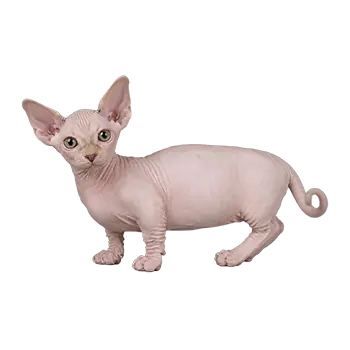
The Dwelf is a natural subject for photographers. Its sculptural body, softly wrinkled skin, large eyes, and curling ears create dramatic shapes and textures that translate vividly into still images.

Its fantastical, elfin appearance lends itself especially well to themed and stylized photography, including fantasy and editorial concepts where an unusual, almost mythical animal is desired. Digital artists likewise gravitate toward the breed as a striking reference.

This visual appeal feeds directly back into the breed’s identity. Much of what the wider public knows about the Dwelf comes through carefully composed imagery rather than in-person encounters, making photography one of the primary ways the breed is experienced.

Internet & Social Media

If the Dwelf has a true home in popular culture, it is online. Social platforms such as Instagram and TikTok have given unusual cats a stage, and accounts dedicated to hairless and dwarf breeds can attract substantial followings.

The breed’s novelty is well suited to the way social media spreads. Images of a small, curl-eared, hairless cat reliably prompt curiosity and the familiar “is that even a cat?” reaction, encouraging the shares and comments that extend the breed’s reach.

Beyond entertainment, these platforms serve a practical function. Owners use them to document care routines and daily life, building communities where prospective and current owners can learn what living with such a distinctive cat actually involves.

Advertising & Aesthetic Appeal

Unusual cats occasionally surface in advertising, fashion editorials, and design contexts, where their appearance can signal something modern, edgy, or avant-garde. The hairless look in particular is sometimes used to convey luxury or a sense of the unconventional.

The Dwelf’s rarity keeps it more niche than the better-known Sphynx, so it appears far less frequently in commercial work. When it or cats like it do appear, the aim is usually to capture attention through striking contrast rather than to depict a conventional pet.

This commercial use, however limited, reinforces the breed’s role as a visual statement. The Dwelf is rarely presented as an ordinary housecat and more often as an emblem of the distinctive and the rare.

The Popularity Effect

Viral attention is a double-edged sword for unusual breeds. A surge of online interest can drive demand quickly, and with it the risk of impulse acquisitions and irresponsible breeding by those hoping to capitalize on a trend.

For a breed with significant special needs, this is a particular concern. The Dwelf requires regular skin care, protection from temperature extremes, and attentive veterinary care, and these realities can be lost beneath the novelty that makes the cat appealing in the first place.

Responsible breeders and owners therefore tend to stress education over hype, encouraging anyone drawn to the breed to understand its needs before seeking one out. Presented plainly, the popularity effect is a reminder that a memorable appearance carries real responsibilities.

Always consult a qualified professional before making any health-related decisions. This content is provided for informational reference only and should not replace professional guidance specific to your animal.