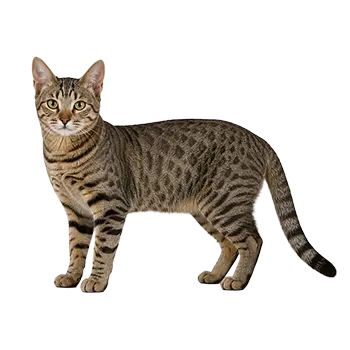

In Traditional Literature & Folklore

The cat has a long and nuanced presence in Chinese literary tradition, and while the Dragon Li was never identified by its modern breed name in classical texts, the brown mackerel tabby it represents was the most common domestic cat type across China for centuries and is therefore the cat most frequently evoked in traditional stories and poetry. Chinese folklore contains numerous tales involving clever, independent cats that outsmart rivals and navigate the complexities of human households, and these literary cats are almost certainly modeled on the sturdy, self-reliant tabbies that would later be formalized as the Dragon Li breed.

One of the most widely told Chinese animal legends concerns the Great Race that determined the order of the zodiac. In most versions of this story, the cat is famously excluded from the twelve zodiac animals after being tricked by the rat, who either failed to wake the cat or pushed it from a raft during the race across the river. This tale is used to explain the enmity between cats and rats, and it positions the cat as a sympathetic figure whose trusting nature was exploited. The cultural resonance of this myth extends deeply into Chinese attitudes toward cats, and the Dragon Li, as the archetypal Chinese cat, is the breed most naturally associated with this story.

In classical Chinese poetry and literary prose, cats appear as symbols of domestic comfort, scholarly companionship, and quiet observation. Poets of the Song and Ming dynasties occasionally referenced their household cats in verses celebrating the pleasures of a studious, contemplative life. The cat curled beside the writing desk or stalking mice in the courtyard became a minor but recurring motif in literati culture, representing the ideal balance between useful action and elegant repose.

Modern Chinese authors have revisited the cat's role in traditional storytelling, sometimes explicitly invoking the Dragon Li or Li Hua Mao by name. Contemporary children's literature in China has produced several illustrated books featuring tabby cats that draw on folk tale traditions while introducing young readers to the concept of indigenous Chinese breeds. These publications represent a conscious effort to connect the Dragon Li's identity to the broader literary heritage of cats in Chinese culture.

In Film, Television & Animation

The Dragon Li's appearances in Chinese film and television have been modest but culturally meaningful. Chinese cinema has not developed the same tradition of breed-specific animal star vehicles that characterizes some Hollywood productions, but cats resembling the Dragon Li have appeared in numerous domestic films and television dramas as background elements of household scenes. Their presence in these productions is typically naturalistic rather than featured, reflecting the breed's real-world role as the ubiquitous Chinese house cat.

Chinese animated productions have offered more prominent roles for cats based on the Dragon Li type. Several animated series and feature films produced in China have included tabby cat characters whose visual design clearly references the brown mackerel tabby pattern and sturdy build of the Li Hua Mao. These animated cats often serve as companion characters or comic relief figures, and their design draws on the same folk traditions that have shaped literary depictions of cats in Chinese culture for centuries.

Documentary filmmaking has provided the Dragon Li with some of its most substantive screen time. Chinese nature and culture documentaries exploring the country's indigenous animal heritage have dedicated segments to the breed, tracing its connection to the wild Chinese mountain cat and documenting the efforts of breeders to preserve and standardize it. These documentaries have been particularly important in educating domestic audiences about the distinction between the pedigree Dragon Li and the general population of Chinese stray and feral cats.

International media coverage of the Dragon Li has been limited but has increased in recent years as Western audiences have become more interested in Asian cat breeds. English-language cat breed documentaries and YouTube channels focused on rare and unusual breeds have begun featuring the Dragon Li, typically emphasizing its status as one of the few naturally occurring breeds recognized from China. These international media appearances, while niche, have contributed to a gradual expansion of the breed's global visibility.

In Art & Visual Culture

Cats have been a subject of Chinese painting since at least the Song dynasty, and the brown tabby type that corresponds to the modern Dragon Li is among the most commonly depicted. Classical Chinese cat paintings, executed in ink and watercolor on silk or paper, frequently show cats with clearly rendered mackerel tabby markings, round faces, and alert expressions that are immediately recognizable as the Dragon Li phenotype. These paintings were created both as standalone works and as elements of larger compositions depicting garden scenes, scholarly studios, and domestic interiors.

The cat in classical Chinese art carried specific symbolic associations. Paintings of cats with butterflies, known as maodie, constituted a visual pun on the Chinese characters for a long life of seventy or eighty years, making them popular gifts for elderly recipients. Cats depicted with peonies symbolized wealth and prosperity, while cats shown catching rats or birds demonstrated the practical virtues of the household mouser. In all of these artistic conventions, the cat depicted most closely resembles the brown tabby pattern of the Dragon Li, simply because this was the cat type most familiar to Chinese artists and their audiences.

Contemporary Chinese artists have returned to the cat as a subject with renewed interest, and some have explicitly engaged with the Dragon Li as a symbol of Chinese cultural identity. Mixed-media works, digital illustrations, and photography projects have explored the breed's connection to Chinese rural life, urbanization, and the tension between modernization and heritage preservation. These artistic engagements treat the Dragon Li not merely as an attractive animal subject but as a cultural marker with broader significance.

The breed has also appeared in commercial and graphic design contexts within China. Advertising campaigns, product packaging, and brand mascots have occasionally featured tabby cats based on the Dragon Li type, leveraging the breed's associations with authenticity, good fortune, and Chinese heritage. Ceramic figurines and decorative objects depicting brown tabby cats remain popular in Chinese craft markets and gift shops, continuing an artistic tradition that stretches back centuries.

Social Media & Digital Presence

The Dragon Li has experienced its most dramatic surge in public visibility through Chinese social media platforms. Weibo, Douyin, Xiaohongshu, and Bilibili have become major channels for cat content in China, and Dragon Li cats and their tabby lookalikes feature prominently in this ecosystem. The breed's expressive face, athletic build, and characteristically independent personality make for engaging video content, and numerous Dragon Li accounts have accumulated followings numbering in the hundreds of thousands.

The social media phenomenon surrounding Chinese tabby cats has had a direct impact on attitudes toward the Dragon Li as a breed. For decades, the common Chinese tabby was often dismissed as a lowly street cat, inferior to imported Western and Asian pedigree breeds like the British Shorthair, Ragdoll, or Scottish Fold that became status symbols among Chinese pet owners. Social media advocacy by Dragon Li enthusiasts has challenged this perception, reframing the native tabby as a breed worthy of the same respect and care given to expensive imported cats. The hashtag equivalent of adopt a native cat has trended repeatedly on Chinese platforms, encouraging pet owners to value local cats alongside or instead of imported breeds.

International social media platforms have also begun to feature the Dragon Li, though its presence remains far smaller than on Chinese platforms. Instagram and TikTok accounts dedicated to rare cat breeds occasionally spotlight the Dragon Li, and breed information posts shared by cat enthusiast communities have helped introduce the breed to Western audiences. Reddit communities focused on cat breeds have featured threads discussing the Dragon Li's characteristics and rarity outside of China, generating curiosity among cat fanciers who might otherwise never encounter the breed.

The digital presence of the Dragon Li has also facilitated cross-border communication between Chinese and international breed enthusiasts. Online forums and messaging groups have connected Chinese Dragon Li breeders with potential international buyers and with fanciers interested in learning about the breed's history and care requirements. This digital networking has been essential for a breed whose physical distribution remains overwhelmingly concentrated in a single country.

In Breed Literature & Publications

The Dragon Li's representation in formal breed literature reflects its relatively recent entry into the world of pedigreed cats. Western cat breed encyclopedias published before 2010 rarely mention the breed at all, and even those published in the years immediately following its CFA acceptance typically devote only a brief entry to it, noting its Chinese origins, mackerel tabby pattern, and natural breed status without the depth afforded to more established breeds. This bibliographic gap is gradually being addressed as newer editions and digital breed databases incorporate more detailed profiles.

Chinese-language breed publications have provided substantially more coverage. Books and magazines produced by Chinese cat fancier organizations include detailed profiles of the Dragon Li that cover its breed standard, care requirements, temperament, and historical background. The Cat Aficionado Association has published breed-specific literature that serves as the primary reference for breeders and judges working with the Dragon Li in Chinese cat shows. These publications are essential resources for anyone seeking authoritative information about the breed but remain largely inaccessible to non-Chinese-speaking audiences.

Academic and scientific literature has engaged with the Dragon Li primarily through the lens of feline genetics and domestication studies. Research papers examining the genetic diversity of Chinese domestic cat populations have referenced the breed as a point of comparison, and studies investigating the relationship between Felis silvestris bieti and domestic cats have noted the Dragon Li's potential significance as a living bridge between wild and domestic populations. These scientific publications have added a layer of scholarly legitimacy to the breed's identity that complements its cultural and aesthetic recognition.

Online breed databases and cat fancier websites have become the most accessible source of Dragon Li information for international audiences. Sites maintained by CFA, TICA, and independent breed information projects provide standardized profiles that cover the breed's physical characteristics, temperament, and care needs. While these online entries vary in depth and accuracy, they collectively represent the primary channel through which most non-Chinese cat enthusiasts first learn about the Dragon Li and form their initial impressions of the breed.

Cultural Impact & Future Visibility

The Dragon Li's cultural impact extends beyond its role as a companion animal to touch on broader themes of national identity, heritage preservation, and the globalization of pet culture. In China, the breed has become a focal point for conversations about the value of indigenous animal breeds in a market increasingly dominated by imported Western varieties. Advocacy for the Dragon Li is often framed not merely as a breed preference but as a statement about cultural pride and the importance of preserving biological heritage that is uniquely Chinese.

This nationalistic dimension of Dragon Li advocacy has resonated with a Chinese public increasingly interested in domestic alternatives to foreign luxury goods and cultural imports. The breed has benefited from the same cultural currents that have boosted interest in traditional Chinese medicine, domestic fashion brands, and homegrown technology companies. In this context, choosing a Dragon Li over an imported Scottish Fold or Maine Coon becomes a small but symbolically meaningful act of cultural affirmation.

The breed's future visibility on the international stage depends on several factors that remain in flux. The extremely small number of Dragon Li breeders outside China, the logistical challenges of international cat transport, and the breed's lack of championship status in major Western registries all present barriers to broader global adoption. However, the growing international interest in natural and landrace cat breeds, combined with the increasing reach of Chinese social media content, may gradually expand the Dragon Li's profile among Western cat fanciers.

Whether the Dragon Li eventually achieves the international popularity of breeds like the Siamese or Bengal or remains primarily a breed of national significance within China, its cultural contribution is already substantial. The breed has prompted meaningful conversations about what constitutes a valuable cat, challenging the assumption that pedigree worth is determined by Western registries and show ring aesthetics. In doing so, the Dragon Li has carved out a distinctive place in global cat culture that reflects its origins as a practical, unpretentious, and deeply rooted part of Chinese life.

Always consult a qualified professional before making any health-related decisions. This content is provided for informational reference only and should not replace professional guidance specific to your animal.