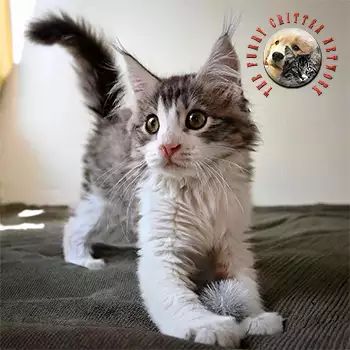

The Cymric traces its roots to the same naturally occurring tailless mutation that gave rise to the Manx cat on the Isle of Man, a small island situated in the Irish Sea between Great Britain and Ireland. While short-haired tailless cats had been documented on the island for centuries, longhaired kittens appeared periodically in Manx litters as carriers of the recessive longhair gene paired together. For much of their early history these fluffy kittens were considered anomalies and were often excluded from breeding programs that focused exclusively on the shorthaired Manx standard.
By the mid-twentieth century, breeders in Canada began to take a serious interest in these longhaired Manx variants. Rather than viewing the longer coat as a fault, a small group of enthusiasts in the 1960s and 1970s recognized the longhaired cats as a distinct and desirable variety worthy of their own breeding programs. Canadian breeders Blair Wright and Leslie Falteisek are frequently credited with championing the early development of the Cymric as a recognized breed, carefully selecting breeding pairs to produce consistent longhaired, tailless offspring.
The name Cymric was chosen as a nod to the Welsh word for Wales, reflecting the broader Celtic heritage shared across the British Isles. Though the breed did not originate in Wales itself, the name was intended to honor the Celtic cultural landscape from which the Isle of Man draws much of its identity. This choice of name helped distinguish the longhaired variety from its shorthaired Manx cousin and gave the breed a sense of independent character within the cat fancy world.
Genetic studies have confirmed that the Cymric and the Manx share the same autosomal dominant gene responsible for their taillessness. The primary difference between the two breeds lies in the presence of the recessive longhair allele. Because both parents must carry the longhair gene for it to express, Cymric kittens can appear in litters where both parents appear to be shorthaired Manx, a fact that initially caused confusion among breeders unfamiliar with recessive inheritance patterns.