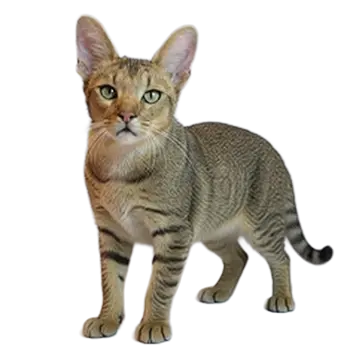

Origins & Development

The Chausie traces its ancestry to the jungle cat (Felis chaus), a medium-sized wild feline native to a broad swath of territory stretching from the Nile Delta across the Middle East and into South and Southeast Asia. Archaeological evidence and ancient Egyptian art suggest that jungle cats lived alongside human settlements thousands of years ago, occasionally interbreeding with domestic cats in the fertile agricultural regions of the Nile Valley. Mummified remains of jungle cats and jungle-cat hybrids discovered in Egyptian tombs indicate that these animals held cultural and perhaps spiritual significance in antiquity.

Modern development of the Chausie as a deliberate breed began in the late 1960s and 1970s, when breeders in the United States started crossing jungle cats with domestic shorthairs. The goal was to capture the striking wild appearance and athletic build of Felis chaus while producing a cat with a stable, companionable domestic temperament. Early crosses were unpredictable, and it took several generations of careful selection before breeders achieved consistent type and reliable temperament.

By the 1990s, a small but dedicated community of Chausie breeders had established foundation lines and begun working toward formal breed recognition. The International Cat Association (TICA) accepted the Chausie for registration in 1995 and granted the breed championship status in 2013. This milestone recognized decades of selective breeding that had produced a cat distinctly different from its wild ancestor yet unmistakably shaped by that heritage.

The breed's development also sparked broader conversations within the cat fancy about the ethics and practicalities of hybrid breeding programs. Advocates argued that well-managed programs could produce healthy, well-socialized cats while preserving genetic diversity. Critics raised concerns about welfare, temperament, and the challenges of placing early-generation hybrids in typical pet homes. These debates continue to shape breeding standards and ownership guidelines for the Chausie and other hybrid breeds.

Historical Roles

The jungle cat ancestors of the Chausie are believed to have served a practical purpose in ancient agricultural communities. Living near granaries and food stores, these cats hunted rodents and small vermin that threatened stored grain. Their presence was tolerated and possibly encouraged by early farmers who recognized the benefits of natural pest control, a dynamic that mirrors the domestication pathway of cats more broadly.

In ancient Egypt, the jungle cat's role appears to have extended beyond pest management. Artistic depictions on tomb walls and papyrus scrolls show cats resembling Felis chaus participating in hunting scenes alongside human companions, sometimes flushing birds from marshland reeds for hunters. Whether these cats were truly trained hunting partners or simply depicted in an idealized cultural context remains a subject of scholarly discussion.

The modern Chausie has not filled a traditional working role in the way that some dog breeds have. Instead, its historical significance lies in its position as a living link between wild and domestic felines. Breeders and enthusiasts value the Chausie for the way it embodies qualities that humans have admired in cats for millennia—agility, grace, keen intelligence, and an independent spirit tempered by genuine affection for trusted companions.

In recent decades, the Chausie has also played a role in conservation education. Breeders and breed clubs have used the Chausie's story to raise awareness about wild cat species, habitat preservation, and the ecological importance of small and medium-sized felids that often receive less public attention than their larger relatives.

Cultural Symbolism

The Chausie occupies a unique symbolic space in cat culture as a bridge between the wild and the domestic. For many owners and admirers, the breed represents the allure of the untamed natural world made accessible within the home. Its tall, rangy build, large tufted ears, and intense gaze evoke the wildlands of its ancestry, and this visual connection to nature is a powerful part of the breed's appeal.

Within the broader cat fancy, the Chausie symbolizes the ambition and creativity of modern breeding programs. It stands alongside breeds like the Bengal and the Savannah as evidence that thoughtful hybridization can produce cats that are both visually striking and well suited to life with people. The breed's journey from experimental crosses to championship recognition is often cited as a testament to the patience and dedication required to establish a new breed.

Culturally, the Chausie has also become associated with a particular kind of cat owner—someone who values an active, engaged relationship with their pet and who is willing to provide the enrichment and interaction that a high-energy breed demands. Chausie enthusiasts often describe the breed as more doglike in its loyalty and responsiveness, a characterization that challenges conventional perceptions of cats as aloof and independent.

The breed's Egyptian heritage adds an additional layer of cultural resonance. Egypt's ancient reverence for cats is one of the most enduring and widely recognized aspects of that civilization's legacy, and the Chausie's connection to the jungle cats of the Nile Valley lends it an air of historical depth that few modern breeds can claim.

Breed Clubs & Standards

The primary breed organization for the Chausie is The International Cat Association (TICA), which has been the leading registry for the breed since its earliest days of formal development. TICA's breed standard describes the Chausie as a tall, long-bodied cat with a deep chest, long legs, and a medium-length tail. The standard emphasizes the breed's athletic build and wild appearance while requiring a temperament suitable for domestic life.

TICA recognizes three color patterns in the Chausie: brown ticked tabby, solid black, and graded black-tipped silver. Each of these patterns reflects colorations found in the wild jungle cat, reinforcing the breed's visual connection to its ancestor. The brown ticked tabby is perhaps the most popular, as it most closely resembles the natural coat of Felis chaus and gives the cat a warm, earthy appearance.

Breed clubs dedicated to the Chausie exist primarily in North America, where the breed was developed, but interest has grown internationally in recent years. These clubs serve as resources for breeders and prospective owners, providing educational materials about the breed's unique needs, organizing meet-ups and show entries, and maintaining breeder directories. Many clubs also work to dispel misconceptions about hybrid cats and advocate for responsible breeding practices.

The Chausie is not currently recognized by all major cat registries. The Cat Fanciers' Association (CFA), for example, does not accept hybrid breeds for registration. This policy reflects ongoing differences of opinion within the cat fancy about the role of wild-domestic hybrids, and it means that Chausie breeders and exhibitors focus their competitive efforts primarily within TICA and other registries that welcome hybrid breeds.

The Breed Today

Today the Chausie remains a relatively rare breed, but its following has grown steadily since it achieved TICA championship status. Breeders in the United States continue to be the primary source of Chausie kittens, though catteries have also been established in Europe, Canada, and other regions. The breed's rarity contributes to its mystique and means that prospective owners often spend considerable time on waiting lists before bringing a Chausie into their home.

Modern Chausie breeders focus on producing cats that are several generations removed from the original jungle cat cross. Most pet-quality Chausies are fourth generation (F4) or later, meaning they are far enough from their wild ancestry to exhibit reliably domestic behavior while retaining the breed's distinctive appearance. Earlier-generation cats (F1 through F3) are typically kept by experienced breeders or placed with owners who have specific experience with hybrid cats.

The breed's popularity has been boosted by social media, where Chausie owners share photos and videos that showcase the breed's athleticism and playful nature. Clips of Chausies leaping to impressive heights, playing fetch, or walking on leashes have introduced the breed to audiences who might never encounter one at a cat show. This online visibility has both expanded the breed's fan base and increased demand for responsibly bred kittens.

Health and genetic diversity remain priorities for the Chausie breeding community. Because the breed's gene pool is relatively small, breeders work collaboratively to avoid excessive inbreeding and to monitor for health issues. Outcrosses to domestic shorthairs and Abyssinians are permitted under TICA guidelines to maintain genetic vigor, and responsible breeders conduct health screenings before making breeding decisions.

Notable Individuals

While the Chausie has not produced the kind of individually famous cats associated with some more established breeds, several cats have played pivotal roles in the breed's development. Foundation cats from the earliest breeding programs in the 1960s and 1970s established the genetic lines that would eventually define the breed's type and temperament. These pioneering animals and their dedicated breeders laid the groundwork for everything the breed has become.

Among the most significant figures in Chausie history are the breeders who shepherded the breed through the long process of TICA recognition. Their work involved not only producing cats that met an evolving breed standard but also documenting pedigrees, organizing breed presentations at cat shows, and building the network of breeders and supporters necessary to achieve formal recognition. This was a multi-decade effort that required extraordinary persistence.

In the show ring, Chausies that have earned TICA championship titles have served as ambassadors for the breed, demonstrating to judges and spectators alike that a hybrid-origin cat can meet rigorous standards of type, temperament, and condition. These show cats have helped shift perceptions within the cat fancy and have encouraged other hybrid breed programs to pursue their own paths to recognition.

Online, individual Chausies with large social media followings have become informal breed ambassadors, introducing thousands of people to the breed through daily posts and videos. These cats and their owners have helped build a community of Chausie enthusiasts who share information, support new owners, and celebrate the unique qualities that make the breed special.

Always consult a qualified professional before making any health-related decisions. This content is provided for informational reference only and should not replace professional guidance specific to your animal.