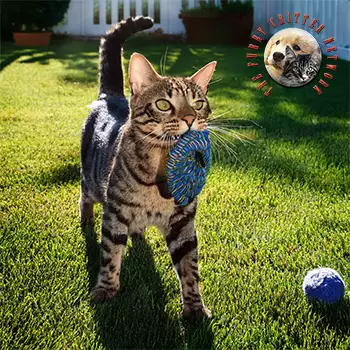

The California Spangled is one of the few cat breeds whose creation was driven primarily by a conservation ethic rather than by aesthetics or competitive breeding ambitions. The breed owes its existence to Paul Arnold Casey Jr., a Hollywood screenwriter and playwright who conceived the idea during a trip to Africa in the early 1970s. While visiting Tanzania, Casey witnessed the devastating effects of poaching on wild cat populations and became determined to create a domestic cat whose wild appearance would remind owners of the endangered spotted cats being hunted for their pelts.
Casey's vision required an ambitious and carefully orchestrated breeding program that spanned more than a decade. Beginning around 1971, he worked with geneticists and breeders to cross a wide variety of domestic cats, including Abyssinians, American Shorthairs, British Shorthairs, and several non-pedigree cats from regions including Malaysia and Egypt. The goal was not to introduce wild cat genetics, but to replicate the visual impact of a wild spotted coat using entirely domestic bloodlines. Each generation was selectively bred to intensify the spotted pattern while maintaining a gentle domestic temperament.
The breeding program demanded extraordinary patience. Casey reportedly worked through eleven generations of carefully planned crosses before arriving at a cat that consistently produced the bold, well-defined spots and athletic body type he envisioned. The intermediate generations included cats with a wide range of coat patterns and body types, and only those individuals that moved the program closer to the wild aesthetic were retained for further breeding. This disciplined approach set the California Spangled apart from many other breed development projects that relied on fewer generations and less rigorous selection criteria.
By the early 1980s, Casey had established a breeding colony that reliably produced kittens with the desired spotted coat, muscular build, and low-slung hunting posture that evoked the look of small wild cats such as the ocelot and the leopard cat. The breed's name reflected both its geographic origin in California and the distinctive spotted, or spangled, markings that defined its appearance.