
Film & Television

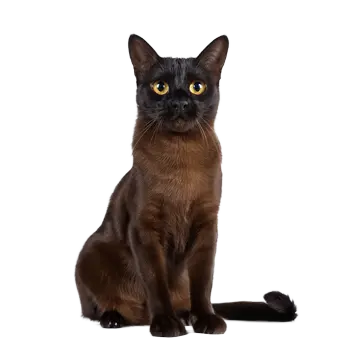
Black cats have long been a staple of visual storytelling, appearing in everything from horror films to family comedies, and the Bombay's sleek panther-like appearance makes it a natural fit for screen work. While specific breed identification is rarely made explicit in film and television credits, cats matching the Bombay's distinctive profile — compact muscular body, glossy black coat, and luminous copper eyes — have appeared in numerous productions over the decades. Their calm, people-oriented temperament makes them easier to work with on set than many other breeds, as they tend to tolerate the lights, noise, and repeated handling that film production demands.

The broader cultural fascination with black cats in cinema has indirectly benefited the Bombay's visibility. When audiences see a striking black cat in a film or television show and search for more information, the Bombay is often among the first breeds they encounter. This search-driven discovery has introduced the breed to countless potential owners who might otherwise have never heard of it.

Animal trainers who work in the entertainment industry have noted that Bombays possess several qualities that make them well-suited to screen work. Their high food motivation facilitates training, their social nature means they are less likely to become stressed by unfamiliar environments, and their solid black coat photographs cleanly without the distracting patterns or color variations that can complicate lighting setups. These practical advantages, combined with the breed's undeniable visual impact, ensure that Bombay-type cats continue to find work in front of the camera.

Television has also embraced the mystique of the black cat in various genres. Mystery series, supernatural dramas, and even sitcoms have featured black cats as recurring characters or atmospheric elements. While these appearances rarely specify a breed, the Bombay's look — particularly its rounded head and wide copper eyes — has become a visual shorthand for the elegant, enigmatic feline companion.

Literature & Art

The black cat holds an outsized place in literary tradition, from Edgar Allan Poe's classic tale to countless modern novels and short stories. While these literary black cats predate the Bombay breed by over a century, the breed has become a living embodiment of the sleek, mysterious feline that writers have long imagined. Cat breed guides and coffee-table books frequently feature the Bombay prominently, using its photogenic appearance to illustrate the beauty and elegance of the domestic cat.

In the world of visual art, the Bombay's striking silhouette and glossy coat have made it a popular subject for photographers and illustrators. The contrast between the cat's uniformly black fur and its bright copper eyes creates a naturally dramatic image that translates well across artistic media. Cat photography competitions regularly feature Bombay subjects, and the breed's images are widely shared in print and online publications devoted to feline aesthetics.

Children's literature has also drawn on the Bombay's appearance, though typically without naming the breed explicitly. Picture books featuring sleek black cats with golden eyes owe a visual debt to the Bombay type, and the breed's friendly, approachable nature aligns well with the companion-cat characters that populate stories aimed at young readers. These depictions help counter the negative superstitions surrounding black cats by presenting them as lovable, loyal friends.

The Bombay has also appeared in breed-specific publications and cat fancy literature, where its unique origin story — a deliberate attempt to create a miniature panther — provides compelling narrative material. Articles and books about cat breeding frequently cite the Bombay as an example of how selective breeding can produce a domestic cat that captures the essence of a wild species while remaining thoroughly suited to life as a household companion.

Internet & Social Media

The rise of social media has been transformative for niche cat breeds like the Bombay. Platforms built around visual content have given Bombay owners and breeders unprecedented reach, allowing them to showcase the breed's distinctive beauty to audiences numbering in the hundreds of thousands. The Bombay's photogenic qualities — that glossy black coat catching the light, those wide copper eyes staring into the lens — translate exceptionally well to the short-form photo and video formats that dominate modern social media.

Several Bombay cats have developed substantial online followings, with dedicated accounts on major platforms documenting their daily lives. These accounts typically highlight the breed's affectionate and playful personality, showing Bombays cuddling with their owners, playing fetch, or supervising household activities with characteristic intensity. The resulting content paints a picture of a breed that is not only beautiful but genuinely engaging as a companion, driving interest from potential adopters and buyers.

The internet has also provided a platform for Bombay breed education and advocacy. Breeders and breed clubs maintain websites, blogs, and social media presences that offer information about the breed's history, care requirements, and temperament. Online communities dedicated to the Bombay bring together owners from around the world, creating spaces for sharing advice, celebrating new litters, and coordinating rescue efforts for Bombays in need of rehoming.

Black cat appreciation movements on social media have further boosted the Bombay's profile. Hashtags celebrating black cats regularly trend on major platforms, and the Bombay is frequently featured as the quintessential example of black cat beauty. These movements have helped shift cultural attitudes toward black cats in general, and the Bombay — as arguably the most recognizable black cat breed — has benefited significantly from this changing perception.

Advertising & Branding

The Bombay's sleek, all-black appearance gives it a natural association with luxury, sophistication, and elegance — qualities that advertisers have long sought to convey. Black cats in general appear frequently in advertising for fashion, jewelry, perfume, and home décor, and the Bombay's refined look makes it a particularly effective brand ambassador in these contexts. The breed's calm demeanor also makes it cooperative during the extended photography sessions that commercial work requires.

Pet industry marketing has also embraced the Bombay, featuring the breed in advertisements for premium cat food, grooming products, and health supplements. The visual impact of a gleaming black cat against a clean backdrop is difficult to surpass, and the Bombay's association with pedigree breeding lends an air of quality and exclusivity to the products it helps promote. Cat food brands in particular have used Bombay-type cats in packaging and promotional materials.

Beyond traditional advertising, the Bombay's image has influenced product design and branding in subtler ways. The breed's silhouette — compact, muscular, with a distinctive rounded head — has appeared in logos, illustrations, and graphic design elements for businesses ranging from boutique catteries to cat-themed cafés. The Bombay's clean, recognizable outline makes it an effective design element that communicates "cat" instantly while conveying a sense of polish and intentionality.

The breed's association with the concept of a "miniature panther" has proven particularly resonant in branding contexts. This framing positions the Bombay as both exotic and approachable, wild in appearance but gentle in reality — a duality that marketing professionals find useful across a range of product categories. Whether selling luxury goods or pet supplies, the Bombay's image communicates a compelling blend of mystique and warmth.

The Popularity Effect

Media exposure has a well-documented impact on breed popularity, and the Bombay provides an interesting case study in how visibility translates — or fails to translate — into widespread adoption. Despite its striking appearance and frequent representation in visual media, the Bombay has remained a relatively uncommon breed. This apparent paradox reflects several factors, including the small number of active breeders, the breed's exacting standard, and the simple fact that many people who admire black cats opt to adopt from shelters rather than seek out a pedigreed Bombay.

The relationship between media visibility and breed popularity is not always straightforward. While some breeds experience dramatic surges in demand following prominent media appearances — often with negative consequences for breed welfare — the Bombay has been somewhat insulated from these boom-and-bust cycles by its rarity. The limited number of available kittens acts as a natural brake on rapid popularity growth, giving breeders time to screen prospective owners and ensure appropriate placements.

One positive effect of the Bombay's media presence has been increased adoption of black cats from shelters and rescues. Studies and anecdotal reports from shelter workers suggest that awareness of the Bombay breed has helped counter the persistent myth that black cats are unlucky or undesirable. When potential adopters learn about the Bombay and its celebrated black coat, they often become more open to adopting black cats of any background, which benefits the broader population of black cats awaiting homes.

The Bombay's cultural impact thus extends well beyond its small registered population. By serving as a high-profile ambassador for black cats in media, advertising, and online spaces, the breed has helped reshape public perceptions and contributed to improved outcomes for black cats in shelters. This advocacy effect may ultimately prove to be the Bombay's most significant cultural contribution, demonstrating that a breed's influence can far exceed its numbers.

Always consult a qualified professional before making any health-related decisions. This content is provided for informational reference only and should not replace professional guidance specific to your animal.