Bombay Cat Breed Guide - Furry Critter Network

Bombay

Quick Facts

📏 Height
8-10 inches
⚖️ Weight
8-15 pounds
⏱️ Lifespan
12-16 years
📊 Size Category
Medium
🏆 Breed Group
Hybrid
✨ Coat Type
Short
😊 Temperament
Affectionate, playful, social, intelligent
🏃 Exercise Needs
Moderate
💇 Grooming Needs
Low
🔊 Vocalization
Moderate
🌍 Origin
United States

Bombay - Names & Recognition

The Bombay cat derives its name from the exotic Indian city of Bombay (now Mumbai), chosen by breeder Nikki Horner to evoke the image of the black leopards found in India. Despite the geographic reference, the breed was developed entirely in the United States during the 1950s. The name reflects Horner's vision of creating a domestic cat that resembled a miniature black panther, combining wild appearance with domestic temperament.

The breed is officially recognized by major cat registries under the singular name "Bombay," with no widely used alternate names. However, Bombay cats are often affectionately referred to as "parlor panthers" or "mini-panthers" due to their striking resemblance to wild black panthers. Some enthusiasts also call them "patent-leather kids" because of their distinctive glossy, black coat that shines like polished leather.

The Bombay is recognized by The Cat Fanciers' Association (CFA), which granted the breed championship status in 1976, and The International Cat Association (TICA). In CFA standards, the breed is shown in a single division due to its uniform black coloration. Some registries distinguish between American Bombays (bred from American Burmese) and British Bombays (bred from British Burmese), though both share the same fundamental characteristics and breed standard requirements focusing on the sleek black coat and copper eyes.

Bombay Physical Description

The Bombay is a medium-sized cat with a muscular, compact body that belies surprising weight when lifted. Males typically weigh between 10-15 pounds, while females range from 8-12 pounds. Despite their solid build, Bombays move with remarkable grace and agility, their movements often compared to those of a prowling panther. The breed's body is neither cobby nor svelte, instead presenting a moderate type that balances strength with elegance.

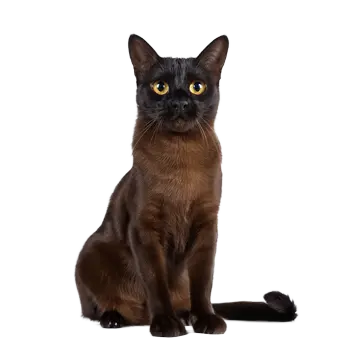
The most distinctive feature of the Bombay is its jet-black coat, which should be solid black from root to tip with no white hairs, tabby markings, or rusty tones. The coat is short, fine, and lies close to the body with a sleek, satin-like texture that has been described as resembling patent leather. When in peak condition, the coat has an almost liquid appearance that catches light beautifully, enhancing the breed's exotic look. Regular brushing brings out the natural oils that give the coat its characteristic sheen.

The head is pleasantly rounded with no sharp angles, featuring a moderate stop between the rounded top of the head and the medium-short, well-developed muzzle. The breed's eyes are one of its most captivating features—large, round, and set wide apart, ranging in color from gold to deep copper. The deeper and more brilliant the eye color, the more prized the cat. The eyes, combined with the black coat, create a striking contrast that gives the Bombay its signature look.

Bombays have medium-sized ears that are set wide apart, tilting slightly forward, giving the cat an alert expression. The ears are broad at the base with slightly rounded tips. The breed's tail is straight and medium in length, neither whip-like nor stubby, tapering slightly to a rounded tip. Overall, the Bombay presents a harmonious, well-balanced appearance that successfully achieves the breeder's original vision of creating a domestic black panther.

Affection Level
Bombays are exceptionally affectionate cats that thrive on human companionship. They form strong bonds with their families and often follow their favorite people from room to room, seeking attention and physical contact throughout the day.
Friendliness
Known for their outgoing and social nature, Bombays are friendly with both family members and strangers. They typically greet visitors with curiosity rather than fear and enjoy being the center of attention in social situations.
Child-Friendly
Bombays are excellent companions for children due to their patient, playful nature and tolerance for handling. They enjoy interactive games and adapt well to the energy levels of active households with kids.
Pet-Friendly
These cats generally get along well with other pets, including dogs and other cats, especially when properly introduced. Their social nature and adaptability make them good candidates for multi-pet households.
Exercise Needs
Bombays require moderate exercise to maintain their muscular build and mental stimulation. Daily play sessions with interactive toys help satisfy their hunting instincts and prevent boredom-related behaviors.
Playfulness
Highly playful throughout their lives, Bombays retain their kitten-like enthusiasm for games well into adulthood. They particularly enjoy interactive toys, fetch games, and puzzle feeders that challenge their intelligence.
Energy Level
Bombays possess a moderately high energy level that balances active play with relaxation. While they enjoy vigorous play sessions, they're equally content to lounge with their owners during downtime.
Intelligence
These cats are remarkably intelligent and quick learners. They can master tricks, solve puzzle toys, and even learn to walk on a leash. Their cleverness sometimes leads to mischievous behavior if not properly stimulated.
Tendency to Vocalize
Bombays are moderately vocal cats that communicate with soft chirps and meows. While not as talkative as Siamese cats, they will vocalize to express their needs and engage in conversation with their owners.
Amount of Shedding
Thanks to their short, sleek coat, Bombays are light shedders compared to many other breeds. Regular brushing helps minimize loose hair and keeps their coat looking glossy and healthy.

Bombay History & Origins

The Bombay cat breed is a relatively modern creation that emerged from the ambitious vision of Louisville, Kentucky breeder Nikki Horner in the 1950s. Horner dreamed of creating a domestic cat that would resemble a miniature black panther—combining the sleek black coat and muscular build of a wild cat with the affectionate temperament of a domestic breed. To achieve this goal, she began a selective breeding program in 1958 that would span nearly two decades before gaining official recognition.

Horner's breeding program crossed black American Shorthair cats with sable Burmese cats. The American Shorthair contributed the solid black coat color, robust build, and round facial features, while the Burmese provided the compact muscular body type, social personality, and distinctive large, round eyes. The combination proved challenging at first, as Horner worked to eliminate any tabby markings or rusty tones in the coat while maintaining the desired copper eye color and muscular physique.

After numerous attempts and careful selection over multiple generations, Horner succeeded in producing cats that consistently displayed the desired characteristics. The breed began to attract attention in the cat fancy during the 1960s, though acceptance was gradual. In 1970, the breed achieved preliminary recognition by The Cat Fanciers' Association (CFA), marking a significant milestone in its development. However, full championship status would not come until 1976, nearly 18 years after Horner began her breeding program.

The name "Bombay" was chosen deliberately to evoke the exotic image of the black leopards of India, despite the breed's entirely American origins. This marketing decision helped establish the breed's unique identity and appeal. Following CFA recognition, The International Cat Association (TICA) also recognized the breed, helping to spread its popularity beyond the United States.

Interestingly, a similar breeding program was undertaken in Britain around the same time, crossing British Burmese with British Shorthairs to create what became known as the British Bombay. While the goal was the same, the use of different foundation breeds resulted in subtle differences between American and British lines. Some registries distinguish between these variations, while others consider them a single breed.

Today, the Bombay remains a relatively rare breed compared to more established cat breeds, but it has developed a devoted following among cat enthusiasts who appreciate its unique appearance and exceptional personality. The breed continues to honor Nikki Horner's original vision, serving as a testament to the possibilities of careful, dedicated breeding programs focused on creating cats that combine beauty with temperament.

Bombay Temperament & Personality

The Bombay cat is renowned for having one of the most affectionate and people-oriented personalities in the feline world. Often described as "dog-like" in their devotion, Bombays form intense bonds with their human family members and thrive on companionship. These cats are not content to be independent observers; they want to be involved in every aspect of household life. It's common for a Bombay to follow their favorite person from room to room, offering a running commentary of soft chirps and purrs.

Social interaction is not just desired but required for a Bombay's emotional well-being. These cats actively seek out physical contact, often claiming a lap the moment someone sits down. They're known for their love of cuddling and will frequently sleep pressed against their owners or burrowed under covers. Many Bombays also enjoy being held and carried around, treating their humans as mobile perches. This need for attention means the breed is not well-suited to households where they would be left alone for extended periods regularly.

Intelligence is another defining characteristic of the Bombay temperament. These cats are quick learners who can master tricks, figure out how to open doors or cabinets, and solve puzzle toys with impressive speed. Their intelligence, combined with their playful nature, means they require adequate mental stimulation to prevent boredom. Bombays often enjoy playing fetch, can learn to walk on a leash, and may even learn to perform simple commands. However, their cleverness can sometimes manifest as mischief if they're not properly engaged.

Despite their active and playful nature, Bombays know how to relax. They possess a wonderful ability to match their energy level to their household's rhythm. After an energetic play session, they're perfectly content to settle down for extended lounging periods. This adaptability makes them suitable for various living situations, from active families to quieter homes, as long as they receive adequate attention and interaction.

The breed is generally excellent with children, displaying patience and tolerance for the sometimes clumsy affections of young family members. Their playful nature aligns well with children's energy levels, and they often become devoted companions to kids who treat them respectfully. Bombays also typically coexist peacefully with other pets, including dogs and other cats, especially when introduced properly and gradually. Their social nature extends beyond humans, and they often enjoy having another pet companion, particularly in households where humans are away during work hours.

While moderately vocal, Bombays are not typically nuisance talkers. They communicate with purpose, using soft chirps and meows to greet their owners, request attention, or announce mealtime. Many owners describe their Bombay's vocalizations as conversational rather than demanding. The breed's voice is generally pleasant and less strident than more talkative breeds like the Siamese, though individual personalities vary.

Care Requirements

Caring for a Bombay cat is relatively straightforward, making them an excellent choice for first-time cat owners, though their social needs require consideration. The most important aspect of Bombay care is providing adequate attention and companionship. These cats should not be left alone for long periods regularly; if family members work full-time, consider adopting two cats for companionship or ensuring someone is home for significant portions of the day. A lonely Bombay may develop behavioral issues or depression.

Environmental enrichment is crucial for this intelligent and active breed. Provide multiple scratching posts, cat trees for climbing and perching, and a variety of toys that can be rotated to maintain interest. Interactive toys that mimic prey movements are particularly effective at engaging their hunting instincts. Puzzle feeders and treat-dispensing toys provide mental stimulation while making mealtime more engaging. Window perches offering views of outdoor activity can provide hours of entertainment for indoor Bombays.

Regular play sessions are essential, ideally 15-20 minutes two to three times daily. Wand toys, laser pointers (always ending with a catchable toy), and small balls or toy mice are excellent choices. Many Bombays enjoy retrieving toys, so incorporating fetch into play sessions can provide both physical exercise and bonding time. Their intelligence makes them good candidates for clicker training, which provides mental stimulation while strengthening the human-animal bond.

Litter box maintenance is important for all cats but particularly for fastidious Bombays. Provide one litter box per cat plus one extra, scooped daily and thoroughly cleaned weekly. The breed has no special litter box requirements, though many cats prefer unscented litter and uncovered boxes. Place boxes in quiet, accessible locations away from food and water bowls.

While Bombays adapt well to indoor living and should be kept indoors for safety, some owners successfully train their cats to walk on harnesses and leashes, providing supervised outdoor experiences. If considering outdoor access, a secure catio (cat patio) or enclosed outdoor space offers safe enrichment. Never allow Bombays to roam freely outdoors, as their friendly nature makes them vulnerable to theft, and their black coat color increases risks from traffic.

Regular veterinary care is essential, including annual wellness exams, vaccinations, parasite prevention, and dental care. Establish a relationship with a trusted veterinarian and maintain consistent healthcare throughout the cat's life. Early detection of health issues significantly improves treatment outcomes.

Feeding & Nutrition

Proper nutrition is fundamental to maintaining a Bombay's health, muscular build, and glossy coat. As obligate carnivores, Bombays require a diet high in animal-based proteins. Choose high-quality commercial cat food—either wet, dry, or a combination—that lists real meat (chicken, turkey, fish, or beef) as the first ingredient. Look for foods that meet AAFCO (Association of American Feed Control Officials) standards for complete and balanced nutrition.

Portion control is particularly important for Bombays, as their compact, muscular build can make weight gain less immediately obvious. These cats have hearty appetites and, combined with their love of lounging with their owners, can easily become overweight if overfed. Follow feeding guidelines on pet food packaging as a starting point, but adjust based on your individual cat's age, activity level, and body condition. Adult Bombays typically need 20-30 calories per pound of body weight daily, though this varies.

Many experts recommend feeding measured meals two to three times daily rather than free-feeding, as this allows better portion control and weight monitoring. Feeding at consistent times also provides routine, which many cats find comforting. Some owners successfully use automatic feeders to maintain consistent meal times when schedules are irregular. If you notice your Bombay gaining weight, consult your veterinarian before making dietary changes, as gradual adjustments are important for feline health.

Wet food offers several advantages for Bombays, including higher moisture content supporting urinary health, typically higher protein and lower carbohydrate content, and greater palatability. Some owners feed exclusively wet food, while others combine wet and dry food to balance benefits. If feeding dry food, ensure your Bombay has constant access to fresh water, as cats eating primarily dry food need to drink more to maintain proper hydration. Consider a cat water fountain, as many cats prefer running water and drink more from fountains.

Protein requirements are particularly important for maintaining the Bombay's muscular physique. Look for foods containing at least 35-40% protein on a dry matter basis for adult cats. Kittens and pregnant or nursing cats have even higher protein needs. The protein should come primarily from named meat sources rather than by-products or plant proteins. Adequate protein supports muscle maintenance, healthy skin and coat, and overall vitality.

Treats should comprise no more than 10% of daily caloric intake. While Bombays' food-motivated nature makes treats useful for training and bonding, overindulgence contributes to obesity. Choose healthy treats or use small portions of cooked chicken or fish. Avoid toxic foods including chocolate, onions, garlic, grapes, raisins, and xylitol. Never feed raw or undercooked meat due to bacterial contamination risks.

Bombay Health & Lifespan

The Bombay is generally a healthy and robust breed with a relatively long lifespan of 12-16 years, and many individuals live even longer with proper care. The hybrid vigor resulting from the breed's Burmese and American Shorthair ancestry contributes to overall good health. However, like all purebred cats, Bombays can be predisposed to certain genetic and breed-specific health conditions. Responsible breeders screen for known genetic issues and work to minimize health problems through careful selection. Prospective owners should obtain health clearances and genetic testing results for breeding cats when possible.

With attentive care, regular veterinary visits, proper nutrition, and a safe environment, most Bombays enjoy long, healthy lives. Being observant of subtle changes in behavior, appetite, litter box habits, or activity level allows early intervention when health issues arise. Pet insurance can help manage unexpected veterinary costs and ensure your Bombay receives necessary care throughout their life. Choose a reputable breeder who tests breeding cats and provides health guarantees when acquiring a Bombay kitten.

Common Health Issues

  • Hypertrophic Cardiomyopathy - HCM, : This is the most common heart disease in cats and has been observed in Bombays inherited from their Burmese ancestry. HCM causes thickening of the heart muscle, potentially leading to heart failure. Regular veterinary examinations and screening echocardiograms can detect this condition early, allowing for management with medication.
  • Craniofacial Defects: A small percentage of Bombay kittens may be born with craniofacial abnormalities inherited from Burmese lines - Including severely shortened or malformed skulls. Reputable breeders work to eliminate this trait through careful breeding practices, and affected kittens typically do not survive or are humanely euthanized shortly after birth.
  • Excessive Tearing - Epiphora, : Some Bombays experience excessive tearing due to their facial structure, particularly the shorter muzzle inherited from Burmese ancestry. While usually cosmetic and requiring only regular cleaning of tear stains, persistent tearing should be evaluated by a veterinarian to rule out blocked tear ducts or other issues.
  • Obesity: Bombays have hearty appetites and - Combined with their love of lounging with their owners, can easily become overweight. Obesity contributes to numerous health problems including diabetes, arthritis, and liver disease. Maintaining healthy weight through portion control and regular exercise is crucial for long-term health.
  • Dental Disease: Like many cats - Bombays are susceptible to periodontal disease if dental care is neglected. Bacteria from dental disease can enter the bloodstream and affect vital organs. Regular dental examinations, professional cleanings, and home dental care help prevent this common but serious condition.
  • Upper Respiratory Infections: While not specific to Bombays - These social cats may be more exposed to respiratory pathogens if they interact with other cats. Vaccinations protect against common viral causes, and prompt veterinary attention for respiratory symptoms helps prevent complications and spread to other household pets.

Preventive Care & Health Monitoring

  • Annual Veterinary Examinations: Regular wellness visits allow early detection of health issues before they become serious. Senior cats - Over 7 years, benefit from biannual exams. These visits should include physical examination, weight monitoring, dental assessment, and discussion of any behavioral changes.
  • Vaccinations: Core vaccines protect against panleukopenia - Feline herpesvirus, and calicivirus. Rabies vaccination is legally required in most areas. Non-core vaccines like FeLV may be recommended based on lifestyle and exposure risk. Follow your veterinarian's recommended vaccination schedule.
  • Parasite Prevention: Year-round protection against fleas - Ticks, and intestinal parasites is important even for indoor cats. Heartworm prevention may be recommended depending on geographic location. Many products combine multiple parasite protections in single monthly treatments.
  • Dental Care: Establish a dental care routine early - Ideally including daily tooth brushing with cat-specific toothpaste. Dental treats and water additives provide additional support but don't replace brushing. Professional dental cleanings under anesthesia should be performed as recommended by your veterinarian, typically every 1-2 years.

Coat Color & Grooming

The Bombay's coat is one of its most distinctive and celebrated features. According to breed standards, the only acceptable color is solid jet black—the fur should be uniformly black from root to tip with no white hairs, ghost tabby markings, or rusty or brown tones. This solid black coloration extends to the nose leather and paw pads, which should also be black. The intensity and uniformity of the black color is a crucial aspect of breed type, and cats showing any other coloration would be disqualified from showing.

The coat texture is as important as its color. Bombay fur is short, fine, and lies close to the body with a sleek, satin-like feel. When in optimal condition, the coat has a distinctive sheen that resembles patent leather or polished ebony. This glossy appearance is one of the breed's signature characteristics and results from natural oils in healthy skin and coat. The texture should feel smooth and silky when stroked, quite different from the plush, dense coats of some other breeds.

Grooming a Bombay is refreshingly simple compared to long-haired breeds. The short, fine coat requires minimal maintenance—weekly brushing with a soft bristle brush or grooming mitt is typically sufficient to remove loose hairs and distribute natural oils that enhance the coat's shine. Many owners find that a chamois cloth or silk scarf buffed over the coat after brushing creates an extra glossy finish. During seasonal shedding periods in spring and fall, you may want to increase brushing frequency slightly, though Bombays are relatively light shedders.

Bathing is rarely necessary for Bombays unless they get into something messy. The breed's short coat naturally sheds dirt and debris, and their fastidious grooming habits keep them clean. If bathing becomes necessary, use a gentle, cat-specific shampoo and ensure thorough rinsing, as residue can dull the coat's shine. Always completely dry the cat after bathing, as their short coat provides little insulation when wet.

Regular nail trimming every 2-3 weeks prevents overgrowth and reduces damage from scratching. Start nail care early to help kittens accept the process. Provide scratching posts and pads to satisfy natural scratching instincts and help keep claws in good condition. Weekly ear checks and cleaning as needed with cat-safe ear cleaner prevents buildup and infections. Check between paw pads for debris or foreign objects, particularly if your Bombay has access to outdoor catios.

The Bombay's large, round eyes may accumulate discharge in the corners. Gently wipe away any discharge with a damp cotton ball or soft cloth, using a different section for each eye to prevent spreading potential infections. Some Bombays, particularly those with shorter muzzles, may experience some degree of tearing that causes dark staining around the eyes, which can be minimized with regular, gentle cleaning.

Children & Other Pets

Bombays are exceptionally well-suited to families with children, consistently ranking among the best cat breeds for households with kids. Their patient, tolerant nature allows them to handle the sometimes unpredictable behavior of children better than many other breeds. Bombays typically enjoy the active, playful energy that children bring to a household and often become devoted companions to youngsters who treat them with respect and kindness. Their sturdy, muscular build also makes them more tolerant of the occasionally clumsy handling that can occur with young children still learning appropriate pet interaction.

The breed's playful nature aligns perfectly with children's interests. Bombays retain their kitten-like enthusiasm for games well into adulthood and genuinely enjoy interactive play sessions. They're often willing participants in gentle games of fetch, chase, or hide-and-seek. Many Bombays will actively seek out children for play and attention, following kids from room to room much as they would with adult family members. This mutual enjoyment of play helps forge strong bonds between Bombays and children.

However, as with any cat breed, it's crucial to teach children proper handling and interaction techniques. Supervise interactions with very young children (under five years old) to ensure both child and cat safety. Teach children to be gentle, avoid pulling tail or ears, and recognize when the cat wants space. Show them how to properly pet and pick up the cat, and explain the importance of not disturbing a sleeping or eating cat. It's equally important to provide the Bombay with "escape routes" and elevated perches where they can retreat if overwhelmed.

Bombays generally coexist peacefully with other pets, including dogs and other cats, making them excellent choices for multi-pet households. Their social nature and adaptability help them form positive relationships with other animals, particularly when introduced properly through gradual, supervised meetings. Many Bombays actively enjoy having another cat companion, especially in households where humans are away during work hours. A second cat can provide social interaction and play opportunities that help prevent loneliness and boredom.

When introducing a Bombay to resident pets or bringing new pets into a home with a Bombay, follow standard introduction protocols. Begin with scent exchanges, then progress to visual contact through baby gates or cracked doors, and finally supervised direct interaction. The Bombay's generally friendly and confident demeanor often facilitates easier introductions than with more reserved or territorial breeds. With dogs, ensure the dog has reliable training and understands how to behave appropriately around cats.

Thanks to their confident yet non-aggressive personality, Bombays rarely instigate conflicts with other household pets. They're more likely to seek friendship than dominance. However, individual personality varies, and some Bombays may be more reserved or particular about their feline or canine companions. Consider personality matching when adding new pets to a household with a Bombay—generally, cats or dogs with calm, friendly temperaments make the best companions for this breed.