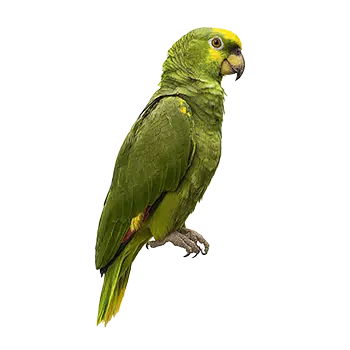

Successful travel with a Yellow-Naped Amazon begins well before the day of departure. These are large, intelligent parrots with strong preferences and well-developed routines, and disrupting those routines without adequate preparation can result in significant stress for the bird and considerable difficulty for the owner. The foundation of travel readiness is carrier training, a process that should ideally begin weeks or even months before any planned trip.
Carrier training involves introducing the travel carrier as a positive element in the bird's daily environment. The carrier should be placed in the bird's living area with the door open, allowing the parrot to investigate it at its own pace. Placing favored treats, toys, and food inside the carrier encourages voluntary entry, and over time the bird should become comfortable spending extended periods inside with the door closed. Rushing this process or forcing the bird into the carrier without prior acclimation is likely to produce a panicked, agitated animal that associates the carrier with fear, making every subsequent travel experience more difficult.
The choice of carrier itself is an important consideration. For Yellow-Naped Amazons, the carrier must be large enough for the bird to stand upright, turn around, and extend its wings partially, while being sturdy enough to withstand the powerful beak of a large Amazon parrot. Hard-sided carriers designed specifically for medium to large parrots are generally preferred over soft-sided alternatives, which a Yellow-Naped Amazon can damage or escape from with relative ease. The carrier should have secure latches, adequate ventilation on multiple sides, and a stable, non-slip floor surface.
Beyond carrier training, travel preparation includes assembling a travel kit appropriate for the duration and nature of the trip. Essential supplies include the bird's regular pellet diet, familiar treats, a portable water dispenser, a lightweight perch for use at the destination, any prescribed medications, and copies of veterinary health records and ownership documentation. For birds that are closely bonded to specific toys or comfort objects, including a familiar item in the carrier can help reduce stress during transit.