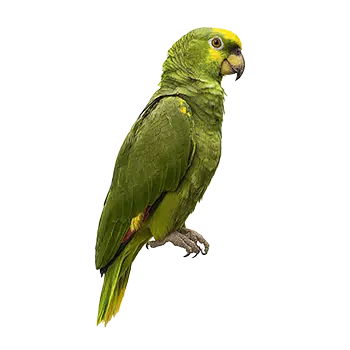

Parrots on Screen: Film & Television

The parrot has been a recurring figure in film and television for decades, and while specific breed identification in screen appearances is not always straightforward, the Amazon parrot group — including the Yellow-Naped Amazon — has contributed numerous animal actors to productions that call for a large, colorful, talking bird. The species' vivid green plumage, expressive eyes, and remarkable vocal clarity make it a natural choice for scenes requiring a parrot that can deliver lines, react to actors, or simply look striking on camera.

In Hollywood and international film, parrots frequently appear in comedies, adventure films, and family features where a talking bird serves as comic relief, a plot device, or a charming companion to a central character. Animal trainers working in the entertainment industry have noted that Amazon parrots, and the Yellow-Naped Amazon in particular, are among the most trainable species for on-set work due to their willingness to vocalize on cue and their relative comfort with the noise and activity of a production environment. Their ability to learn and repeat specific phrases makes them valuable assets when a script calls for a bird that appears to speak in context.

Television has provided additional platforms for the Yellow-Naped Amazon's talents. Talk shows, variety programs, and morning news segments have frequently featured individual Yellow-Naped Amazons brought on by their owners or by animal ambassadors from zoos and educational organizations. These appearances typically showcase the bird's vocal repertoire, with hosts reacting with visible delight to a parrot that sings, tells jokes, or responds to questions with well-timed phrases. The format is well suited to the Yellow-Naped Amazon's personality, as the species tends to be bold, attention-seeking, and energized by social interaction.

While the Yellow-Naped Amazon has not been the named star of a major franchise in the way that some dog and cat breeds have achieved cinematic fame, its collective presence across decades of screen appearances has reinforced the public image of the talking parrot as a charismatic, entertaining, and surprisingly intelligent companion. Each appearance, whether in a feature film or a five-minute television segment, contributes to the cultural perception that shapes how audiences think about parrots and the people who keep them.

In Literature & Print Media

Parrots have occupied a distinctive niche in Western literature since at least the age of exploration, when returning sailors' accounts of brightly colored, talking birds fueled European fascination with the tropics. The Yellow-Naped Amazon, as one of the most accomplished vocal mimics among the New World parrots, has appeared in various forms across fiction, nonfiction, and specialized avicultural publications, though often as part of the broader Amazon parrot category rather than under its specific species name.

In nonfiction, the Yellow-Naped Amazon features prominently in field guides, avicultural handbooks, and natural history texts covering the parrots of Central America. Ornithological monographs on the genus Amazona routinely devote substantial attention to the species, discussing its vocal dialects, nesting ecology, and conservation status. The work of field researchers studying wild Yellow-Naped Amazon populations in Costa Rica and Nicaragua has generated peer-reviewed publications that have contributed to the broader scientific literature on parrot vocal learning and cultural transmission, subjects that attract readership well beyond the ornithological community.

Avicultural magazines and bird-keeping periodicals have consistently featured the Yellow-Naped Amazon in articles on talking ability, training methods, behavioral management, and species profiles. Publications such as Bird Talk, Parrots Magazine, and their successors have published owner accounts, veterinary guidance, and breeder interviews centered on the species, building a substantial body of print material that informs and connects the Yellow-Naped Amazon keeping community. These articles have played a meaningful role in shaping husbandry standards and buyer expectations over the past several decades.

In fiction, while the Yellow-Naped Amazon is rarely identified by its scientific or full common name, the archetype of the talkative green parrot that appears in novels, short stories, and children's literature draws heavily on the real-world characteristics of Amazon parrots. The literary parrot — perceptive, irreverent, and possessed of an uncanny ability to say exactly the wrong thing at the wrong moment — owes much of its personality to the actual behavior of species like the Yellow-Naped Amazon, whose owners will readily confirm that their birds have an unnerving talent for vocal commentary delivered with impeccable comic timing.

Social Media & Online Communities

The rise of social media has transformed the Yellow-Naped Amazon from a species known primarily within avicultural circles into a minor internet celebrity in its own right. Platforms built around short-form video have proven to be ideal showcases for the species' vocal talents, and clips of Yellow-Naped Amazons singing recognizable songs, engaging in apparent conversations, laughing, and performing vocal impressions routinely accumulate hundreds of thousands or even millions of views. The immediacy and shareability of video content have given the species a visibility that print media and television appearances never achieved at comparable scale.

Individual Yellow-Naped Amazons have built substantial followings on platforms where their owners post regular updates documenting the birds' daily lives, vocal developments, and interactions with household members. These accounts often blend entertainment with education, as experienced keepers use their platforms to discuss diet, enrichment, behavioral challenges, and the realities of living with a large, long-lived parrot. The comment sections beneath these posts frequently become informal forums where prospective owners ask questions and current keepers exchange advice.

Dedicated online communities for Amazon parrot enthusiasts have flourished across forums, social media groups, and messaging platforms. These spaces serve as vital resources for keepers seeking species-specific guidance on topics ranging from hormonal aggression management to foraging toy recommendations. The Yellow-Naped Amazon is one of the most frequently discussed species in these communities, reflecting both its popularity and the particular challenges it presents. Long-time keepers often serve as informal mentors to newcomers, sharing hard-won knowledge about the species' temperament, dietary sensitivities, and social needs.

The species' social media presence has had mixed consequences. On one hand, viral videos and engaging content have raised public awareness of the Yellow-Naped Amazon's intelligence and personality, inspiring genuine interest in avian welfare and conservation. On the other hand, the appeal of a charismatic talking parrot can encourage impulse acquisitions by individuals unprepared for the decades-long commitment and behavioral complexity that Yellow-Naped Amazon ownership entails. Responsible content creators within the community increasingly address this tension directly, pairing entertaining clips with candid discussions of the less glamorous aspects of parrot keeping.

In Art & Visual Culture

The vibrant green plumage and expressive demeanor of the Yellow-Naped Amazon have made it a subject of interest for artists, illustrators, and photographers working across a range of media. In the tradition of natural history illustration, the species has been depicted by ornithological artists contributing to field guides, taxonomic plates, and decorative prints. These illustrations serve both scientific and aesthetic purposes, capturing the subtle gradations of green across the bird's body, the diagnostic yellow nape patch, and the red and blue wing speculum that becomes visible in flight or during wing-stretching displays.

Contemporary wildlife photographers have found the Yellow-Naped Amazon a rewarding subject, both in the wild and in captive settings. The species' range in Central America overlaps with landscapes of considerable scenic beauty, and images of Yellow-Naped Amazons in flight against volcanic backdrops or perched in flowering tropical trees are staples of regional nature photography. In captive settings, the bird's expressiveness and willingness to engage with the camera produce portraits that convey personality in ways that resonate with viewers who may have no prior familiarity with the species.

In folk art and decorative traditions across Central America, parrots appear frequently as motifs in textiles, pottery, and painted wood carvings. While these depictions are not always species-specific, the green parrot with a yellow head marking is a recognizable type that reflects the presence of Yellow-Naped Amazons and their relatives in the cultural landscape of the region. Markets in Honduras, Nicaragua, and Costa Rica commonly offer parrot-themed crafts that serve as souvenirs for tourists and as everyday decorative objects for local households.

The digital age has expanded the visual culture surrounding the Yellow-Naped Amazon. Fan art, digital illustrations, and stylized portraits of individual pet birds circulate widely in online parrot communities, and some owners commission custom artwork of their birds as a form of tribute to a beloved companion. This creative output, ranging from photorealistic digital paintings to whimsical cartoon depictions, reflects the emotional depth of the bond between keepers and their Yellow-Naped Amazons and contributes to the species' visibility in contemporary visual culture.

Educational Media & Documentaries

The Yellow-Naped Amazon has appeared in a variety of educational contexts, from nature documentaries and zoo programming to classroom resources and conservation outreach materials. The species' status as an excellent talker and its compelling conservation story make it a natural fit for content designed to engage audiences with the broader themes of avian intelligence, tropical ecology, and wildlife protection.

Nature documentaries covering the parrots of Central America have featured the Yellow-Naped Amazon in segments highlighting its vocal dialects, social behavior, and nesting ecology. Research footage of wild flocks at communal roost sites, often captured during long-term field studies, has been incorporated into programs examining animal communication and cultural learning. The discovery that Yellow-Naped Amazon populations maintain distinct regional dialects — learned contact calls that differ between geographically separated groups — has been a particularly compelling storyline for documentary producers seeking to illustrate the concept of animal culture in an accessible and visually engaging way.

Zoos and aviaries that house Yellow-Naped Amazons frequently use them as ambassador animals in educational programming. The species' comfort with human interaction and its readiness to vocalize in public settings make it well suited for live demonstrations and keeper talks that introduce visitors to parrot biology, conservation challenges, and responsible pet ownership. These encounters often leave lasting impressions, particularly on younger visitors, and serve as entry points into deeper engagement with avian conservation.

Conservation organizations operating within the Yellow-Naped Amazon's range have produced educational materials targeting both local communities and international audiences. These resources highlight the species' ecological role in its native forest ecosystems, the threats it faces from habitat loss and illegal trapping, and the actions that individuals and communities can take to support its survival. The Yellow-Naped Amazon's combination of charisma, cultural familiarity, and genuine vulnerability makes it an effective ambassador species, capable of generating empathy and motivating action in ways that statistics and policy documents alone cannot achieve.

Cultural Impact & Continuing Influence

The Yellow-Naped Amazon's cultural footprint extends beyond any single medium or platform. Taken together, its appearances in film, television, literature, social media, art, and educational programming have established the species as one of the most recognizable and admired parrots in the public imagination. While it may not enjoy the universal name recognition of the African Grey or the Macaw, the Yellow-Naped Amazon occupies a position of particular esteem among those who know parrots well, consistently cited by aviculturists and behaviorists as one of the most vocally talented and personally engaging species in the entire order Psittaciformes.

This cultural prominence carries real-world consequences for both the species and the people who interact with it. The Yellow-Naped Amazon's reputation as an exceptional talker drives sustained demand in the pet trade, which in turn creates economic incentives that can either support responsible captive breeding or fuel illegal capture from wild populations. The way the species is represented in media — whether as a delightful entertainer, a challenging companion, or an endangered wild animal — directly influences public attitudes and, by extension, the regulatory and conservation landscape.

The parrot-keeping community has increasingly recognized its role in shaping these narratives. Prominent Yellow-Naped Amazon owners, breeders, and rescue operators use their platforms to advocate for responsible acquisition, lifelong commitment, and support for in-situ conservation programs. By sharing both the joys and the difficulties of living with the species, these voices work to ensure that the Yellow-Naped Amazon's media presence does not create unrealistic expectations that lead to neglect, surrender, or increased pressure on wild populations.

As media technologies continue to evolve, the Yellow-Naped Amazon is well positioned to maintain and expand its cultural presence. The species' vocal abilities translate naturally to audio and video formats, its conservation story provides compelling narrative material, and its devoted community of keepers and advocates ensures a steady supply of content, commentary, and creative expression. The Yellow-Naped Amazon's journey through human culture is far from complete, and each new generation of keepers, filmmakers, researchers, and audiences will add fresh chapters to a story that has been unfolding since the forests of Central America first echoed with the calls of these remarkable birds.

Always consult a qualified professional before making any health-related decisions. This content is provided for informational reference only and should not replace professional guidance specific to your animal.