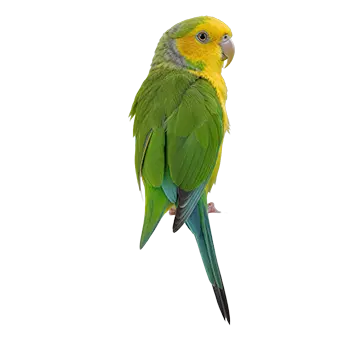

CITES & International Trade Framework

The Yellow-Faced Parrotlet is regulated under the Convention on International Trade in Endangered Species of Wild Fauna and Flora (CITES), the primary international agreement governing the cross-border movement of wildlife and wildlife products. All species within the order Psittaciformes, which includes parrots, parakeets, and parrotlets, are listed on either Appendix I or Appendix II of CITES. Forpus xanthops is currently listed on Appendix II, meaning that international trade is permitted but must be authorized through a system of export permits issued by the management authority of the country of origin, which must confirm that the trade will not be detrimental to the species' survival in the wild.

For the Yellow-Faced Parrotlet specifically, the Appendix II listing has practical implications that differ depending on whether the birds in question are wild-caught or captive-bred. Peru, as the sole range state for the species, has imposed strict controls on the export of wild-caught specimens, and legitimate international trade in Forpus xanthops now consists almost entirely of captive-bred birds accompanied by appropriate documentation from the exporting country's CITES management authority. Buyers and sellers engaged in international transactions must ensure that all required permits are in order before any bird crosses a national border, and failure to comply can result in seizure of the birds and criminal prosecution.

The CITES permitting system relies on a network of national management and scientific authorities that assess trade volumes, evaluate population impacts, and issue or deny permits accordingly. For species like the Yellow-Faced Parrotlet, where the wild population is relatively small and confined to a limited geographic area, scientific authorities must exercise particular caution in determining whether any given trade proposal meets the non-detriment standard. This determination involves weighing the cumulative impact of trade against the species' ability to sustain itself in the wild, a calculation that becomes more conservative as population estimates decline or habitat conditions deteriorate.

It is important for prospective owners and breeders to understand that CITES compliance is not optional or advisory. Violations of CITES regulations are treated as serious offenses in most signatory countries, and penalties can include substantial fines, imprisonment, and permanent confiscation of birds and breeding stock. The legal framework is designed to balance the legitimate interests of aviculturists and pet keepers with the overriding need to prevent trade from driving species toward extinction, and the Yellow-Faced Parrotlet's vulnerable status makes it a species where this balance is closely monitored.

Peruvian National Wildlife Legislation

As the Yellow-Faced Parrotlet's entire natural range falls within Peru, the country's domestic wildlife legislation plays a central role in the species' legal protection. Peru's primary framework for wildlife conservation is established through its General Law on Biological Diversity, the Forestry and Wildlife Law, and a series of implementing regulations and supreme decrees that govern the capture, possession, trade, and transport of native fauna. Under this framework, the Yellow-Faced Parrotlet is classified as a protected species, and the unauthorized capture, killing, or commercial exploitation of wild individuals is prohibited.

The Servicio Nacional Forestal y de Fauna Silvestre (SERFOR), Peru's national forestry and wildlife service, is the principal authority responsible for administering and enforcing wildlife regulations. SERFOR issues permits for the legal capture of wildlife for scientific research, authorized breeding programs, and other approved purposes, and it maintains oversight of the facilities and individuals that hold native species in captivity within Peru. For a species with the Yellow-Faced Parrotlet's conservation profile, SERFOR applies heightened scrutiny to any permit application involving wild capture, and approvals are granted sparingly and under strict conditions.

Peru has also established a network of protected areas and conservation concessions that provide habitat protection for native wildlife, including areas within and adjacent to the Maranon Valley. While the Yellow-Faced Parrotlet's range does not fall entirely within formally protected territory, conservation agreements with local landowners and community-based natural resource management programs have extended a degree of protection to key habitat areas. These arrangements operate alongside the formal legal framework, creating a layered system of safeguards that reflects both national policy and local engagement.

Enforcement of wildlife laws in remote Andean valleys remains a persistent challenge. The Maranon Valley is geographically isolated, and government agencies face logistical and resource constraints that limit the frequency and reach of patrols and inspections. Illegal trapping of parrots, while reduced from historical levels, has not been entirely eliminated, and the clandestine nature of the activity makes it difficult to detect and prosecute consistently. Strengthening enforcement capacity in these areas is recognized as a priority by both Peruvian authorities and international conservation partners.

Import & Export Requirements

The import and export of Yellow-Faced Parrotlets across national borders involves a complex set of documentary and procedural requirements that reflect the intersection of CITES regulations, national wildlife laws, and veterinary health protocols. Any international movement of the species requires, at a minimum, a valid CITES export permit from the country of origin and a corresponding import permit or notification from the destination country. For captive-bred birds, the exporting country's CITES authority must verify that the birds were bred in a facility registered with the relevant management authority and that the breeding operation meets established standards.

The European Union, which represents one of the largest markets for captive-bred parrotlets, implements CITES through its own Wildlife Trade Regulations, which in some respects impose stricter controls than the convention itself requires. Importers of Yellow-Faced Parrotlets into EU member states must obtain an import permit from their national CITES authority before the birds leave the exporting country, and the application process requires documentation of the birds' captive-bred status, health certification, and evidence that the import will not have adverse conservation consequences. Delays in processing permits are common, and importers must plan transactions well in advance to accommodate administrative timelines.

The United States regulates parrot imports through a combination of CITES implementation under the Endangered Species Act, the Wild Bird Conservation Act (WBCA) of 1992, and quarantine requirements administered by the U.S. Department of Agriculture. The WBCA effectively prohibits the import of most wild-caught parrots into the United States and requires that captive-bred imports meet specific documentation standards. Yellow-Faced Parrotlets entering the country must clear USDA quarantine, which involves a mandatory holding period at an approved quarantine facility where birds are tested for diseases including avian influenza and exotic Newcastle disease.

Beyond the regulatory paperwork, practical considerations such as airline acceptance policies, crate specifications, and seasonal shipping restrictions add additional layers of complexity to international parrotlet transport. Breeders and buyers who engage in cross-border transactions must be prepared to navigate a process that can be time-consuming, expensive, and subject to disruption by changes in regulations or carrier policies. Working with experienced avian transport specialists who understand the full scope of requirements is strongly advisable for anyone considering an international acquisition or sale of Yellow-Faced Parrotlets.

Domestic Ownership Regulations

Within countries where the Yellow-Faced Parrotlet is kept as a companion bird or bred in aviculture, domestic regulations governing ownership vary considerably by jurisdiction. In many countries, keeping captive-bred parrotlets does not require a specific permit, provided the owner can demonstrate legal provenance through documentation such as a breeder's certificate, a closed leg band with traceable information, or microchip records. However, some jurisdictions impose additional requirements that owners and breeders must satisfy to remain in compliance with local law.

In the European Union, several member states require keepers of CITES-listed species to register their birds with national or regional authorities and to maintain records of acquisitions, transfers, deaths, and breeding outcomes. Germany, the Netherlands, and Belgium, all countries with active Yellow-Faced Parrotlet breeding communities, have established registration and reporting systems that vary in detail and stringency. Breeders in these countries are generally required to band chicks with closed rings of a specified size and to report breeding results to their national avicultural society or government agency, creating a paper trail that supports traceability and deters the laundering of wild-caught birds into the legal market.

In the United States, federal law does not require permits for the possession of most captive-bred parrots, but state and local regulations can add requirements that vary widely. Some states classify all parrots, including parrotlets, as exotic animals subject to specific permitting, housing, or veterinary requirements, while others impose no additional restrictions beyond general animal welfare standards. Municipal ordinances in certain cities and counties may limit the number of birds that can be kept in a residential setting or impose noise-related restrictions that can affect parrot keepers. Prospective owners should research the specific regulations applicable in their jurisdiction before acquiring a Yellow-Faced Parrotlet.

Australia and New Zealand maintain some of the strictest biosecurity regimes in the world, and the importation of live parrots into these countries is heavily restricted or effectively prohibited. While captive populations of some parrotlet species exist within Australia, the Yellow-Faced Parrotlet is not widely established there, and acquiring one legally would be extremely difficult given current import controls. These national biosecurity policies, while not specifically targeting the Yellow-Faced Parrotlet, have a direct impact on the species' availability and legal status in the Australasian region.

Captive Breeding Documentation & Compliance

Responsible captive breeding of the Yellow-Faced Parrotlet requires careful attention to documentation and compliance with the legal frameworks that govern the keeping and sale of CITES-listed species. Breeders who operate within the law maintain detailed records of their breeding stock, including the provenance of each bird, its closed band or microchip number, the dates and outcomes of breeding attempts, and the disposition of offspring. These records serve multiple purposes: they demonstrate legal provenance in the event of an inspection, they support genetic management of captive populations, and they provide transparency to buyers who need assurance that the birds they are purchasing were bred legally.

Closed leg bands are the most widely used method of identifying captive-bred parrotlets and establishing their status as legally bred specimens. Bands must be applied to chicks at an early age, while the foot is still small enough to allow the solid ring to slide over the toes and onto the tarsus, after which natural growth prevents removal without cutting the band. The band typically carries a unique identification number, the breeder's code or society affiliation, and the year of hatching. In jurisdictions that require registration, the band number is linked to the breeder's records and to the bird's official documentation, creating a chain of custody that follows the bird through its lifetime.

Microchip implantation has emerged as a complementary identification method, particularly for birds that are not banded or for situations where band damage or loss creates ambiguity. Avian-specific microchips, which are smaller than those used for dogs and cats, can be implanted by a qualified avian veterinarian and scanned with a standard reader to retrieve a unique identification number. Some countries and avicultural organizations now accept or require microchipping as an alternative or supplement to banding, and the practice is likely to become more widespread as technology improves and costs decrease.

Breeders who sell Yellow-Faced Parrotlets are generally required to provide buyers with documentation that establishes the bird's legal status. This documentation may include a certificate of captive breeding, a copy of the breeder's registration with the relevant authority, the bird's band or microchip number, and, for international sales, the applicable CITES permits. Failure to provide adequate documentation can expose both seller and buyer to legal liability and can complicate future transactions involving the bird, including resale, transfer to another keeper, or movement across jurisdictional boundaries. Maintaining thorough, organized records is not merely a legal obligation but a professional standard that distinguishes responsible breeders within the avicultural community.

Enforcement Challenges & Ethical Considerations

The enforcement of wildlife trade laws as they apply to the Yellow-Faced Parrotlet is complicated by a range of factors that are common to the regulation of rare and valuable species. The high market value of Forpus xanthops in international aviculture creates a financial incentive for illegal trapping and smuggling that persists despite legal prohibitions and the availability of captive-bred alternatives. Enforcement agencies in Peru and in destination countries face the challenge of detecting and intercepting illicit shipments that may involve small numbers of birds concealed within legitimate cargo or transported through informal border crossings.

The laundering of wild-caught birds into the legal captive-bred market is a recognized concern within the avicultural community and among enforcement authorities. Techniques used to disguise the origins of illegally obtained birds include falsifying breeding records, banding wild-caught juveniles with closed bands that are then represented as captive-bred identification, and routing birds through intermediary countries where documentation standards are less rigorous. Combating these practices requires vigilance from enforcement agencies, cooperation between national authorities, and the active participation of the avicultural community in reporting suspicious activity and maintaining high standards of transparency.

Ethical considerations extend beyond the letter of the law. Even where ownership and breeding of Yellow-Faced Parrotlets is legally permissible, responsible keepers and breeders are expected to adhere to standards of practice that reflect the species' conservation needs. This includes supporting captive breeding programs that prioritize genetic diversity over commercial output, avoiding purchases from sources whose documentation is incomplete or questionable, and contributing to conservation efforts that benefit the species in its native habitat. Avicultural societies and conservation organizations have developed codes of ethics and best practice guidelines that address these issues, and adherence to these voluntary standards is widely regarded as a marker of responsible participation in the keeping and breeding of vulnerable species.

The broader ethical landscape surrounding the keeping of rare parrots continues to evolve as public attitudes toward wildlife ownership shift and as conservation science provides more detailed assessments of the relationship between captive populations and wild population viability. For the Yellow-Faced Parrotlet, the intersection of legal compliance, ethical practice, and conservation outcomes is an area where individual decisions by keepers and breeders can have meaningful aggregate effects on the species' long-term prospects. Staying informed about changes in legislation, engaging with the avicultural community, and maintaining a commitment to transparency and accountability are essential responsibilities for anyone involved in the keeping or breeding of this remarkable bird.

Always consult a qualified professional before making any health-related decisions. This content is provided for informational reference only and should not replace professional guidance specific to your animal.