
Film & Television Appearances

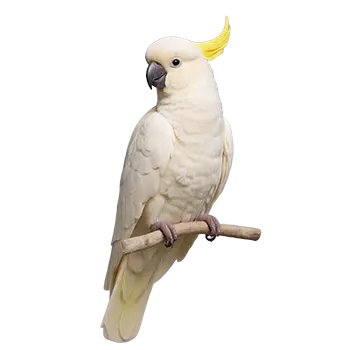
The Sulphur-Crested Cockatoo's dramatic appearance and expressive behavior have made it a natural fit for film and television, where it has served as both a featured animal actor and a visual shorthand for Australian settings. The species' large white body, brilliant yellow crest, and piercing dark eyes give it a screen presence that few other birds can rival, and its willingness to interact with handlers and perform on cue has made it a reliable choice for productions requiring live avian performers.

In Australian cinema, flocks of Sulphur-Crested Cockatoos frequently appear in establishing shots and landscape sequences, their screeching calls used as an audio signature to immediately communicate an Australian setting to audiences worldwide. Documentaries about Australian wildlife invariably feature the species, and natural history programs produced by the BBC, National Geographic, and the Australian Broadcasting Corporation have devoted extensive segments to the cockatoo's behavior, intelligence, and ecological role. David Attenborough's various natural history series have showcased the species on multiple occasions, bringing its antics into living rooms around the globe.

Hollywood productions set in Australia or the broader Asia-Pacific region have also utilized Sulphur-Crested Cockatoos as set dressing and narrative elements. The birds have appeared in a range of films and television series, from adventure dramas to family comedies, their visual impact lending authenticity and a sense of the exotic to scenes shot on location or on studio backlots designed to evoke tropical and antipodean environments. Animated features have drawn inspiration from the species as well, with cockatoo characters appearing in family-oriented films that capitalize on the bird's recognizable silhouette and lively personality.

The use of live cockatoos in film and television has also prompted discussions about animal welfare in the entertainment industry. Handlers and trainers who work with cockatoos on set emphasize the importance of positive reinforcement, controlled working conditions, and strict limits on working hours for avian performers. Industry guidelines for the use of birds in production have become more rigorous over time, reflecting broader shifts in public attitudes toward the treatment of animals in entertainment.

Literature & Written Works

The Sulphur-Crested Cockatoo has appeared in Australian literature since the earliest days of European settlement, its unmistakable presence woven into the written record of colonial life, bush storytelling, and modern fiction. Early settlers' journals, letters, and memoirs frequently mention cockatoos, sometimes with exasperation at their crop-raiding habits and sometimes with genuine admiration for their intelligence and personality. These accounts provide a valuable historical record of human-cockatoo interactions in the 18th and 19th centuries and have informed later literary treatments of the species.

In Australian children's literature, the Sulphur-Crested Cockatoo occupies a beloved position. The species features in picture books, early readers, and illustrated natural history titles aimed at young audiences, often depicted as clever, noisy, and endearingly mischievous. These portrayals help shape the perception of the cockatoo for new generations of Australians, reinforcing its status as a cultural icon from an early age. Adult fiction set in Australia frequently uses the cockatoo as an atmospheric element, its calls and flocks providing a sense of place that anchors narratives in the Australian landscape.

Non-fiction writing about the Sulphur-Crested Cockatoo spans popular natural history, scientific literature, and avicultural guides. Books devoted to Australian birdlife routinely highlight the species as one of the continent's most charismatic and widely encountered parrots. Dedicated avicultural texts provide detailed guidance on the care and husbandry of captive Sulphur-Crested Cockatoos, while popular science books have drawn on the species to illustrate broader themes of animal intelligence, social learning, and the challenges of human-wildlife coexistence in increasingly urbanized landscapes.

The species has also appeared in poetry and literary essays, where its voice, movement, and visual impact serve as metaphors for wildness, resilience, and the distinctive character of the Australian environment. Poets working in both Indigenous and settler traditions have found in the cockatoo a subject that resonates on multiple levels, capable of evoking the beauty and harshness of the Australian bush in equal measure. This literary presence ensures that the Sulphur-Crested Cockatoo remains embedded in the broader cultural imagination of Australia and the English-speaking world.

Art & Visual Representation

The Sulphur-Crested Cockatoo has been a subject of visual art for thousands of years, beginning with the rock art traditions of Aboriginal Australians and continuing through colonial-era natural history illustration to contemporary fine art and commercial design. In Indigenous rock art, cockatoo figures appear at sites across northern and eastern Australia, rendered in ochre and pigment on sandstone surfaces in styles that range from simple silhouettes to detailed, multicolored compositions. These images carry cultural and spiritual significance that extends far beyond their aesthetic appeal.

European artists arriving in Australia in the late 18th and 19th centuries were immediately drawn to the Sulphur-Crested Cockatoo as a subject. Natural history illustrators such as John Gould, whose monumental work The Birds of Australia (1840-1848) included meticulously rendered plates of the species, helped introduce the cockatoo to European audiences as a symbol of Australia's extraordinary avifauna. Gould's illustrations, with their attention to plumage detail, posture, and habitat, set a standard for ornithological art that influenced subsequent generations of bird artists working in Australia and beyond.

In contemporary Australian art, the Sulphur-Crested Cockatoo appears across a wide spectrum of media and styles, from photorealist painting and sculpture to abstract and conceptual work. The species' visual drama, particularly the contrast of white plumage against a blue Australian sky or the flare of its yellow crest, provides artists with a subject that is both immediately recognizable and endlessly interpretable. Commercial artists and graphic designers have also embraced the cockatoo, using its image in logos, packaging, tourism campaigns, and public art installations that celebrate Australian identity.

Photography has played a significant role in shaping public perception of the Sulphur-Crested Cockatoo. Wildlife photographers across Australia and internationally have produced iconic images of the species in flight, at rest, and in dramatic interaction with its environment. The rise of digital photography and social media has democratized this process, with amateur photographers and smartphone users contributing vast numbers of cockatoo images to online platforms. This photographic abundance has helped cement the Sulphur-Crested Cockatoo as one of the most visually documented bird species in the world.

Digital Media & Internet Culture

The Sulphur-Crested Cockatoo has become one of the most prominent bird species in internet culture, its combination of visual appeal, vocal expressiveness, and unpredictable behavior making it ideally suited to the short-form video formats that dominate social media platforms. Videos of cockatoos dancing, talking, destroying household objects, opening bins, and engaging in elaborate displays of personality routinely accumulate millions of views on platforms such as YouTube, TikTok, and Instagram, reaching audiences far beyond the traditional avicultural community.

The species' capacity for vocal mimicry and its tendency to vocalize loudly and dramatically have made it a favorite subject for viral content. Clips of individual cockatoos producing unexpected sounds, engaging in apparent conversations with their owners, or reacting with exaggerated emotion to everyday situations are shared widely across social media, often accompanied by humorous captions or commentary that anthropomorphizes the birds' behavior. While this content brings the species to the attention of millions, aviculturists and welfare advocates have noted that viral cockatoo videos can inadvertently promote the birds as low-maintenance or comedic pets, obscuring the significant challenges of cockatoo ownership.

The bin-opening behavior documented by researchers in suburban Sydney received extensive coverage in digital media, becoming a viral phenomenon that bridged the gap between scientific research and popular entertainment. News outlets, science communicators, and social media users around the world shared videos and articles about the cockatoos' ingenuity, sparking conversations about animal intelligence, cultural learning, and the adaptability of urban wildlife. The story's appeal lay in its combination of rigorous science and inherently amusing footage, a combination that the Sulphur-Crested Cockatoo seems uniquely equipped to provide.

Online communities dedicated to cockatoo ownership and appreciation have flourished on platforms including Facebook, Reddit, and specialized avicultural forums. These communities serve as spaces for keepers to share advice, troubleshoot behavioral issues, and celebrate the personalities of their individual birds. They also function as informal networks for cockatoo rescue and rehoming, connecting birds in need with experienced adopters. The digital presence of the Sulphur-Crested Cockatoo has thus expanded its cultural footprint well beyond its physical range, making it a globally recognized and discussed species in the age of social media.

Advertising, Branding & National Identity

The Sulphur-Crested Cockatoo's striking visual profile and strong association with the Australian landscape have made it a popular choice for commercial branding, advertising campaigns, and the construction of national identity. Tourism Australia and state-level tourism organizations have frequently featured the species in promotional materials, using images and footage of wild cockatoos to evoke the natural beauty, biodiversity, and distinctive character of the Australian experience. For international audiences, the sight of a flock of white cockatoos against a backdrop of eucalyptus forest or red outback soil serves as an instantly recognizable visual cue for Australia.

Corporate branding in Australia has drawn on the cockatoo as a symbol of energy, intelligence, and local authenticity. Businesses ranging from cafes and breweries to telecommunications providers and financial services firms have incorporated cockatoo imagery into their logos and marketing, leveraging the species' positive associations and high public recognition. The bird's image appears on Australian postage stamps, commemorative coins, and official government publications, further embedding it in the visual language of Australian national identity.

In the context of cultural tourism, the Sulphur-Crested Cockatoo functions as a living attraction in its own right. Wildlife parks, botanical gardens, and urban green spaces across Australia's eastern seaboard attract visitors specifically seeking encounters with wild or semi-wild cockatoos. The birds' bold and approachable behavior in these settings creates photo opportunities and memorable interactions that visitors share widely, generating organic publicity that reinforces the species' association with Australia in the global imagination.

The use of the Sulphur-Crested Cockatoo in branding and national representation is not without complexity. As awareness of the challenges posed by cockatoo populations in urban and agricultural settings has grown, the species' image has come to embody a tension between admiration and exasperation that many Australians find relatable. This duality, far from undermining the cockatoo's appeal, has arguably deepened it, giving the species a cultural resonance that goes beyond simple iconography to reflect the broader Australian experience of living alongside a confident, intelligent, and sometimes exasperating wild neighbor.

Lasting Cultural Impact

The Sulphur-Crested Cockatoo's cumulative presence across film, literature, art, digital media, and national branding has established it as one of the most culturally significant bird species in the world. Its impact extends well beyond Australia, shaping international perceptions of Australian wildlife and contributing to global conversations about animal intelligence, urban ecology, and the ethics of keeping highly social birds as pets. Few species of any kind occupy such a prominent position at the intersection of science, entertainment, and cultural identity.

The species' cultural influence has practical implications for conservation and welfare. Public awareness driven by media exposure can generate support for habitat protection, responsible ownership practices, and the work of rescue organizations. At the same time, the romanticized or comedic portrayals of cockatoos that circulate in popular media can create unrealistic expectations among prospective owners, contributing to the cycle of impulse acquisition and eventual surrender that welfare organizations work to address. The challenge for educators and communicators is to harness the cockatoo's undeniable charisma while conveying the full reality of what it means to share a home, or a neighborhood, with one of these birds.

In Australian society specifically, the Sulphur-Crested Cockatoo has achieved a status that transcends the category of wildlife. It is a character in the national story, a fixture of the suburban experience, and a source of both pride and frustration. Its voice is the alarm clock of the Australian dawn and the soundtrack of the afternoon barbecue. Its image is shorthand for the Australian outdoors. And its behavior, from the ingenious to the destructive, provides a constant reminder that the natural world does not pause at the edge of the city.

As media platforms continue to evolve and global audiences grow more connected, the Sulphur-Crested Cockatoo's cultural footprint is likely to expand further. The species possesses a rare combination of visual impact, behavioral complexity, and emotional expressiveness that resonates across cultures and media formats. Whether it appears in a documentary, a social media feed, a children's book, or a tourism campaign, the Sulphur-Crested Cockatoo commands attention and leaves a lasting impression, ensuring that its place in popular culture is secure for generations to come.

Always consult a qualified professional before making any health-related decisions. This content is provided for informational reference only and should not replace professional guidance specific to your animal.