
Australian Federal Protections

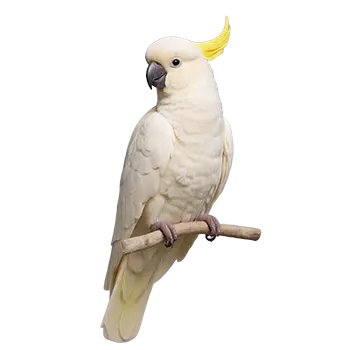
In Australia, the Sulphur-Crested Cockatoo is a native species afforded protection under the Environment Protection and Biodiversity Conservation Act 1999 (EPBC Act), the primary piece of federal legislation governing the conservation and management of Australia's wildlife. Under the EPBC Act, it is illegal to capture, kill, trade, or export native wildlife, including Sulphur-Crested Cockatoos, without appropriate authorization from the Australian Government. The legislation reflects Australia's international obligations under treaties such as the Convention on International Trade in Endangered Species of Wild Fauna and Flora (CITES) and the Convention on Biological Diversity.

The EPBC Act provides a framework within which the Australian Government can regulate the export of native species and their derivatives, but it operates in conjunction with state and territory wildlife legislation, which governs the day-to-day management of native animals within each jurisdiction. This layered regulatory structure means that the legal status of the Sulphur-Crested Cockatoo can vary depending on the specific activity in question and the jurisdiction in which it takes place. Federal law controls international trade and matters of national environmental significance, while state and territory laws govern keeping, breeding, and intrastate movement of the birds.

Australia has maintained a strict ban on the commercial export of native wildlife since 1960, a policy that has had a profound impact on the availability of Australian cockatoo species on the international pet market. While captive-bred Sulphur-Crested Cockatoos from non-Australian populations are legally available in many countries, no legally exported Australian-origin birds have entered the international market for decades. This export ban has been instrumental in protecting wild populations from the trapping pressures that have affected cockatoo species in other parts of their range, particularly in Indonesia and Papua New Guinea.

Federal wildlife enforcement in Australia is carried out by officers within the Department of Climate Change, Energy, the Environment and Water, working in coordination with the Australian Border Force and state-level wildlife agencies. Penalties for violations of the EPBC Act's wildlife provisions can be severe, including substantial fines and imprisonment. The enforcement regime reflects the seriousness with which Australia treats the protection of its native fauna, a commitment that has helped maintain robust wild populations of the Sulphur-Crested Cockatoo even as other parrot species globally have faced significant declines.

State & Territory Regulations in Australia

Each Australian state and territory maintains its own wildlife legislation that supplements the federal EPBC Act, and the rules governing the keeping of Sulphur-Crested Cockatoos as pets vary considerably across jurisdictions. In New South Wales, the Biodiversity Conservation Act 2016 governs the keeping of native birds, and the Sulphur-Crested Cockatoo is classified in a category that requires a basic wildlife licence for private keeping. The licence system is designed to ensure that keepers meet minimum standards of husbandry and that birds are obtained from legal sources.

In Queensland, the Nature Conservation Act 1992 and its associated regulations establish the framework for keeping native wildlife, including cockatoos. Queensland's licensing system categorizes species by risk and management requirements, and the Sulphur-Crested Cockatoo falls within a class that requires a recreational wildlife licence. Victoria, South Australia, Western Australia, and Tasmania each have their own parallel systems, with licensing categories and requirements that differ in detail but share a common intent: to regulate private keeping, prevent illegal trade, and ensure a minimum standard of animal welfare.

One area of particular legal complexity involves the management of Sulphur-Crested Cockatoos as agricultural pests. While the species is protected under both federal and state law, provisions exist in most jurisdictions for the issuing of damage mitigation permits, which authorize landholders to deter, relocate, or in some cases cull cockatoos that are causing significant damage to crops, infrastructure, or property. The criteria for obtaining such permits, the methods allowed, and the reporting requirements vary by state, and the permits are typically issued on a case-by-case basis after assessment by wildlife management officers.

The intersection of conservation law and pest management creates ongoing tension in rural and peri-urban Australia. Farmers and property owners who suffer significant losses to cockatoo damage sometimes view the regulatory framework as insufficiently responsive to their needs, while conservation advocates argue that lethal control should be a last resort and that non-lethal deterrent methods should be exhausted before permits are issued. This debate is likely to intensify as cockatoo populations continue to adapt to human-modified landscapes and as urban expansion brings more residents into contact with large, boisterous cockatoo flocks.

International Trade & CITES Framework

The international trade in Sulphur-Crested Cockatoos is regulated under the Convention on International Trade in Endangered Species of Wild Fauna and Flora (CITES), a multilateral treaty that establishes a framework of controls on the cross-border movement of listed wildlife species and their products. The Sulphur-Crested Cockatoo is listed under CITES Appendix II, which includes species that are not necessarily threatened with extinction but whose trade must be controlled to prevent utilization that is incompatible with their survival.

Under Appendix II, international trade in Sulphur-Crested Cockatoos requires the issuance of export permits by the CITES Management Authority of the exporting country. These permits are granted only when the exporting authority is satisfied that the trade will not be detrimental to the survival of the species in the wild, that the specimens were legally obtained, and that living specimens will be transported in a manner that minimizes the risk of injury, damage to health, or cruel treatment. The importing country may also require an import permit, depending on its national legislation and any stricter domestic measures it has adopted.

The practical effect of Australia's longstanding wildlife export ban, combined with the CITES framework, is that legally traded Sulphur-Crested Cockatoos on the international market are almost exclusively captive-bred birds from populations maintained outside Australia. Significant captive breeding populations exist in the United States, Europe, and parts of Southeast Asia, and these populations supply the majority of the legitimate international pet trade. However, illegal trapping and smuggling of wild cockatoos from Indonesia and Papua New Guinea remains a concern, particularly for subspecies native to those regions.

CITES enforcement relies on cooperation between national wildlife agencies, customs authorities, and international policing organizations such as INTERPOL. Detection of illegal wildlife trade in cockatoos typically involves documentation checks at points of import and export, physical inspection of shipments, and intelligence-led investigations targeting organized smuggling networks. The penalties for CITES violations vary by country but can include significant fines, confiscation of specimens, and criminal prosecution. The treaty's effectiveness depends on consistent implementation across all 184 parties, and enforcement capacity remains uneven, particularly in developing countries within the Sulphur-Crested Cockatoo's native range.

Ownership Laws in the United States

In the United States, the legal landscape governing ownership of Sulphur-Crested Cockatoos is shaped by a combination of federal statutes and a patchwork of state and local regulations. At the federal level, the Wild Bird Conservation Act of 1992 (WBCA) prohibits the importation of most CITES-listed parrot species for the pet trade, effectively closing the U.S. border to wild-caught Sulphur-Crested Cockatoos. The WBCA was enacted in response to concerns about the impact of the U.S. pet market on wild parrot populations globally and has been credited with significantly reducing U.S. demand for wild-caught birds.

Domestic captive breeding of Sulphur-Crested Cockatoos is legal in the United States, and the species is bred by aviculturists across the country. Captive-bred birds can be legally sold and kept as pets in most states, subject to any applicable state or local restrictions. The Lacey Act, another key piece of federal wildlife legislation, prohibits the trade in wildlife that has been illegally taken, possessed, transported, or sold, providing an additional layer of enforcement against the laundering of wild-caught birds through the domestic market.

State-level regulations on cockatoo ownership vary widely. Some states impose no specific restrictions on keeping Sulphur-Crested Cockatoos beyond general animal welfare laws, while others require permits, impose banding or microchipping requirements, or restrict the species under exotic or non-native animal statutes. A small number of states and municipalities ban or heavily restrict the keeping of large parrots altogether, typically citing concerns about noise, property damage, or the welfare of birds in domestic settings. Prospective owners should research the specific regulations in their state, county, and municipality before acquiring a cockatoo.

The long lifespan of Sulphur-Crested Cockatoos raises unique legal considerations related to estate planning and custody. Because a cockatoo may outlive its original owner by decades, issues of legal guardianship, trusts established for the ongoing care of companion animals, and the enforceability of care directives in wills have become increasingly relevant. Several states have enacted pet trust statutes that allow owners to establish legally enforceable trusts for the care of their animals, a provision that is particularly pertinent for species as long-lived as cockatoos.

European & Other International Regulations

The European Union regulates the trade and keeping of Sulphur-Crested Cockatoos through a combination of EU-wide wildlife trade regulations and member state national laws. EU Council Regulation (EC) No 338/97, which implements CITES within the European Union, governs the import, export, and intra-EU trade of CITES-listed species, including the Sulphur-Crested Cockatoo. Under this regulation, import permits are required for bringing the species into the EU, and commercial use of CITES Appendix II specimens within the EU is generally permitted provided that documentation of legal origin accompanies the bird.

Individual EU member states maintain their own national laws on the keeping of exotic and non-native birds, and these vary considerably. In Germany, one of the largest markets for companion parrots in Europe, the keeping of Sulphur-Crested Cockatoos is subject to animal welfare regulations that mandate minimum enclosure sizes, social housing requirements (cockatoos must generally be kept in pairs or groups), and standards of veterinary care. The Netherlands, Belgium, and France have similar regulatory frameworks, each reflecting national priorities and cultural attitudes toward the keeping of large parrots.

In the United Kingdom, post-Brexit wildlife trade regulations are administered under the Control of Trade in Endangered Species Regulations and related legislation. The keeping of Sulphur-Crested Cockatoos as pets is legal but subject to animal welfare legislation, including the Animal Welfare Act 2006, which establishes a duty of care for all kept animals. The UK does not currently require a specific licence for keeping cockatoos, but keepers are expected to meet the species' needs for space, social interaction, and veterinary attention, and failure to do so can result in prosecution under welfare legislation.

Outside of Europe and North America, regulations governing Sulphur-Crested Cockatoo ownership and trade vary dramatically. In parts of Southeast Asia, particularly Indonesia, the species is subject to national wildlife laws that regulate capture and trade, though enforcement capacity varies. Japan, which has a significant market for companion parrots, implements CITES through its national legislation and requires import documentation for listed species. In all jurisdictions, the legal obligations of cockatoo ownership extend beyond mere possession to encompass welfare, housing, and in many cases, proof of legal acquisition, reflecting the global recognition that the keeping of intelligent, long-lived, and socially complex birds carries responsibilities that the law must address.

Enforcement Challenges & Future Directions

Despite the extensive legal framework governing the trade and keeping of Sulphur-Crested Cockatoos, enforcement remains a significant challenge at both national and international levels. Illegal trapping of wild cockatoos for the pet trade continues in parts of Indonesia and Papua New Guinea, driven by demand in domestic and regional markets where captive-bred birds may be unavailable or prohibitively expensive. Smuggling methods have grown increasingly sophisticated, and enforcement agencies face ongoing difficulties in distinguishing illegally trapped wild birds from legally bred captive stock, particularly when documentation is forged or incomplete.

Within countries where the species is legally kept, enforcement of welfare standards presents its own set of challenges. The long lifespan of cockatoos means that welfare issues can develop gradually over years or decades, and birds may pass through multiple owners, each with varying levels of knowledge and commitment. Municipal animal control agencies, which may be well equipped to handle complaints involving dogs and cats, often lack the specialized expertise needed to assess and intervene in cases involving large parrots. The result is that welfare violations involving cockatoos may go unreported or unaddressed until the birds are in severe distress.

Advances in technology are beginning to change the enforcement landscape. DNA testing and stable isotope analysis can help determine the geographic origin and captive or wild status of individual birds, providing forensic tools that strengthen prosecution cases in wildlife trafficking investigations. Microchipping and closed leg banding are increasingly required or encouraged for captive cockatoos, creating audit trails that make it harder to introduce illegally sourced birds into the legitimate market. Online monitoring tools are also being deployed to detect the sale of illegally traded wildlife on social media platforms and e-commerce sites.

Looking ahead, the legal framework governing Sulphur-Crested Cockatoos is likely to evolve in response to changing conservation priorities, scientific understanding of animal welfare, and public attitudes toward the keeping of large parrots. Proposals for stricter housing and socialization standards, mandatory keeper education or licensing, and enhanced tracking of individual birds from breeder to final owner are all under discussion in various jurisdictions. The overarching direction of regulatory development points toward greater accountability for keepers, more robust enforcement mechanisms, and a legal environment that more fully reflects the complex needs and remarkable capabilities of these birds.

Always consult a qualified professional before making any health-related decisions. This content is provided for informational reference only and should not replace professional guidance specific to your animal.