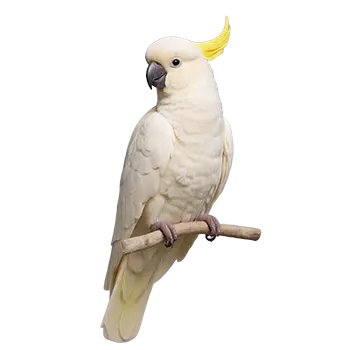

The Sulphur-Crested Cockatoo (Cacatua galerita) is native to a broad geographic range spanning the wooded landscapes and open forests of Australia, New Guinea, and several Indonesian islands. Within Australia, the species occurs across the northern, eastern, and southeastern regions of the continent, from Cape York Peninsula through the temperate forests of Victoria and into Tasmania. Its range extends into the tropical lowlands and montane forests of Papua New Guinea and the islands of the Aru group and parts of the Maluku chain in eastern Indonesia.
Four subspecies have been recognized by ornithologists, each associated with a distinct portion of the species' range. Cacatua galerita galerita occupies eastern and southeastern Australia, while C. g. fitzroyi is found across northern Australia from the Kimberley region to the Gulf of Carpentaria. C. g. triton inhabits New Guinea and surrounding islands, and C. g. eleonora is confined to the Aru Islands of Indonesia. While the subspecies differ in body size and in subtle characteristics of bill and periorbital skin coloring, all share the species' defining feature: a large, expressive crest of recurved yellow feathers that can be raised or lowered to communicate mood and intent.
The species thrives in a wide range of habitats, from tropical and subtropical rainforest edges to open eucalyptus woodland, savanna, and agricultural land. This ecological flexibility has been a key factor in the Sulphur-Crested Cockatoo's long-term success as a species and its ability to coexist, sometimes contentiously, with human settlement. In rural and suburban Australia, large flocks are a familiar and often dramatic sight, their raucous calls and aerial acrobatics a defining element of the local soundscape.
Fossil and subfossil evidence indicates that cockatoos have occupied the Australasian region for millions of years, with the Cacatuidae diverging from other parrot families deep in the evolutionary past. The genus Cacatua itself is thought to have diversified across its current range during periods of climatic and geographic change in the Pleistocene, as shifting sea levels alternately connected and isolated landmasses in the region. This long evolutionary history has given the Sulphur-Crested Cockatoo deep roots in the landscapes it inhabits, roots that are reflected in the cultural traditions of the people who have shared those landscapes for millennia.