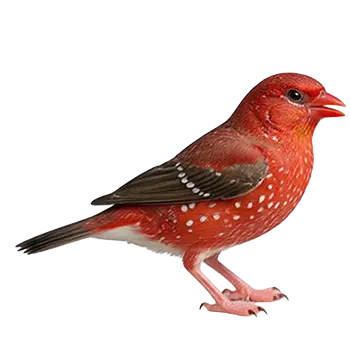

International Wildlife Trade Regulations

The legal framework governing the trade in Strawberry Finches begins at the international level with the Convention on International Trade in Endangered Species of Wild Fauna and Flora, commonly known as CITES. The Strawberry Finch (Amandava amandava) is not currently listed on any CITES appendix, which means that international trade in the species is not subject to the permit requirements and quotas that apply to CITES-listed species. This absence from the CITES appendices reflects the species' classification as Least Concern on the IUCN Red List and its generally stable global population, but it does not mean that trade in the Strawberry Finch is entirely unregulated.

Even without CITES listing, international trade in live birds is subject to a complex web of national and regional regulations that govern import, export, quarantine, and veterinary certification. The European Union's bird trade regulations, for example, impose strict health and quarantine requirements on all live bird imports regardless of CITES status, and the United States enforces similar controls through the Animal and Plant Health Inspection Service within the Department of Agriculture. These regulations exist to prevent the introduction of avian diseases such as avian influenza and Newcastle disease, and compliance is mandatory for any legal shipment of Strawberry Finches across international borders.

The Lacey Act in the United States provides an additional layer of legal protection by making it a federal offense to import, export, sell, or transport any wildlife taken or traded in violation of any foreign, state, or tribal law. This means that even though the Strawberry Finch itself is not specifically named in U.S. endangered species legislation, a bird captured in violation of Indian wildlife law, for instance, cannot legally enter the United States. The Lacey Act thus extends the reach of foreign conservation law into the American legal system, creating a deterrent against the laundering of illegally obtained birds through international trade channels.

Prospective owners and breeders should be aware that the regulatory landscape governing live bird trade is subject to change. Shifts in conservation status, emerging disease concerns, or political developments can prompt the addition of new species to CITES appendices or the imposition of national trade restrictions with relatively little advance notice. Staying informed about current regulations through official government sources and reputable avicultural organizations is essential for anyone involved in the purchase, sale, or international movement of Strawberry Finches.

National & Regional Ownership Laws

The legality of keeping Strawberry Finches as pets varies significantly by country and, in some cases, by state, province, or municipality within a country. In the United States, the Strawberry Finch is generally legal to own as a captive-bred pet in most states, but owners must be aware of state-level regulations that may impose licensing, banding, or record-keeping requirements on the keeping of non-native bird species. Hawaii, for example, has particularly restrictive regulations on the importation of non-native wildlife due to the ecological sensitivity of its island ecosystems, and the Strawberry Finch's status as an established invasive species there adds a further layer of regulatory complexity.

In the European Union, member states implement the EU Wildlife Trade Regulations alongside their own national legislation, creating a patchwork of rules that can differ substantially from one country to the next. In the United Kingdom, which now operates outside the EU framework following Brexit, the keeping of Strawberry Finches is generally permitted, but importation is subject to the health and quarantine requirements administered by the Animal and Plant Health Agency. Germany, Belgium, and the Netherlands, where estrildid finch keeping is particularly popular, each maintain their own frameworks for regulating the keeping and breeding of exotic birds, often including registration or banding requirements.

In the Strawberry Finch's native range, legal protections tend to be more stringent. India's Wildlife Protection Act of 1972, as amended, provides broad protections for native bird species, and the capture, trade, and keeping of wild-caught Strawberry Finches is illegal under Indian law. Enforcement varies widely across the country, and illegal trapping for domestic and international markets persists in some regions despite the legal prohibitions. Similar wildlife protection laws exist in other range states including Nepal, Bangladesh, and Myanmar, though the scope of protection and the effectiveness of enforcement differ considerably.

Australia maintains some of the most restrictive regulations on exotic bird importation and keeping in the world. The importation of Strawberry Finches into Australia is subject to strict biosecurity controls, and the species must be held under conditions that prevent escape and potential establishment of feral populations. Australian state and territory governments may impose additional requirements, including permits, aviary inspections, and compliance with codes of practice for captive bird welfare. Prospective keepers in Australia should consult their state or territory wildlife authority before acquiring Strawberry Finches to ensure full compliance with local regulations.

Breeding & Sale Regulations

The legal requirements governing the breeding and sale of Strawberry Finches vary widely by jurisdiction and can encompass licensing, record-keeping, banding, and facility standards. In many countries, small-scale hobby breeding of non-endangered exotic finches is permitted without specific licensing, but commercial breeding operations may require business permits, veterinary inspection, and compliance with animal welfare codes. The distinction between hobby and commercial breeding is not always clearly defined in law, and keepers who sell birds regularly are advised to research whether their activities cross the threshold into commercial territory under applicable local regulations.

Closed bands, which are solid rings placed on a chick's leg during the first few days of life, serve as proof that a bird was bred in captivity rather than captured from the wild. In some jurisdictions, banding is a legal requirement for the sale or transfer of exotic birds, while in others it is a voluntary practice encouraged by avicultural societies. For Strawberry Finch breeders, banding provides a means of establishing provenance and maintaining breeding records, and many buyers prefer or require banded birds as assurance of captive-bred origin. Avicultural societies in Europe and North America issue bands through their member organizations, and the band codes can be used to trace a bird's breeder and year of hatch.

Sale of Strawberry Finches through pet shops, bird fairs, and online marketplaces is subject to consumer protection laws in addition to wildlife regulations. In the European Union, the sale of live animals through online platforms is regulated by directives that require sellers to provide accurate descriptions, disclose the species' care requirements, and comply with postal and transport regulations for live animals. In the United States, the sale of live birds across state lines may trigger requirements under the Animal Welfare Act if the seller meets the definition of a dealer, and state-level pet sale regulations may impose additional obligations.

Breeders participating in organized avicultural shows and competitions must comply with the rules and standards set by the sponsoring organization, which typically include health certification, banding, and adherence to species-specific show standards. These organizational requirements exist alongside and sometimes exceed governmental regulations, creating a layered compliance landscape that breeders must navigate carefully. Membership in a reputable avicultural society provides access to guidance on these requirements and helps ensure that breeding and sale activities remain within legal and ethical bounds.

Import & Export Requirements

Importing or exporting live Strawberry Finches across national borders involves compliance with a suite of regulatory requirements that address animal health, biosecurity, and customs law. At a minimum, most countries require an official veterinary health certificate issued by an accredited veterinarian in the exporting country, confirming that the birds are free of specified diseases and fit for transport. The specific diseases that must be tested for vary by country, but avian influenza, Newcastle disease, and psittacosis are commonly included in testing protocols for imported cage birds.

Quarantine requirements represent one of the most significant practical considerations for international movement of Strawberry Finches. Many countries mandate a period of post-arrival quarantine during which imported birds are held in approved facilities and monitored for signs of disease before being released to the importer. The duration of quarantine varies, typically ranging from 30 to 45 days, and the costs of quarantine accommodation, veterinary inspection, and testing are borne by the importer. In some jurisdictions, pre-export quarantine in the country of origin may be required or accepted as an alternative to post-arrival quarantine.

Customs documentation for live bird shipments typically includes a commercial invoice or declaration of value, an import permit (where required), the veterinary health certificate, and any applicable CITES or wildlife trade permits. While the Strawberry Finch is not CITES-listed, some countries require import permits for all non-native bird species as part of their biosecurity or invasive species management frameworks. Failure to provide complete and accurate documentation can result in seizure of the birds at the port of entry, fines, and potential criminal prosecution.

The logistics of international bird transport add further complexity. The International Air Transport Association publishes Live Animals Regulations that establish standards for container construction, environmental conditions, and handling procedures for the air transport of live birds. Airlines that accept live animal shipments require compliance with these standards, and specialized animal transport companies often handle the practical aspects of booking, crating, and monitoring shipments. The costs associated with international transport of Strawberry Finches can be substantial, and prospective importers should budget for veterinary fees, quarantine charges, transport costs, and customs duties in addition to the purchase price of the birds themselves.

Invasive Species & Environmental Law

The Strawberry Finch's demonstrated ability to establish feral populations outside its native range places it within the scope of invasive species legislation in several jurisdictions. In regions where the species has already become established or where the climate could support a feral population, environmental laws may restrict or prohibit the importation, keeping, or sale of Strawberry Finches to prevent further introductions. These regulations reflect a growing awareness among policymakers that the release or escape of captive exotic birds can have ecological consequences that are difficult or impossible to reverse.

In the United States, the Lacey Act provides the federal government with authority to restrict the importation and interstate transport of species determined to be injurious to wildlife, agriculture, or human health. While the Strawberry Finch has not been listed as an injurious species under the Lacey Act, its established populations in Hawaii and other tropical territories mean that it is monitored by agencies concerned with invasive species management. Individual states may impose their own restrictions on species known to pose invasion risks, and keepers are advised to check state-level prohibited and restricted species lists before acquiring or transporting Strawberry Finches.

The European Union's Regulation on Invasive Alien Species establishes a framework for preventing, managing, and mitigating the impacts of invasive species across member states. Species placed on the Union list are subject to import bans, keeping restrictions, and management measures. The Strawberry Finch is not currently on the Union list, but its established populations in Spain and Portugal have drawn the attention of European environmental authorities, and future listing remains a possibility if populations expand or evidence of ecological harm emerges.

Australia and New Zealand maintain particularly rigorous biosecurity frameworks that explicitly address the risk of exotic species introductions. In Australia, the Strawberry Finch is already present in captivity and subject to state-level regulations designed to prevent escape and establishment. New Zealand's Hazardous Substances and New Organisms Act imposes strict controls on the importation of any organism not already present in the country, and bringing Strawberry Finches into New Zealand without the required approvals would constitute a criminal offense. These stringent approaches reflect the particular vulnerability of island ecosystems to the impacts of introduced species and the high priority that these governments place on preventing new introductions.

Ethical & Welfare Considerations in Law

Beyond trade and ownership regulations, Strawberry Finch keepers must comply with animal welfare laws that establish minimum standards for the care and housing of captive birds. These laws vary considerably in scope and specificity by jurisdiction, but they generally require that captive animals be provided with adequate food, water, shelter, space, and veterinary care, and that they be protected from unnecessary suffering. Violations of animal welfare laws can result in fines, confiscation of animals, and criminal prosecution, and enforcement agencies may conduct inspections of breeding facilities, pet shops, and private collections.

In the European Union, Directive 98/58/EC on the protection of animals kept for farming purposes has been supplemented by national legislation in many member states that extends welfare protections to companion and aviary birds. Germany's Animal Welfare Act, for example, establishes detailed requirements for the housing and care of captive birds, including minimum cage dimensions, access to natural light, and provisions for social interaction. The Netherlands and Belgium maintain similar frameworks, and compliance is monitored through inspections by veterinary and animal welfare authorities.

The ethical dimensions of Strawberry Finch keeping extend beyond minimum legal requirements into questions of sourcing, breeding practice, and the broader impact of the pet trade on wild populations. While captive breeding has substantially reduced the demand for wild-caught Strawberry Finches in many markets, illegal trapping continues in parts of the species' native range, driven by domestic demand and, to a lesser extent, by international smuggling. Responsible keepers and breeders can contribute to the suppression of the illegal trade by sourcing birds only from verified captive-bred stock, maintaining transparent breeding records, and supporting enforcement efforts through cooperation with wildlife authorities.

Avicultural organizations play an important role in promoting ethical standards that complement legal requirements. Codes of practice published by organizations such as the Avicultural Society, the American Federation of Aviculture, and their international counterparts establish guidelines for responsible breeding, sale, and keeping that often exceed the minimum standards set by law. Adherence to these voluntary codes helps maintain the reputation of the avicultural community, supports the welfare of captive birds, and provides a framework for self-regulation that can preempt the need for more restrictive government intervention.

Always consult a qualified professional before making any health-related decisions. This content is provided for informational reference only and should not replace professional guidance specific to your animal.