
Social Media & Online Communities

The Spectacled Parrotlet's rise in popular awareness owes more to the internet than to any traditional media channel. Beginning in the early 2010s, parrotlet owners discovered that short video clips of their birds performing tricks, bathing in teacups, or riding on shirt collars resonated powerfully with online audiences. The birds' tiny size relative to their outsized confidence makes for inherently compelling visual content, and Spectacled Parrotlets have featured in thousands of viral clips across platforms including Instagram, TikTok, and YouTube. A single video of a parrotlet bobbing its head to music or aggressively defending a favorite toy can accumulate millions of views, introducing the species to audiences that may never have heard the word parrotlet before.

Dedicated parrotlet communities have flourished on social media and forum platforms. Facebook groups devoted to Forpus species routinely attract tens of thousands of members, and Spectacled Parrotlet owners form an active and vocal subset within these spaces. Members share photographs, husbandry tips, mutation breeding results, and behavioral observations, creating a decentralized knowledge base that supplements formal avicultural literature. Reddit communities focused on parrots and small birds also feature regular Spectacled Parrotlet content, and the species' photogenic combination of bright green plumage and expressive facial markings makes it a consistent favorite in upvote-driven environments.

The social media presence of Spectacled Parrotlets has had tangible effects on the species' popularity in the pet trade. Breeders report that inquiries from prospective buyers frequently reference specific videos or social media accounts, and the visual impact of color mutations displayed on Instagram has driven demand for rarer variants. This dynamic has created a feedback loop in which social media visibility increases demand, which in turn encourages more breeders to work with the species, which generates more content. The cycle has accelerated the Spectacled Parrotlet's transition from avicultural niche interest to mainstream companion-bird option.

Online communities have also become important support networks for Spectacled Parrotlet owners navigating health issues, behavioral challenges, or the complexities of multi-bird households. Real-time advice from experienced keepers, accessible through messaging groups and forums, has democratized expertise that was once available only through local bird clubs or specialized veterinarians. While the quality of online advice varies and should not replace professional veterinary care, the collective knowledge housed in these digital communities represents a significant cultural development in the way people relate to and care for small parrots.

Avicultural Publications & Literature

The Spectacled Parrotlet has been a recurring subject in avicultural magazines and breed-specific literature since the species gained traction in international aviculture during the 1980s and 1990s. Publications such as Bird Talk, Parrots magazine, and the AFA Watchbird have featured articles on Spectacled Parrotlet husbandry, breeding genetics, and behavioral profiles, introducing the species to readers already engaged with companion-bird keeping. These articles helped establish the Spectacled Parrotlet's reputation as a hardy, rewarding species suitable for both novice and experienced aviculturists.

Several book-length guides to parrotlet keeping have devoted chapters or substantial sections to the Spectacled Parrotlet. These works typically cover the species alongside its more widely kept relative, the Pacific Parrotlet (Forpus coelestis), drawing comparisons that highlight the Spectacled Parrotlet's slightly larger size, its somewhat bolder temperament, and the distinctive facial markings that give it its common name. The availability of dedicated literature has been an important factor in the species' growing popularity, providing prospective owners with detailed guidance that goes beyond the generalized small-bird care advice available in broader pet-keeping manuals.

Avicultural societies and breed clubs have contributed to the Spectacled Parrotlet's literary footprint through newsletters, studbook reports, and conference proceedings. The International Parrotlet Society, founded in the 1990s, has published extensively on Forpus genetics, and its membership includes breeders who have been instrumental in developing and documenting the color mutations now available in captive Spectacled Parrotlet populations. These publications serve both as practical resources and as historical records of the species' development within aviculture.

In the broader landscape of ornithological literature, the Spectacled Parrotlet appears in regional field guides covering Colombian, Panamanian, and Venezuelan avifauna. Works such as the Hilty and Brown guide to Colombian birds and the more recent Restall, Rodner, and Lentino guide to Venezuelan birds include the species in their parrot sections, providing descriptions, range maps, and habitat notes that serve birdwatchers and researchers alike. While these treatments are necessarily brief, they anchor the Spectacled Parrotlet within the documented biodiversity of its native region and provide a scientific complement to the more personality-driven narratives found in avicultural literature.

Film, Television & Documentary Coverage

The Spectacled Parrotlet has not achieved the kind of individual celebrity status in film or television that larger parrots such as macaws and cockatoos enjoy. No Spectacled Parrotlet has played a named role in a major motion picture, and the species does not appear as a recognizable character in mainstream animated features. This absence reflects a broader pattern in entertainment media, where parrots are typically represented by large, colorful species whose visual impact translates more readily to the screen. The Spectacled Parrotlet's compact size and predominantly green plumage make it less visually dramatic in a medium that favors spectacle.

Wildlife documentaries, however, have occasionally featured Spectacled Parrotlets as part of broader treatments of Neotropical bird diversity. Programs focused on Colombian biodiversity, including segments produced for international nature channels, have captured footage of parrotlet flocks moving through agricultural landscapes and nesting in tree cavities. These appearances, while typically brief, provide viewers with a glimpse of the species in its natural habitat and contribute to a more complete picture of tropical parrot ecology that extends beyond the charismatic macaws and Amazons that dominate most documentary coverage.

YouTube and other video-sharing platforms have partially filled the gap left by traditional media. Independent content creators specializing in aviculture have produced detailed video profiles of the Spectacled Parrotlet, covering topics from basic care and mutation identification to behavioral training and veterinary health. These videos often reach audiences numbering in the hundreds of thousands, functioning as a parallel media ecosystem that operates outside the gatekeeping structures of broadcast television and theatrical film.

The cumulative effect of this media presence, though diffuse, has been meaningful. While no single documentary or viral video has made the Spectacled Parrotlet a household name, the steady accumulation of content across platforms has built a level of public awareness that would have been inconceivable thirty years ago. The species' media trajectory illustrates how the democratization of content creation has allowed niche subjects to reach global audiences without requiring the endorsement of traditional media gatekeepers.

Art, Photography & Visual Culture

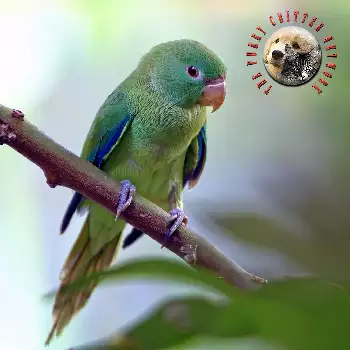
The Spectacled Parrotlet occupies a modest but growing place in avian art and photography. Wildlife photographers working in Colombia have captured striking images of the species in natural settings, and photographs of Spectacled Parrotlets perched on flowering branches or feeding in small flocks have appeared in birding magazines, nature photography competitions, and online galleries. The male's blue eye ring and rump markings provide a subtle but appealing contrast against the bird's predominantly green plumage, making it a rewarding subject for photographers skilled at capturing fine detail in small birds.

In the companion-bird world, Spectacled Parrotlet photography has become a minor art form in its own right. Owners invest in macro lenses and controlled lighting setups to produce portraits that highlight the species' expressive eyes, intricate feather patterns, and the range of color mutations available in captive populations. These images circulate widely on social media and are frequently used in promotional materials by breeders, bird supply companies, and avian veterinary practices. The aesthetic appeal of a well-photographed parrotlet has contributed measurably to the species' commercial marketability.

Traditional avian art has given the Spectacled Parrotlet less attention than it has lavished on larger and more vividly colored parrots. The great parrot painters of the 18th and 19th centuries, including Edward Lear and Jacques Barraband, focused on species whose size and plumage offered more dramatic visual subjects. Contemporary wildlife artists, however, have begun to include parrotlets in collections that celebrate the full diversity of psittacine species, and the Spectacled Parrotlet has appeared in watercolor, acrylic, and digital illustrations published in both avicultural and fine-art contexts.

Colombian visual culture has incorporated parrotlets into folk art, handicrafts, and regional branding in ways that reflect the bird's everyday presence in rural life. Hand-painted ceramics, woven textiles, and carved wooden figures depicting small green parrots are available in markets throughout the coffee-growing regions and Andean valleys where the Spectacled Parrotlet is a common sight. While these representations are rarely species-specific, they draw on the visual vocabulary of the local avifauna and contribute to a cultural landscape in which parrotlets are recognized as emblematic birds of the Colombian countryside.

Breed Clubs, Expos & Community Events

Organized avicultural societies have been instrumental in promoting the Spectacled Parrotlet and establishing standards for its care and breeding in captivity. The International Parrotlet Society, along with regional parrotlet clubs in the United States, Europe, and Australia, provides a structured community for breeders and keepers. These organizations host annual meetings, publish newsletters, and maintain breeder directories that connect prospective owners with reputable sources of healthy, well-socialized birds. Membership in these clubs often serves as a marker of serious engagement with parrotlet aviculture.

Bird expos and avicultural trade shows provide important venues for the Spectacled Parrotlet's public visibility. Events such as the American Federation of Aviculture conference, regional bird marts, and international avicultural expos regularly feature Spectacled Parrotlets among their vendor offerings and educational displays. These events allow prospective buyers to see the species in person, compare color mutations side by side, and speak directly with experienced breeders. For many people, an encounter with a Spectacled Parrotlet at a bird expo is the first step toward ownership.

In Europe, parrotlet societies affiliated with national ornithological federations have played a similar role. German, Dutch, and Belgian avicultural organizations have long histories of breeding and exhibiting parrotlets, and Spectacled Parrotlets appear regularly at European bird shows where they are judged against breed standards that evaluate condition, color, and conformation. The competitive exhibition circuit provides an additional motivation for breeders to maintain high standards of husbandry and genetic management.

Online events and virtual meetups have expanded the reach of parrotlet community activities beyond geographic boundaries. Webinars on parrotlet nutrition, behavioral enrichment, and mutation genetics attract participants from multiple countries, and virtual bird shows conducted through social media platforms have allowed breeders to present their birds to international audiences without the logistical challenges of physical transport. These digital extensions of traditional community events reflect the adaptability of the avicultural community and have helped sustain interest in the Spectacled Parrotlet during periods when in-person gatherings were limited.

Cultural Impact & Future Visibility

The Spectacled Parrotlet's cultural impact is best understood not as a single dramatic moment of recognition but as a gradual accumulation of visibility across multiple channels. The species has not been the subject of a bestselling book, a blockbuster film, or a landmark scientific study comparable to the Alex the African Grey phenomenon. Instead, its cultural presence has been built incrementally through social media content, avicultural literature, community events, and the quiet evangelism of satisfied owners who introduce friends and family to the species one bird at a time.

This pattern of gradual visibility reflects the Spectacled Parrotlet's nature as a species that rewards close attention. Its appeal is not immediately obvious to someone unfamiliar with parrotlets; the bird's small size, green coloration, and relatively quiet voice do not command the instant attention that a scarlet macaw or a sulfur-crested cockatoo can claim. The Spectacled Parrotlet reveals its qualities through interaction and observation, and the media content that has been most successful in promoting the species tends to be content that invites viewers into a sustained relationship with the bird rather than offering a single striking image.

The species' future visibility will likely be shaped by several converging trends. The growing popularity of small companion animals in urban environments, where space and noise constraints make large parrots impractical, positions the Spectacled Parrotlet favorably in a market that values manageability alongside personality. Continued growth in social media content creation, particularly short-form video, provides ongoing opportunities for individual birds to capture public attention. Advances in avian behavioral science may also elevate the profile of parrotlets as subjects of cognitive research, following the trail blazed by studies on larger psittacines.

Whether the Spectacled Parrotlet will achieve the mainstream name recognition enjoyed by a handful of parrot species remains to be seen, but the trajectory is clearly upward. The combination of an engaged and growing owner community, a robust captive breeding infrastructure, and a media landscape that rewards niche content suggests that the species' cultural footprint will continue to expand. For a bird that weighs less than an ounce, the Spectacled Parrotlet has already made a surprisingly substantial impression on the world of companion animals and avian popular culture.

Always consult a qualified professional before making any health-related decisions. This content is provided for informational reference only and should not replace professional guidance specific to your animal.