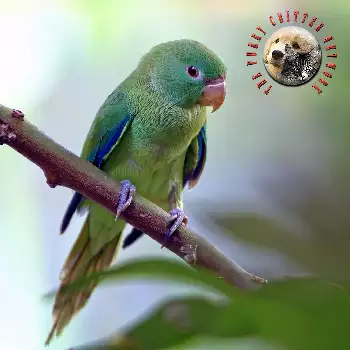

Origins & Natural Habitat

The Spectacled Parrotlet (Forpus conspicillatus) is a small Neotropical parrot native to the northern reaches of South America, where it inhabits a range stretching across Colombia, western Venezuela, and eastern Panama. Within this geography the species occupies a remarkably varied set of habitats, from semi-arid scrublands and dry inter-Andean valleys to the edges of humid lowland forests and cultivated agricultural zones. Its adaptability to disturbed and secondary-growth landscapes has allowed it to persist in regions where larger, more habitat-dependent parrots have declined, though it remains most abundant in Colombia's Magdalena and Cauca River valleys.

The species belongs to the genus Forpus, a group of seven recognized parrotlet species distributed from Mexico through South America. Forpus conspicillatus was first formally described by the French naturalist Frédéric de Lafresnaye in 1848, based on specimens collected in Colombia. The common name derives from the conspicuous ring of bare blue-tinged skin and feathering around the eye in adult males, which gives the bird the appearance of wearing spectacles. Females lack this marking, instead presenting a more uniformly green face, a degree of sexual dimorphism that is subtle by parrot standards but reliable in the field.

Within its native range the Spectacled Parrotlet is predominantly a bird of lowland and mid-elevation zones, generally occurring below 1,600 meters. It favors open country interspersed with scattered trees, forest edges, and agricultural land planted with fruit trees or grain crops. The species is gregarious outside of breeding season, forming flocks of twenty to fifty or more individuals that move through the landscape in search of seeds, small fruits, and blossoms. These flocks often roost communally in dense vegetation, a behavior that provides protection from predators and facilitates the social bonds that characterize parrotlet biology.

Ecologically, the Spectacled Parrotlet fills a niche as a small-bodied, fast-breeding granivore and frugivore capable of exploiting both natural and human-modified landscapes. Its nest sites are typically cavities in trees, fence posts, or even termite mounds, and pairs may reuse productive cavities across multiple breeding seasons. This flexibility in nesting, combined with a diet that includes cultivated grains and garden fruits, has helped the Spectacled Parrotlet maintain relatively stable populations across much of its historical range, even as larger parrots in the same regions have faced severe population pressures.

Early History with Humans

The Spectacled Parrotlet's relationship with humans in South America predates any written record. Indigenous communities throughout Colombia's Andean valleys and Caribbean lowlands have long coexisted with parrotlets, regarding the small green birds as familiar elements of the agricultural landscape. While the larger macaws and Amazons attracted more ceremonial attention, parrotlets were occasionally kept as casual household companions by indigenous and mestizo families, prized for their tameness when hand-raised and their cheerful, chirping vocalizations.

European naturalists first encountered the Spectacled Parrotlet during expeditions to the interior of New Granada, as colonial-era Colombia was then known. Lafresnaye's 1848 description formalized the species in Western taxonomy, but earlier collectors and missionaries had noted small green parrots fitting its description in travel accounts from the 17th and 18th centuries. Unlike the African Grey or the larger Amazons, however, the Spectacled Parrotlet did not immediately enter the European pet trade in significant numbers. Its small size and relatively modest coloration made it less commercially appealing during a period when collectors sought the most spectacular tropical birds for aristocratic aviaries.

The species remained largely a regional companion bird through the 19th and early 20th centuries, kept informally by rural families in Colombia, Panama, and Venezuela. Children in farming communities commonly raised parrotlets found in nests on agricultural land, and tame individuals might spend years perched on shoulders or wandering freely through homes. This informal keeping tradition created a deep cultural familiarity with parrotlets in rural South America, even as the birds remained virtually unknown to aviculturists in North America and Europe.

The Spectacled Parrotlet's entry into international aviculture began in earnest during the latter half of the 20th century, as improved shipping methods and growing interest in small parrot species opened new markets. By the 1970s and 1980s, small numbers of wild-caught Spectacled Parrotlets were being exported to the United States and Europe, where breeders recognized the species' potential as a compact, personable companion bird. This period marked the transition from an obscure regional pet to a species with a nascent but growing international following.

Cultural Symbolism & Folklore

In the rural communities of Colombia's inter-Andean valleys, parrotlets have long been woven into local folklore and everyday speech. Colombian Spanish includes several colloquial expressions referencing periquitos (the diminutive term applied to parrotlets and small parakeets), and the image of a small green parrot perched on a farmer's hand or flitting through a coffee plantation is a familiar cultural motif in the country's Andean and Caribbean regions. While these references typically encompass parrotlets as a group rather than the Spectacled Parrotlet specifically, the species is the most common and recognizable parrotlet across much of Colombia and is the bird most often meant when rural Colombians speak of their local periquitos.

Indigenous traditions in the broader northern Andes sometimes incorporated small parrots into stories about cleverness, companionship, and the bonds between humans and the natural world. The Muisca people of the Colombian highlands, whose civilization flourished before Spanish contact, are known to have kept birds, and archaeological sites in the Boyaca and Cundinamarca departments have yielded ceramic and gold representations of parrots that may include parrotlet-sized species. Though specific identification of these artistic depictions is difficult, they attest to the deep historical presence of parrots in Andean cultural expression.

In Venezuelan llanos communities and Panamanian rural districts where the Spectacled Parrotlet also occurs, the bird carries associations of domesticity and good fortune. A parrotlet nesting in the eaves of a house or in a fence post near a dwelling was sometimes interpreted as a sign of household prosperity. These superstitions, while not universal, reflect the intimate proximity in which parrotlets and humans have lived for generations, occupying the same edges between cultivated fields and remnant forest.

The Spectacled Parrotlet's cultural symbolism has shifted as the bird has entered the international pet trade. In Western avicultural circles, the species has come to represent the idea that meaningful companionship with a parrot does not require a large, loud, or flamboyantly colored bird. This narrative positions parrotlets as intelligent, affectionate alternatives to the macaws and cockatoos that dominate popular perceptions of parrot keeping, and the Spectacled Parrotlet's growing reputation in this role has added a new layer of meaning to a bird that has been a quiet cultural presence in South America for centuries.

Scientific Study & Recognition

Taxonomically, the Spectacled Parrotlet has had a relatively stable scientific history compared to many Neotropical parrots. Since Lafresnaye's original description in 1848, the species has been consistently placed within Forpus, and its three recognized subspecies — F. c. conspicillatus, F. c. metae, and F. c. caucae — reflect geographic variation across its Colombian range. The nominate subspecies occupies the upper Magdalena Valley, metae is found in the eastern Andean foothills and Meta department, and caucae inhabits the Cauca Valley in western Colombia. Subspecific differences are subtle, primarily involving minor variations in the intensity of blue facial and rump markings in males.

Field research on the Spectacled Parrotlet has been limited compared to work on larger and more endangered parrots, a common pattern in ornithology where smaller species receive less funding and attention. Nevertheless, studies conducted in Colombia during the late 20th and early 21st centuries have contributed valuable information about the species' breeding biology, diet, and habitat preferences. Research in the Magdalena Valley documented the parrotlet's use of a wide range of cavity types for nesting and confirmed its preference for semi-open landscapes with access to seeding grasses and fruiting shrubs.

The species' cognitive abilities have received less formal study than those of larger psittacines, but aviculturists and behavioral researchers have noted that Spectacled Parrotlets display problem-solving behaviors, social learning, and individual recognition consistent with the cognitive profiles of other Forpus species. Informal observations from experienced breeders consistently describe the species as curious, bold relative to its size, and capable of learning simple tricks and responding to vocal cues, traits that align with the broader body of parrotlet cognition research.

Conservation assessments by the International Union for Conservation of Nature have classified the Spectacled Parrotlet as a species of Least Concern, reflecting its relatively large range and its tolerance of habitat modification. However, researchers have cautioned that localized population declines driven by trapping for the domestic pet trade and habitat conversion in key valleys warrant continued monitoring. The species' conservation status is a reminder that even common birds can face pressures that, if left unchecked, could alter their long-term population trajectories.

The Species Today

The Spectacled Parrotlet occupies a distinctive position in modern aviculture as one of the most popular parrotlet species kept in captivity worldwide. Captive breeding programs in the United States, Europe, and increasingly in Asia have established self-sustaining populations that supply the companion-bird market with domestically bred individuals, reducing dependence on wild-caught imports. Breeders have developed several color mutations, including blue, lutino, American yellow, and dilute variants, which have expanded the species' appeal among hobbyists while raising questions within the avicultural community about the prioritization of color genetics over behavioral health and natural phenotype preservation.

In its native range the Spectacled Parrotlet remains a common and conspicuous bird. Colombian birdwatchers frequently encounter flocks in agricultural zones, suburban parks, and even urban green spaces in cities like Medellin, Cali, and Bucaramanga. The species' adaptability to human-modified landscapes has made it one of the more resilient parrots in a region where habitat loss has significantly affected many other psittacine species. Local birding guides often use the Spectacled Parrotlet as an accessible introduction to Neotropical parrot diversity for visiting birdwatchers.

Within the companion-bird community, the Spectacled Parrotlet has earned a reputation for a personality that belies its small stature. Keepers describe the species as confident, sometimes feisty, and capable of forming deep bonds with individual humans. Unlike some larger parrots whose vocalizations can present challenges in apartment living, the Spectacled Parrotlet's voice is relatively quiet, making it a practical choice for owners in shared-wall housing. This combination of personality, manageability, and compact size has driven steady growth in the species' popularity over the past two decades.

Avian veterinary care for Spectacled Parrotlets has advanced alongside the species' rising profile. Practitioners specializing in avian medicine have developed protocols addressing the nutritional, reproductive, and behavioral health needs specific to small parrots, and resources for parrotlet owners have expanded considerably through online communities, breed-specific clubs, and published care guides. The Spectacled Parrotlet's trajectory from an obscure regional bird to a recognized and well-supported companion species reflects broader trends in aviculture toward the appreciation of smaller, less demanding parrot species.

Conservation & Legacy

The conservation story of the Spectacled Parrotlet is less dramatic than those of its larger, more endangered relatives, but it carries lessons about the quiet pressures that shape wild parrot populations. While the species is not globally threatened, localized trapping for the domestic pet trade in Colombia and Venezuela has reduced populations in some valleys, and the conversion of native scrubland to intensive agriculture has eliminated habitat in portions of the species' historical range. Conservation biologists have emphasized that Least Concern status should not be mistaken for the absence of risk, particularly for species whose populations are not systematically monitored.

Colombia's growing ecotourism sector has created new economic incentives for the preservation of habitats that support the Spectacled Parrotlet and other native birds. Community-based conservation projects in the Magdalena and Cauca valleys have incorporated parrotlets into birding trail programs, leveraging the species' visibility and approachability to attract visitors. These initiatives align with broader efforts to position Colombia, one of the world's most bird-rich nations, as a premier destination for avian ecotourism, and the Spectacled Parrotlet benefits indirectly from the habitat protections that accompany such programs.

The international avicultural community has also contributed to the species' conservation legacy, though not without controversy. Captive breeding has ensured that demand for companion Spectacled Parrotlets can be met without continued extraction from wild populations, and studbook-like breeding registries maintained by parrotlet societies help preserve genetic diversity within captive lines. Critics, however, have noted that the proliferation of color mutations in captive populations may reduce the long-term genetic fitness of breeding stock and divert attention from the conservation of wild-type birds.

The Spectacled Parrotlet's legacy is one of resilience and adaptability. From the fence posts and fruit orchards of rural Colombia to the aviaries and living rooms of keepers on six continents, this small parrot has demonstrated a capacity to thrive in close proximity to humans without losing the behavioral complexity and social intelligence that define its genus. Its story is a quiet counterpoint to the more urgent conservation narratives surrounding larger parrots, offering a reminder that not all meaningful relationships between humans and birds are born of rarity or spectacle.

Always consult a qualified professional before making any health-related decisions. This content is provided for informational reference only and should not replace professional guidance specific to your animal.