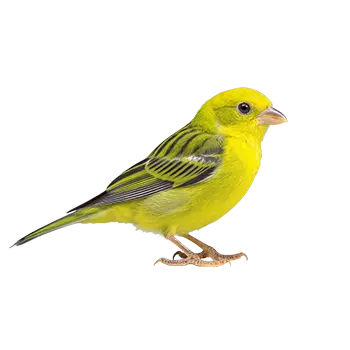

The domestic canary has been a recurring figure in Spanish literature for centuries, and while literary references rarely specify a particular breed, the cultural context in which many of these works were produced places the Timbrado's ancestors at the center of the imagery. Spanish poets of the Romantic and post-Romantic periods frequently invoked the caged songbird as a metaphor for longing, beauty constrained by circumstance, and the tension between nature and domestication. The canary singing from a balcony or courtyard window became a stock image in Andalusian and Castilian verse, evoking the sensory textures of daily life in southern Spain.
In prose, canaries appear in the works of several notable Spanish authors as markers of domesticity, class, and emotional atmosphere. The bird singing in its cage within a modest household often signals simplicity, warmth, and a connection to tradition, while in other contexts it can represent confinement or the suppression of natural vitality. These literary deployments draw on a cultural familiarity with canary keeping that is distinctly Spanish and that the Timbrado breed, as Spain's signature song canary, most directly inherits.
The 20th century saw more explicit attention to the canary breeding tradition in Spanish nonfiction and journalism. As the Timbrado was formalized as a breed in the 1940s and 1950s, newspaper and magazine articles in publications across Spain covered song competitions, profiled prominent breeders, and explored the cultural significance of the tradition. These pieces helped elevate canary breeding from a purely private hobby into a subject of public cultural interest, and they constitute some of the earliest media documentation of the Timbrado as a distinct entity.
Contemporary Spanish authors writing about rural traditions, artisanal crafts, and intangible cultural heritage have continued to reference canary keeping and the Timbrado specifically. Regional histories and ethnographic studies published in Andalusia, Extremadura, and the Canary Islands frequently include chapters or sections on the local canary breeding tradition, treating it as a practice worthy of the same scholarly attention given to other forms of folk culture.