
Origins in the Atlantic Islands

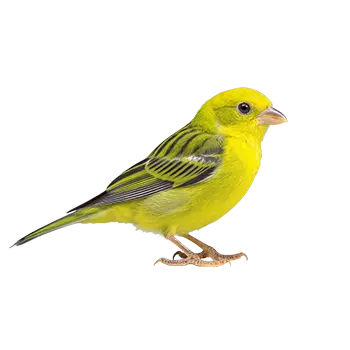
The story of the Spanish Timbrado Canary begins not on the Iberian Peninsula but roughly 1,300 kilometers to the southwest, in the Canary Islands and the broader Macaronesian archipelagos of the eastern Atlantic. The wild Atlantic canary (Serinus canaria) has inhabited these volcanic islands for hundreds of thousands of years, thriving in the laurel forests, scrublands, and cultivated margins of Tenerife, Gran Canaria, La Palma, and the other islands in the chain. These small greenish-brown finches developed a rich, complex song that served territorial and reproductive purposes, and it was this vocal prowess that first drew human attention.

Spanish and Portuguese sailors arriving in the Canary Islands during the 14th and 15th centuries quickly noticed the wild canary's musical abilities. The birds were abundant, relatively easy to trap, and adapted well to caged life, making them attractive trade goods. By the mid-1400s, Spanish colonists had begun exporting canaries to the Iberian mainland and, from there, to the broader European market. The trade was lucrative enough that the Spanish Crown periodically attempted to regulate it, restricting the export of hens to maintain control over the breeding supply.

The wild canary's natural song, while pleasant, was variable and unrefined by the standards that would later develop among European breeders. Individual birds sang with differing degrees of complexity, volume, and tonal quality. What the wild population provided was raw genetic material, a broad palette of vocal tendencies that human selection would eventually shape into distinct breed lines. The Atlantic islands thus served as the biological wellspring from which all domesticated canary breeds, including the Timbrado, ultimately descend.

It is important to recognize that the wild Atlantic canary is not the Spanish Timbrado. Centuries of selective breeding separate the two, and the Timbrado's characteristic metallic song bears only a family resemblance to the wild bird's more naturalistic repertoire. Nevertheless, Spanish breeders have long emphasized the Timbrado's connection to these island ancestors, viewing their breed as the most faithful continuation of the original wild canary's vocal spirit, shaped but not artificially distorted by human intervention.

Early Domestication & the Iberian Breeding Tradition

Once canaries reached mainland Spain in significant numbers during the late 15th and early 16th centuries, a domestic breeding tradition began to take root. Spanish households, monasteries, and marketplaces became centers of canary keeping, and the birds were valued both as household companions and as status symbols. Unlike the German and Belgian breeding programs that would later prioritize specific posture traits or highly controlled roller song, early Spanish breeders tended to favor birds whose singing retained a lively, varied, and spontaneous quality reminiscent of the wild ancestor.

This preference was not immediately codified. For several centuries, canary breeding in Spain was a folk tradition rather than a formal discipline, passed down through families and regional communities. Breeders in Andalusia, Catalonia, Castile, and the Basque Country each developed local preferences and techniques, resulting in a patchwork of loosely related song lines. The common thread was an appreciation for what Spanish fanciers described as canto libre, or free song, a style that allowed the bird to express a wide repertoire of notes, rolls, and flourishes without the rigid constraints imposed by other European breeding schools.

The contrast with the German Harz Roller tradition is instructive. By the 18th century, Harz breeders had developed a highly disciplined approach to song training that involved darkened rooms, tutor birds, and the systematic suppression of notes deemed undesirable. Spanish breeders, by and large, rejected this philosophy. They valued brightness, volume, and metallic resonance over the soft, muffled tones prized in the Roller, and they encouraged their birds to sing with open beaks and full-throated energy. This philosophical divergence would eventually crystallize into the defining characteristics of the Timbrado breed.

By the early 20th century, the informal Spanish song canary tradition had produced birds that were recognizably distinct from other European canary breeds, though no formal standard yet existed. Regional song competitions, often held in conjunction with local festivals or market days, provided a venue for breeders to compare their birds and refine their selection criteria. These gatherings laid the social and organizational groundwork for the formal breed recognition that would come at mid-century.

Formal Recognition & the Birth of the Timbrado Standard

The Spanish Timbrado Canary as a formally recognized breed is a product of the mid-20th century, though its roots reach back much further. The critical period of breed definition began in the 1940s and 1950s, when Spanish aviculturists undertook a concerted effort to distinguish their native song canary from the German Roller and the Belgian Waterslager (Malinois), the two other major European song canary breeds. The goal was to establish a breed standard that codified the qualities Spanish breeders had long valued: a bright, metallic, varied song delivered with energy and clarity.

The name Timbrado itself is derived from the Spanish word timbre, referring to the distinctive tonal quality or resonance of the bird's song. This was a deliberate naming choice that placed the breed's identity squarely in its acoustic character rather than in physical appearance or posture. The breed's architects, working through newly formed Spanish ornithological and canary breeding federations, developed a scoring system that evaluated specific song passages, or tours, each defined by its tonal character, rhythm, and structural complexity.

Official recognition came through the Confederacion Ornitologica Mundial (COM), the international governing body for ornamental bird breeding and exhibition. The Timbrado was accepted as a distinct breed category, and a formal song evaluation protocol was established that judges could apply consistently at competitions. This standardization was a watershed moment, transforming the Timbrado from a regional folk tradition into an internationally recognized breed with a defined identity and competitive framework.

The standardization process was not without internal debate. Some Spanish breeders felt that overly rigid scoring criteria risked pushing the Timbrado toward the same kind of artificial song control that characterized the Roller tradition, potentially undermining the very spontaneity and variety that made the breed distinctive. Others argued that without formal standards, the Timbrado would remain a loose collection of local song lines rather than a coherent breed. This tension between standardization and naturalness has remained a defining feature of Timbrado breeding culture ever since.

The resulting standard struck a compromise. It identified and scored specific desirable tours, such as the timbre metalico, the cascabel, and the floreo, while also penalizing notes borrowed from other breeds or deemed harsh and unmusical. Crucially, it allowed for a broader range of acceptable song variation than the Roller standard, preserving the breed's character as a bird of diverse and spirited vocal expression.

Cultural Significance in Spain

The Spanish Timbrado Canary occupies a unique place in Spanish cultural life, intertwined with regional identity, artisanal tradition, and a broader national appreciation for music and performance. In many Spanish cities and towns, canary song competitions are deeply rooted community events, drawing participants and spectators from across generations. These contests, known as concursos de canto, are often organized by local ornithological societies and may be held in civic centers, cultural halls, or outdoor pavilions, lending them a festive, communal atmosphere.

The breed's cultural resonance extends beyond the competition circuit. In parts of Andalusia and Extremadura, keeping song canaries has historically been associated with working-class and rural life, a modest but cherished pastime that offered beauty and companionship without great expense. The canary's song brightening a courtyard or workshop became a familiar element of daily life in many Spanish communities, and the tradition of passing breeding knowledge from father to son, or between neighbors and friends, reinforced the bird's role as a living cultural artifact.

The Timbrado also carries symbolic weight as a distinctly Spanish creation. In a canary breeding world long dominated by German and Belgian traditions, the formal recognition of the Timbrado represented an assertion of Spanish avicultural identity. Breeders and enthusiasts have often framed the breed's bright, assertive song as a reflection of Spanish temperament and aesthetic values, contrasting it with what they perceive as the more restrained sensibilities of northern European canary culture.

This cultural significance has been reinforced by institutional support. Spanish ornithological federations, such as the Federacion Ornitologica Cultural Deportiva Espanola (FOCDE), have actively promoted the Timbrado as a national heritage breed, organizing exhibitions, publishing educational materials, and advocating for the breed's recognition in international competition. Municipal governments in some regions have supported canary breeding clubs as part of broader cultural preservation efforts, recognizing the tradition's value as intangible cultural heritage.

International Spread & Global Breeding Community

While the Spanish Timbrado Canary was developed and standardized in Spain, its appeal has extended well beyond the Iberian Peninsula over the past several decades. Beginning in the 1970s and 1980s, Timbrado breeding stock was exported to other European countries, Latin America, and eventually to North America, Asia, and parts of Africa. The breed found particularly enthusiastic reception in countries with historical and linguistic ties to Spain, including Mexico, Argentina, Colombia, and the Philippines, where established canary keeping traditions provided a ready audience for a new song breed.

In Latin America, the Timbrado's arrival coincided with a growing interest in competitive canary song judging, and the breed quickly became a favorite among serious fanciers. National and regional ornithological federations in countries like Brazil, Venezuela, and Chile adopted COM-aligned standards and began hosting Timbrado-specific competitions, creating a competitive infrastructure that mirrored the Spanish model. The result was a transatlantic breeding community connected by shared standards, judge exchanges, and the periodic importation of fresh bloodlines from Spanish breeders.

The breed's penetration into North American aviculture has been more gradual. The American canary fancy has historically been oriented toward type breeds, such as the Gloster and the Yorkshire, and the Roller has long dominated the song canary niche. Nevertheless, a dedicated community of Timbrado breeders has emerged in the United States and Canada, supported by specialty clubs and online forums that facilitate knowledge exchange and the sale or trade of breeding stock.

The international spread of the Timbrado has introduced new challenges and opportunities. Breeders working outside Spain must contend with different climates, available food sources, and local avicultural traditions, all of which can influence breeding outcomes and song development. At the same time, the global community has enriched the breed by bringing diverse perspectives to questions of song evaluation, training methodology, and genetic management. International competitions sanctioned by COM and its affiliated federations now feature Timbrado entries from dozens of countries, reflecting the breed's transformation from a regional Spanish specialty into a genuinely global song canary.

The Breed Today & Ongoing Debates

The Spanish Timbrado Canary in the 2020s is a breed defined by both continuity and active debate. At its core, the Timbrado remains what its mid-century founders intended: a song canary that prizes metallic brightness, tonal variety, and spirited delivery. Competitions continue to be the primary engine of breed development, with judges evaluating birds against a standardized scorecard that assesses individual song passages for quality, duration, and proper execution. The competitive circuit in Spain remains the largest and most prestigious, but significant events are now held across Europe and Latin America as well.

One of the most consequential ongoing debates within the Timbrado community concerns the question of classical versus discontinuous song lines. The classical Timbrado, sometimes called the Timbrado Clasico, adheres closely to the original breed vision: a bird whose song is varied, spontaneous, and delivered in a continuous, flowing manner. The discontinuous line, by contrast, has been selectively bred for more pronounced pauses between song phrases, which some breeders and judges argue allows for greater clarity and individual note evaluation. Proponents of each line hold strong opinions, and the debate has occasionally generated friction within national and international federations.

Genetic management is another area of growing attention. As with many domesticated animal breeds, the Timbrado gene pool is finite, and breeders must balance the pursuit of song excellence with the maintenance of overall health, vigor, and genetic diversity. Inbreeding depression, manifested as reduced fertility, weakened immune function, or diminished vitality, is a recognized risk in tightly line-bred populations. Responsible breeders employ outcrossing strategies and maintain detailed pedigree records to manage these risks, though practices vary widely across the global community.

The Timbrado's future will likely be shaped by the same forces that have defined its past: the tension between standardization and spontaneity, the balance between competitive excellence and biological health, and the interplay between Spanish tradition and international influence. What remains constant is the breed's central appeal, a small, unassuming bird whose voice fills a room with a song that is unmistakably its own, carrying forward a tradition that stretches back to the wild canaries of the Atlantic islands and the sunlit courtyards of old Spain.

Always consult a qualified professional before making any health-related decisions. This content is provided for informational reference only and should not replace professional guidance specific to your animal.