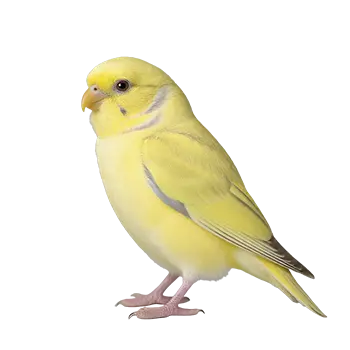

The Roller Canary traces its lineage to the domestic canary (Serinus canaria domestica), which itself descends from the wild Atlantic canary native to the Canary Islands, Madeira, and the Azores. Spanish and Portuguese sailors first brought wild canaries to mainland Europe in the late 15th and early 16th centuries, where the birds' pleasant song quickly captured the attention of nobility and merchants alike. By the mid-1500s, canary breeding had taken root across southern Europe, but it was in the mountainous interior of central Germany that the breed that would become the Roller Canary began to take shape.
The Harz Mountain region of present-day Lower Saxony and Saxony-Anhalt became the epicenter of canary culture beginning in the 17th century. Mining communities in towns such as Sankt Andreasberg, Clausthal, and Lautenthal adopted canary keeping on a large scale, initially as a practical measure. Miners carried canaries underground as living air-quality monitors, relying on the birds' sensitivity to toxic gases like carbon monoxide and methane to provide an early warning system. The close daily contact between miners and their birds fostered a deep familiarity with canary vocalizations and a keen ear for distinguishing superior singers from ordinary ones.
Over generations, Harz Mountain breeders began to select deliberately for vocal quality rather than appearance. Unlike breeders in other parts of Europe who prioritized color mutations or body type, the Harz tradition valued soft, melodious, internally rolling song passages delivered with a closed or nearly closed beak. This preference for subdued, complex song over loud, open-beaked singing became the defining characteristic of the breed and set it apart from every other canary variety in existence.
The geographic isolation of the Harz region and the tight-knit nature of its mining communities contributed to the rapid refinement of the Roller Canary's song. Breeding knowledge was passed from father to son, and individual families developed proprietary lines that were closely guarded. By the early 18th century, the Harz Roller, as it came to be known, had achieved a reputation that extended well beyond the mountains, drawing buyers from across the German-speaking world and eventually from far more distant markets.