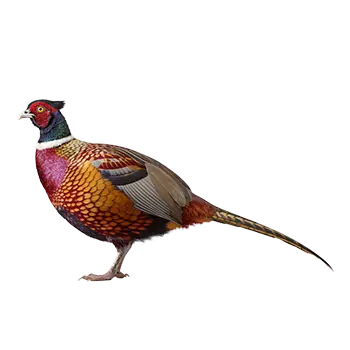

Moving live Ring-necked Pheasants from one location to another, whether across town to a hunting preserve or across state lines to a breeding facility, requires careful attention to the birds' physical safety, stress management, and legal requirements. Pheasants are high-strung birds that react to confinement and handling with vigorous escape attempts, and improper transport is a leading cause of injury, feather damage, and mortality in captive pheasant operations. The foundation of safe pheasant transport is appropriate containment: purpose-built game bird shipping crates with solid floors, adequate ventilation on the sides and top, and low ceiling height to prevent the birds from launching upward and striking the roof with enough force to cause head and neck injuries.
Crate dimensions should be scaled to the number of birds being transported and the duration of the journey. For short-distance moves of a few hours or less, adult pheasants can be housed at a density of roughly one bird per two square feet of floor space, though lower densities are preferable for reducing stress and aggression. For longer journeys, additional space, access to water, and protection from temperature extremes become critical. Pheasants are vulnerable to heat stress at ambient temperatures above approximately 85 degrees Fahrenheit, and summer transport should be planned for the coolest parts of the day, with vehicles equipped to provide airflow through the crate compartment.
The use of visual barriers within transport crates can significantly reduce stress-related injuries. Pheasants that cannot see their surroundings are generally calmer than those exposed to visual stimuli during transit. Some operators drape lightweight, breathable covers over crates during transport, while others use crates with opaque side panels and ventilation provided by perforated upper sections. Anti-pecking devices such as peepers or blinders, commonly used in commercial pheasant rearing, may also be employed during transport to reduce the aggression that confined birds sometimes direct at one another.
Before any transport, operators should verify that they hold the required permits and health certifications for the jurisdictions involved. As detailed in the legal considerations section of this guide, interstate and international movement of live pheasants typically requires a certificate of veterinary inspection and may require additional import permits from the receiving state or country. Planning the documentation well in advance of the transport date is essential, as veterinary appointments, laboratory test turnaround times, and permit processing can each introduce delays that make last-minute compliance difficult.