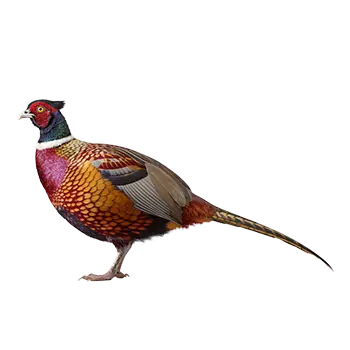

The Ring-necked Pheasant is classified as a game bird in virtually every jurisdiction where it has been established, and its harvest is governed by a detailed framework of hunting regulations that vary by state, province, and country. In the United States, pheasant hunting seasons are set by individual state wildlife agencies, typically opening in mid to late October and extending through December or January depending on the state. Season dates, bag limits, and possession limits are established annually based on population surveys, habitat assessments, and harvest data from previous years, and they can differ substantially from one state to the next even within the same region.
Most states require hunters to hold a valid state hunting license and, in many cases, a separate upland game bird stamp or permit. Some states also require the completion of a hunter education course before a license can be issued, particularly for first-time hunters or those under a specified age. Non-resident hunting licenses are available in all major pheasant hunting states, though fees for non-residents are typically several times higher than those charged to residents, reflecting the economic value of pheasant hunting tourism and the desire to manage hunting pressure.
Regulations governing the methods of take for pheasants are generally consistent across jurisdictions but contain important details that hunters must understand. Shotguns are the standard legal firearm for pheasant hunting, and most states specify maximum magazine capacity, typically limiting semi-automatic and pump-action shotguns to three shells. The use of rifles for pheasant hunting is prohibited in most states due to safety concerns in agricultural landscapes. Falconry is legal for pheasant hunting in many jurisdictions but requires separate permitting and is governed by additional regulations at both the state and federal level.
Special regulations apply in many areas to protect hen pheasants, which are critical to population sustainability. Several states enforce roosters-only harvest rules during all or part of the season, and hunters are expected to distinguish between male and female birds before shooting. Penalties for harvesting hen pheasants where prohibited can include fines, license revocation, and in some jurisdictions, confiscation of equipment. These sex-selective harvest regulations reflect decades of research demonstrating that rooster-only seasons can sustain or even increase pheasant populations by preserving the breeding hen base.