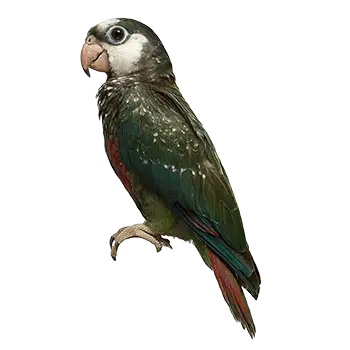

Origins & Natural Range

The White-capped Pionus (Pionus senilis) is native to the tropical and subtropical regions of Central America and southern Mexico. Its natural range stretches from the lowlands of eastern Mexico through Guatemala, Belize, Honduras, El Salvador, Nicaragua, Costa Rica, and into western Panama. Within this broad corridor, the species favors humid evergreen forests, forest edges, and partially cleared agricultural land where fruiting trees remain abundant.

European naturalists first encountered the White-capped Pionus during colonial-era expeditions into the forests of Central America. The species was formally described by the ornithologist Johann Baptist von Spix in 1824, and its scientific name, senilis, references the white feathering on the crown that resembles the hair of an elderly person. Early specimen collections were shipped to European museums, where the bird quietly took its place among the growing catalog of New World parrots.

For centuries before European contact, indigenous communities in Mesoamerica were well acquainted with the White-capped Pionus and other Pionus species. Parrots of various kinds appeared in the daily life and trade networks of Maya and Aztec civilizations, valued for their feathers and sometimes kept as companions. While the White-capped Pionus did not achieve the iconic status of the scarlet macaw or the quetzal, it was nonetheless part of the rich tapestry of avian life woven into the cultural identity of the region.

The species thrives at elevations ranging from sea level up to approximately 6,000 feet, adapting to a variety of forested environments. It feeds primarily on fruits, seeds, flowers, and occasionally cultivated crops, foraging in small flocks that move through the canopy with a quiet, steady demeanor that distinguishes Pionus parrots from their more boisterous relatives.

Early Roles in Human Culture

Throughout much of its history, the White-capped Pionus lived alongside human communities in Central America without drawing the intense commercial attention that larger parrot species attracted. Indigenous peoples valued parrots broadly for their colorful plumage, which played ceremonial and decorative roles. Feathers from various parrot species were incorporated into headdresses, clothing, and ritual objects, serving as symbols of status and spiritual connection to the natural world.

As European colonists established settlements across Central America, local parrot species became curiosities for travelers and traders. Smaller parrots like the White-capped Pionus were occasionally captured and kept as household pets by settlers, though the international pet trade would not develop in earnest until much later. The bird's relatively calm temperament likely made it a manageable companion even in these early settings, though documentation from this period is sparse.

In rural farming communities, White-capped Pionus flocks were sometimes regarded as minor crop pests, particularly where they fed on fruit orchards and cornfields at the edges of forest clearings. This relationship between farmers and wild parrots remains a dynamic part of daily life in many parts of Central America today. Despite occasional conflicts over crops, the species has generally coexisted with human agriculture without the intense persecution faced by larger, more destructive parrot species.

The bird's quiet nature and modest appearance meant it was often overlooked in the historical record compared to showier species like macaws and Amazons. This relative obscurity may have actually served as a form of protection, sparing it from the heavy trapping pressure that depleted populations of more sought-after parrots during the colonial era.

Cultural Symbolism & Regional Identity

In the broader cultural landscape of Central America, parrots occupy a special place as symbols of tropical abundance and biodiversity. The White-capped Pionus, while not as prominently featured as the resplendent quetzal or the scarlet macaw, contributes to the regional identity tied to lush forested landscapes. In countries like Costa Rica and Honduras, the presence of parrot species in local ecosystems is a source of national pride and a draw for ecotourism.

The species' distinctive white-capped crown has inspired local common names in Spanish-speaking regions that reference its elder-like appearance. This anthropomorphic association lends the bird an air of quiet wisdom in local folklore, where parrots in general are often depicted as clever, talkative, and sometimes mischievous figures. While specific legends centered on the White-capped Pionus are not widely documented, the bird fits comfortably within the broader tradition of parrots as culturally significant animals.

In modern conservation culture, the White-capped Pionus has become a symbol of the importance of preserving mid-elevation forest habitats. Conservation organizations in Costa Rica and Guatemala frequently highlight native parrot species in educational campaigns, using them as ambassadors for broader habitat protection efforts. The White-capped Pionus, with its approachable size and gentle demeanor, serves well in this role.

Artists and craftspeople throughout Central America continue to incorporate parrot imagery into textiles, pottery, and wood carvings. While these depictions often represent parrots in a generalized way rather than specific species, the White-capped Pionus is among the birds that inspire such creative work, contributing to a living cultural tradition that bridges natural history and human artistry.

Aviculture & the Rise of the Pet Trade

The White-capped Pionus entered the international pet trade in significant numbers during the mid-twentieth century, as advances in transportation and growing interest in exotic pets made it feasible to import tropical birds to North America and Europe. During the 1970s and 1980s, wild-caught Pionus parrots were exported from Central American countries in considerable volumes, often alongside larger and more expensive parrot species.

Aviculturists quickly recognized the White-capped Pionus as an excellent companion bird. Its calm temperament, manageable size, and lower noise level compared to Amazons and macaws made it particularly appealing to apartment dwellers and first-time parrot owners. Breeders began establishing captive breeding programs, which gradually reduced the demand for wild-caught individuals and helped ensure a sustainable supply of hand-raised birds.

The passage of the Wild Bird Conservation Act in the United States in 1992 marked a turning point for the White-capped Pionus and many other parrot species. By severely restricting the importation of wild-caught parrots, the legislation accelerated the shift toward domestic breeding programs. Dedicated Pionus breeders developed expertise in the species' reproductive requirements, dietary needs, and socialization protocols, producing well-adjusted birds that adapted readily to life in human households.

Today, the White-capped Pionus is considered one of the more readily available Pionus species in aviculture, though it remains less common than mainstream parrot species like cockatiels and budgerigars. Breeding communities in the United States, Canada, and Europe continue to refine their husbandry practices, sharing knowledge through avicultural societies and online forums dedicated to Pionus enthusiasts.

The Species Today

In the wild, the White-capped Pionus maintains stable populations across much of its historical range, though habitat loss due to deforestation and agricultural expansion poses ongoing challenges. The International Union for Conservation of Nature (IUCN) currently lists the species as Least Concern, reflecting its broad distribution and relatively healthy population numbers. However, localized declines have been observed in areas where forest fragmentation is most severe.

Ecotourism has become an increasingly important factor in the conservation of the White-capped Pionus and its habitat. Birdwatching tours in Costa Rica, Guatemala, and Honduras frequently include Pionus species on their target lists, generating economic incentives for local communities to protect forested areas. This model of conservation through sustainable tourism has proven effective in preserving critical habitat corridors throughout Central America.

In aviculture, the White-capped Pionus continues to gain appreciation among experienced bird keepers who value its steady personality and relatively easy care requirements. Online communities and social media groups dedicated to Pionus parrots have expanded significantly, creating networks of owners and breeders who share advice, celebrate their birds, and advocate for responsible ownership practices.

Research into Pionus parrot behavior, nutrition, and veterinary care has advanced considerably in recent years, benefiting both captive and wild populations. Studies on wild flocks have improved understanding of the species' ecological requirements, while veterinary research has enhanced the ability of avian practitioners to diagnose and treat health conditions common in Pionus parrots. This growing body of knowledge supports the long-term well-being of the species across all settings.

Notable Individuals & Community Contributions

While the White-capped Pionus has not produced the kind of individually famous birds associated with some larger parrot species, the breed has benefited enormously from the dedication of individual breeders, aviculturists, and conservationists who have championed the species. Pioneering breeders in the United States during the 1980s and 1990s developed many of the captive breeding techniques still in use today, establishing the White-capped Pionus as a viable and rewarding avicultural species.

Several avicultural societies and parrot clubs have played important roles in promoting the White-capped Pionus and educating the public about its qualities as a companion bird. Organizations like the American Federation of Aviculture and various regional bird clubs have featured Pionus species in their publications and events, helping to raise the profile of these often-overlooked parrots among potential owners.

In the conservation arena, field researchers working in Central American forests have contributed valuable data on the White-capped Pionus' ecology, nesting habits, and population dynamics. These studies, often conducted under challenging conditions in remote forested areas, have informed conservation strategies and land management decisions that benefit the species and its habitat.

Online communities have also produced notable advocates for the White-capped Pionus. Bloggers, forum moderators, and social media personalities who share their experiences with Pionus parrots have helped demystify the species for prospective owners, offering practical guidance on everything from diet and enrichment to managing the species' characteristic wheezing respiratory response when stressed. These community contributions, while less formal than published research, have played a meaningful role in improving the lives of White-capped Pionus parrots in homes around the world.

Always consult a qualified professional before making any health-related decisions. This content is provided for informational reference only and should not replace professional guidance specific to your animal.