
Film & Television

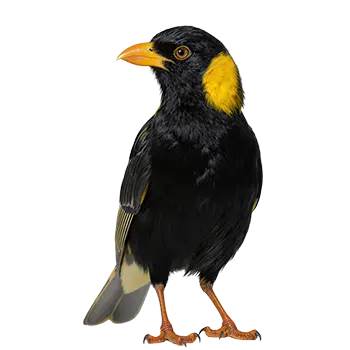
The mynah bird has made memorable appearances in film and television, typically cast in roles that showcase its remarkable ability to mimic human speech. Animated productions have been particularly fond of the mynah as a character, using the bird's real-world vocal talents as a springboard for comedic and dramatic storytelling. The mynah's glossy black plumage and bright yellow accents also make it a visually striking subject for animators and filmmakers alike.

In live-action film and television, mynahs have appeared in a range of productions set in tropical or South Asian locales, where their presence adds atmospheric authenticity. Nature documentaries have frequently featured the Hill Mynah, with segments dedicated to demonstrating the bird's mimicry abilities often becoming standout moments in wildlife programming. These documentary appearances have done much to raise public awareness of the species and its unique cognitive abilities.

Television variety shows and talk shows have periodically featured trained mynah birds as novelty guests, a tradition that dates back to the early days of broadcast television. These appearances typically involve the bird demonstrating its vocabulary, often to the delight and astonishment of studio audiences. While such segments have become less common in contemporary programming, they established the mynah bird's reputation as an entertainer in the public imagination.

The mynah has also appeared in several Bollywood and South Asian film productions, where the bird often serves as a symbolic element tied to themes of communication, truth-telling, or the revelation of secrets. In these cinematic traditions, the talking mynah functions as a narrative device that bridges the gap between human characters, its speech serving as a catalyst for plot developments.

Literature & Art

In literature, the mynah bird has served as both subject and symbol for centuries. Classical Sanskrit and Tamil poetry reference the bird's vocal abilities, often drawing parallels between the mynah's learned speech and the human capacity for eloquence. In these traditions, the mynah represents the ideal student, one who listens attentively and reproduces what it has learned with precision and beauty.

Western literature discovered the mynah bird largely through colonial encounters with South and Southeast Asia. Travel writers and naturalists of the 18th and 19th centuries devoted extensive passages to describing the mynah's mimicry, and these accounts helped fuel European demand for the birds as exotic pets. The mynah appears in several notable works of English-language fiction set in India and the broader Asian tropics, typically as an atmospheric detail that signals the exotic setting.

In visual art, the mynah bird has been a popular subject in Asian painting traditions for centuries. Chinese brush paintings frequently depict mynahs in naturalistic settings, perched on branches of plum blossoms or bamboo. These paintings follow established artistic conventions that associate the mynah with specific seasons, emotions, and philosophical concepts. Indian miniature paintings also feature mynahs, often depicted alongside courtly figures in garden settings that emphasize the bird's role as a companion of the elite.

Contemporary literature and art continue to draw on the mynah bird as a powerful metaphor. Modern poets and novelists have used the mynah's mimicry as a symbol for themes ranging from cultural assimilation and the immigrant experience to the nature of language and identity. The bird's ability to reproduce human speech without understanding its meaning raises philosophical questions that writers and artists find endlessly productive.

Internet & Social Media

The internet age has given the mynah bird a new platform for fame, and the species has thrived in the attention economy of social media. Videos of mynah birds speaking, singing, and mimicking household sounds routinely accumulate millions of views on platforms like YouTube, TikTok, and Instagram. The appeal is universal and immediate: a small, glossy black bird that speaks in a clear, distinctly human-sounding voice is inherently shareable content.

Several individual mynah birds have achieved significant social media followings, with dedicated accounts that document their daily lives and expanding vocabularies. These accounts often feature the birds engaging in what appears to be conversational interaction with their owners, responding to questions and comments with contextually appropriate phrases. While the extent to which mynahs truly understand what they are saying remains a subject of scientific debate, the impression of genuine communication is compelling enough to captivate audiences.

The mynah bird community has also flourished online through dedicated forums, Facebook groups, and subreddits where owners exchange care advice, troubleshoot health issues, and celebrate their birds' latest vocal achievements. These communities have been particularly valuable for mynah owners in regions where avian veterinarians and specialized pet stores are scarce, providing a lifeline of practical knowledge and emotional support.

Viral mynah bird content has had a measurable impact on demand for the species as a pet, a phenomenon that mirrors similar trends with other animals featured in popular online content. Conservation organizations and responsible breeders have responded by using social media platforms to educate potential owners about the significant commitment involved in mynah care, working to ensure that viral fame does not lead to impulse purchases and subsequent abandonment.

Advertising & Branding

The mynah bird's association with speech and communication has made it a natural fit for advertising and branding, particularly in industries related to language, technology, and telecommunications. Companies in South and Southeast Asia have frequently used the mynah as a mascot or brand symbol, leveraging the bird's cultural familiarity and positive associations with intelligence and eloquence.

In India, the mynah has appeared in advertising campaigns for products ranging from language learning programs to mobile phone services, its mimicry serving as a visual metaphor for clear communication and connectivity. The bird's widespread recognition across Indian culture makes it an effective branding element that resonates with diverse audiences. Several Indian companies have incorporated stylized mynah imagery into their logos and brand identities.

Beyond Asia, the mynah bird has been used in advertising contexts where the emphasis is on exoticism, intelligence, or the novelty of animal speech. Pet food companies and avian product manufacturers have featured mynahs in marketing materials aimed at bird enthusiasts, positioning the species as a premium pet that demands high-quality care products. These campaigns often highlight the mynah's dietary needs and social requirements as selling points for specialized products.

The mynah bird's branding potential extends into the digital age, where the concept of a bird that can learn and reproduce speech has obvious parallels with voice recognition technology, artificial intelligence, and smart home devices. While no major technology company has yet adopted the mynah as its primary brand symbol, the conceptual alignment between the bird's abilities and modern voice technology has not gone unnoticed by marketers and brand strategists.

The Popularity Effect

Media exposure has had a profound and complex effect on the popularity of mynah birds as pets. Each wave of media attention, whether through a hit film, a viral video, or a television appearance, has historically been followed by a surge in demand for mynah birds from the pet trade. This pattern of media-driven demand has created both opportunities and challenges for the species and for the broader aviculture community.

The positive side of media-driven popularity is increased awareness and appreciation of the mynah bird's remarkable cognitive abilities. Public fascination with talking mynahs has generated support for conservation efforts, funded research into avian intelligence, and expanded the community of knowledgeable, dedicated mynah owners. Media attention has also helped shift perceptions of birds as pets, challenging the outdated notion that avian companions are less interactive or engaging than mammals.

However, the popularity effect also carries significant risks. Spikes in demand can strain captive breeding programs, drive up prices, and create market incentives for illegal wild capture. Potential owners attracted by viral videos may underestimate the decades-long commitment and specialized care that mynah birds require, leading to birds being surrendered to rescues or rehomed when the reality of ownership sets in. The mynah's need for social interaction, a varied diet, and spacious housing makes it a poor choice for casual or unprepared pet owners.

Responsible media coverage and content creation have become important tools in mitigating the negative aspects of the popularity effect. Increasingly, content creators who feature mynah birds include information about proper care, the species' conservation status, and the ethical considerations of bird ownership. This trend toward responsible representation reflects a maturing relationship between media, commerce, and animal welfare in the digital age.

Always consult a qualified professional before making any health-related decisions. This content is provided for informational reference only and should not replace professional guidance specific to your animal.