
Film & Television

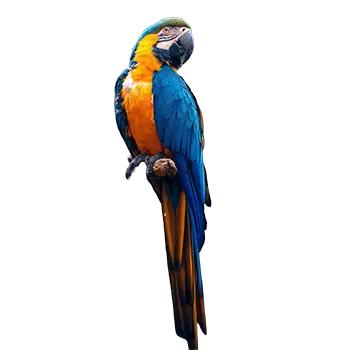
The Blue and Gold Macaw has enjoyed a long and colorful presence on screen, frequently appearing in films and television programs as a visual shorthand for tropical settings, pirate lore, and exotic adventure. Their striking plumage photographs brilliantly, and trained macaws have been featured in both live-action and documentary productions for decades. The species has appeared alongside actors in adventure films, comedies, and family features, often cast as the quintessential "pirate's parrot" or as a companion animal in stories set in Latin America or the Caribbean.

Animated productions have further cemented the Blue and Gold Macaw's place in popular cinema. The species served as clear visual inspiration for characters in animated films set in the rainforests of South America, bringing mainstream attention to macaw conservation and the beauty of neotropical ecosystems. While animated portrayals sometimes simplify or anthropomorphize macaw behavior, they have introduced millions of children and families to the species and generated public interest in the real-world challenges facing wild parrot populations.

Television nature documentaries have showcased the Blue and Gold Macaw in its natural habitat, with footage of massive clay-lick gatherings in the Peruvian Amazon becoming some of the most iconic sequences in wildlife filmmaking. Programs produced by major broadcasters have followed researchers into the field to document nesting behavior, social dynamics, and the threats posed by habitat loss. These documentary appearances lend the species a scientific credibility that complements its more fanciful fictional portrayals.

The cumulative effect of decades of screen appearances has made the Blue and Gold Macaw one of the most visually recognizable bird species in the world. Audiences who may never visit a tropical forest can identify the species on sight, a level of public awareness that conservation advocates have leveraged to build support for habitat protection and anti-trafficking initiatives.

Literature & Art

Macaws have appeared in Western literature since the earliest European accounts of the New World, and the Blue and Gold Macaw's vivid coloring has made it a favorite subject for natural history illustrators and fine artists alike. Sixteenth- and seventeenth-century naturalists included macaw illustrations in their compendiums of exotic fauna, and the tradition continued through the great age of ornithological illustration in the eighteenth and nineteenth centuries. Artists such as Edward Lear, celebrated both as a painter of parrots and as a nonsense poet, produced detailed and affectionate portraits of macaws that remain widely reproduced today.

In fiction, macaws often appear as symbols of the exotic, the untamed, or the mysterious. Adventure novels set in the tropics have long used macaw sightings as atmospheric detail, signaling to readers that characters have entered a wild and unfamiliar landscape. Children's literature has embraced the macaw as a character archetype — the clever, talkative bird who provides comic relief, delivers messages, or serves as a loyal companion to human protagonists.

Contemporary wildlife art continues to feature the Blue and Gold Macaw prominently. The species is a popular subject for painters working in realism and hyperrealism, and macaw imagery appears frequently in the portfolios of artists who specialize in avian and tropical themes. Wildlife art auctions and exhibitions often include Blue and Gold Macaw pieces, and the proceeds sometimes benefit conservation organizations working to protect the species in the wild.

Beyond traditional fine art, the macaw's image has permeated graphic design, fashion illustration, and textile art. Its bold color combination of cobalt blue and warm gold lends itself to striking visual compositions, and designers in fields ranging from interior decor to apparel have drawn on macaw motifs to evoke energy, warmth, and a connection to the natural world.

Internet & Social Media

The rise of social media has transformed the Blue and Gold Macaw from a niche avicultural interest into a mainstream internet personality. Individual macaws with dedicated accounts on platforms such as Instagram, TikTok, and YouTube have amassed followings in the hundreds of thousands, with videos of their vocalizations, tricks, and daily routines generating millions of views. The species' natural charisma, combined with its capacity for vocal mimicry and playful behavior, makes it exceptionally well suited to short-form video content.

Online parrot communities have flourished alongside this social media presence, creating spaces where macaw owners exchange husbandry advice, share behavioral insights, and coordinate rescue and rehoming efforts. Forums, Facebook groups, and dedicated parrot websites serve as hubs for both experienced aviculturists and first-time bird owners, democratizing access to knowledge that was once confined to specialist publications and breeder networks.

The viral appeal of macaw content has had both positive and negative consequences. On the positive side, popular macaw accounts frequently include educational messaging about proper diet, enrichment, and the realities of living with a large parrot, helping to set realistic expectations for prospective owners. Conservation organizations have partnered with prominent macaw accounts to amplify fundraising campaigns and awareness initiatives, reaching audiences that traditional media channels might not.

However, the glamorization of macaw ownership on social media has also contributed to impulse purchases by people unprepared for the decades-long commitment and significant expense involved. Rescue organizations report that social media trends can drive spikes in macaw acquisitions followed by corresponding increases in surrenders. Responsible content creators in the parrot community increasingly include disclaimers about the challenges of macaw ownership alongside their entertaining content, working to balance virality with accountability.

Advertising & Branding

The Blue and Gold Macaw's visual impact has made it a natural choice for advertisers and brand designers seeking to evoke tropical warmth, vivid color, and a sense of adventure. The species has appeared in print and television advertisements for products ranging from vacation resorts and airlines to beverages, clothing lines, and home furnishings. Its instantly recognizable silhouette and brilliant plumage communicate exoticism and luxury without requiring any explanatory text, making it an efficient visual tool in commercial communication.

Tourism boards in several Latin American countries have adopted macaw imagery in their international marketing campaigns, positioning the bird as an ambassador for the biodiversity and natural beauty of their regions. Ecotourism operators in Peru, Brazil, Ecuador, and Bolivia prominently feature Blue and Gold Macaws in brochures, websites, and social media advertising, recognizing that the species is among the most sought-after sightings for birdwatching tourists. The famous clay licks of Tambopata and Manu in southeastern Peru, where dozens of macaws gather to consume mineral-rich soil, have become iconic tourism destinations partly through the power of this imagery.

In corporate branding, macaw motifs appear in logos, mascots, and product packaging for companies that wish to project qualities of vibrancy, intelligence, and tropical origin. Several regional airlines and hospitality brands have incorporated stylized macaw designs into their visual identities, leveraging the bird's cultural familiarity and positive associations.

The use of macaw imagery in advertising raises questions about the relationship between commercial representation and conservation reality. While brand exposure keeps the species in the public eye, critics note that glamorous portrayals can obscure the challenges facing wild macaw populations. Some companies have responded by linking their macaw branding to conservation partnerships, donating a portion of proceeds to habitat protection or anti-trafficking efforts and thereby aligning commercial interests with species preservation.

The Popularity Effect

The Blue and Gold Macaw's pervasive presence in media and popular culture has created what conservationists sometimes call the "popularity paradox." The species' fame generates genuine public affection and awareness, which can be channeled into support for conservation programs and responsible ownership practices. At the same time, that fame drives demand for captive birds, fueling both legitimate breeding operations and, in some regions, illegal capture from the wild.

Studies of the relationship between media exposure and pet acquisition have shown that appearances in popular films can produce measurable spikes in demand for featured species. When animated films featuring macaw-like characters achieved box-office success, parrot rescue organizations and aviculturists reported increased inquiries from prospective buyers, many of whom had little understanding of the species' needs. The resulting cycle of acquisition and surrender places strain on rescue networks and raises welfare concerns for individual birds.

Efforts to harness the popularity effect for positive outcomes have taken several forms. Conservation organizations produce educational content timed to coincide with major media releases, using the heightened public interest as an opportunity to communicate conservation messages. Zoos and aviaries offer macaw-focused programming that channels visitor enthusiasm into learning experiences about habitat loss, trade regulation, and the responsibilities of parrot ownership.

The long-term trajectory of the Blue and Gold Macaw's cultural presence will likely depend on how effectively the conservation and avicultural communities can shape the narrative around the species. If media portrayals continue to be paired with accessible, accurate information about the realities of macaw biology and ownership, the popularity effect can be tilted toward net benefit. Without that counterbalance, the species' fame risks becoming a driver of the very pressures that threaten its wild populations.

Always consult a qualified professional before making any health-related decisions. This content is provided for informational reference only and should not replace professional guidance specific to your animal.