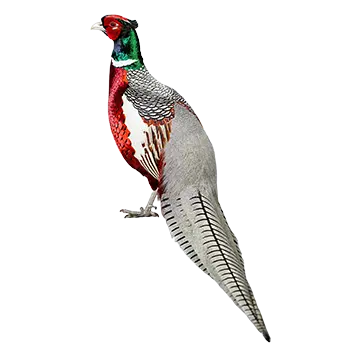

The legal landscape governing the Lady Amherst's Pheasant begins at the international level with the Convention on International Trade in Endangered Species of Wild Fauna and Flora (CITES), the multilateral treaty that regulates cross-border movement of wildlife and wildlife products. The Lady Amherst's Pheasant is not currently listed on any CITES appendix, which means that international trade in the species is not subject to the permit and documentation requirements that apply to CITES-listed birds. This absence from the appendices reflects the species' IUCN classification as Least Concern and the existence of large, self-sustaining captive populations that supply the avicultural market without significant pressure on wild stocks.
The lack of a CITES listing does not, however, mean that international trade in Lady Amherst's Pheasants is entirely unregulated. Individual countries may impose their own restrictions on the import and export of non-CITES-listed wildlife, and bilateral trade agreements between nations can introduce additional requirements. China, as the species' country of origin, maintains domestic wildlife protection laws that restrict the capture and commercial exploitation of native fauna, and these laws apply to C. amherstiae regardless of its international trade status. Myanmar similarly regulates the harvest of wild birds within its borders under national environmental legislation.
For keepers and breeders operating in countries where the Lady Amherst's Pheasant is an established captive species, the practical significance of the CITES framework is largely indirect. Breeders should be aware that CITES status can change if new data indicates declining wild populations or increasing trade pressure, and a future listing could impose permit requirements retroactively on existing captive stocks. Staying informed about CITES Conference of the Parties decisions and tracking any proposals to list Chrysolophus species is a prudent practice for anyone involved in breeding or selling these birds commercially.
It is also worth noting that feather products derived from the Lady Amherst's Pheasant — including tail plumes, cape hackles, and prepared skins — fall under the same international trade framework as live birds. While captive-bred feather products are generally unrestricted, customs authorities in some jurisdictions may require documentation proving captive-bred origin to distinguish legally sourced feathers from those potentially harvested from wild-caught birds.