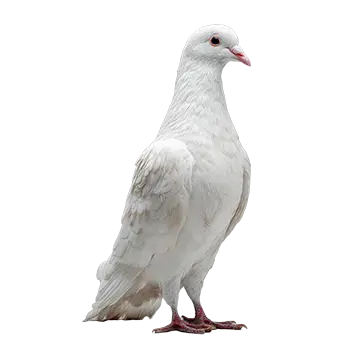

Domestic pigeons have a surprisingly deep filmography, and the King Pigeon's large, photogenic white form has made it a frequent stand-in whenever a script calls for a dove or ceremonial bird. In live-action productions, trained white King Pigeons are regularly used by animal wranglers for wedding scenes, dramatic releases, and spiritual imagery because their calm temperament makes them easier to handle on set than smaller, flightier species. Viewers rarely realize the bird framed against a sunset in a romantic comedy is the same breed raised for squab production, but the King's steady disposition and striking appearance have made it a workhorse of avian film work for decades.
Animated and CGI productions have drawn heavily on the domestic pigeon as a character archetype. Dreamworks' Valiant, released in 2005, cast a cast of pigeons as World War II messenger heroes, drawing on the well-documented military history of homing pigeons and introducing the species to a younger audience as protagonists rather than background scenery. Illumination's Spies in Disguise featured a pigeon transformation as a central plot device, playing the species' ubiquity in urban environments for both comedy and espionage narrative. While neither film depicts King Pigeons specifically, the domestic pigeon's screen presence in these productions has contributed to a broader cultural rehabilitation of the species' image.
Television has given pigeons recurring roles in both scripted and unscripted formats. Mike Tyson Mysteries, the Adult Swim animated series, featured a talking pigeon as a main character, mining humor from the contrast between the bird's mundane species and its sophisticated personality. The reality series Taking on Tyson documented the former boxer's lifelong passion for pigeon keeping, exposing mainstream audiences to the competitive pigeon racing world and the deep emotional bonds that keepers form with their birds. Nature documentaries produced by the BBC and PBS have dedicated segments to the cognitive abilities and social structures of domestic and feral pigeons, often using close-up footage of large-bodied breeds like the King to illustrate anatomical features.
The cumulative effect of these screen appearances has been a gradual normalization of pigeons as interesting, individual animals rather than anonymous urban fixtures. Each time a King Pigeon or its domestic relatives appear in a film or series, whether as a named character or a beautiful prop, audiences receive a small corrective to the pest stereotype that has long dominated public perception. The entertainment industry's appetite for animal content shows no sign of declining, and the pigeon's combination of visual appeal, trainability, and cultural resonance ensures that it will continue to land roles.