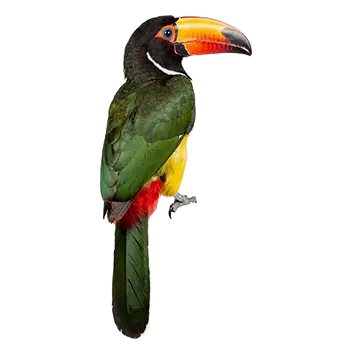

The Green Aracari has appeared in numerous wildlife documentaries focused on the biodiversity of South American rainforests, though it rarely receives the starring role afforded to its larger and more immediately recognizable relative, the Toco Toucan. In broad-scope nature series covering Amazonian and Guiana Shield ecosystems, the Green Aracari typically features in segments highlighting the diversity of frugivorous birds or the ecological complexity of tropical canopy life. Its communal roosting behavior, in which several individuals squeeze into a single tree cavity for the night, has provided particularly compelling footage for filmmakers seeking to illustrate cooperative social behaviors among birds.
Television programs dedicated to exotic pet keeping and aviculture have given the Green Aracari more focused screen time. As interest in softbill species has grown among bird enthusiasts, a number of specialty programs and web series have profiled the Green Aracari as an example of a toucan species that can thrive in a domestic setting when properly cared for. These segments typically emphasize the bird's playful personality, its dietary requirements, and the distinctive experience of sharing a home with a toucan rather than the more commonly kept parrots.
Regional broadcasters in Guyana, Suriname, and Brazil have also featured the Green Aracari in programming related to local wildlife and environmental conservation. In Guyana, where the species is particularly abundant, television features on the country's biodiversity frequently include footage of Green Aracaris foraging in fruiting trees or calling from the forest edge. These regional productions play an important role in building local pride in the country's natural heritage and fostering public support for habitat protection.
The overall trajectory of the Green Aracari's presence in documentary media reflects a broader trend in wildlife filmmaking: a gradual shift from focusing exclusively on large, charismatic species toward a more inclusive portrayal of ecological communities and the less celebrated species that sustain them. As filmmaking technology has become more accessible and audiences have developed a deeper appetite for ecological storytelling, smaller and less familiar birds like the Green Aracari have found a growing place on screen.