
Preparing Golden Pheasants for Transport

Proper preparation is the foundation of safe Golden Pheasant transport, and it begins well before the bird enters a crate. Golden Pheasants are ground-dwelling birds with a strong startle response, and their long tails and elaborate plumage make them more vulnerable to physical damage during transit than many other avian species. Keepers planning to move birds should begin conditioning them to the transport crate several days in advance by placing the crate in or near the aviary and allowing the birds to investigate it voluntarily. This familiarization period reduces stress on the day of travel and makes loading significantly easier.

The physical condition of the bird should be assessed before any journey. Birds that are molting, underweight, ill, or recovering from injury should not be transported unless the journey is medically necessary, such as a trip to an avian veterinarian. Healthy birds should be offered food and water up to the point of loading, and keepers should ensure that the bird is well hydrated before departure. Withholding food for a brief period before loading, typically one to two hours, can reduce the risk of regurgitation or soiling during transit without causing nutritional stress.

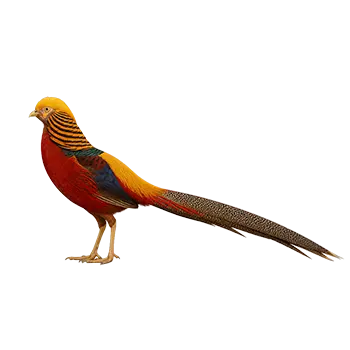
For male Golden Pheasants, the long tail is a primary concern during transport preparation. The tail feathers, which can exceed two feet in length, are fragile and easily bent, broken, or frayed by contact with crate walls and floors. Keepers transporting show-quality males or breeding stock should take particular care to select a crate that accommodates the full length of the tail without compression. Some experienced transporters wrap the tail loosely in a breathable sleeve or light cloth to protect the feathers during the journey, removing the wrapping immediately upon arrival.

Documentation should be assembled and organized before the day of transport. Depending on the destination and the purpose of the journey, keepers may need health certificates issued by a licensed veterinarian, state or federal transport permits, proof of negative disease testing, and receipts or pedigree records. Having these documents readily accessible can prevent delays at checkpoints, shows, or receiving facilities. For interstate transport in the United States, a Certificate of Veterinary Inspection is commonly required and must be obtained within a specified window before the date of travel.

Crate & Container Specifications

The transport crate is the single most important piece of equipment for moving Golden Pheasants safely, and selecting the right crate requires attention to the species' specific physical characteristics and behavioral tendencies. Golden Pheasants are powerful flushers that can launch themselves vertically with considerable force when startled, and a crate with a hard ceiling poses a serious risk of head and neck injury. The ideal transport crate for Golden Pheasants has a padded or soft top, typically made from canvas, mesh, or foam-covered material, that absorbs the impact of upward flight without injuring the bird.

Crate dimensions should provide enough room for the bird to stand, turn around, and settle into a resting position without cramping, but should not be so spacious that the bird can build momentum for repeated flight attempts. For a single adult male Golden Pheasant with a full tail, a crate approximately 24 to 30 inches long, 12 to 16 inches wide, and 12 to 14 inches high generally provides an appropriate balance of space and containment. The floor should be covered with a non-slip substrate such as rubber matting, shredded paper, or clean straw, which provides traction and absorbs moisture.

Ventilation is critical and must be adequate on all sides of the crate without creating direct drafts that could chill the bird. Ventilation holes or mesh panels should be positioned to allow airflow at the bird's level, and the crate should be oriented during transport so that ventilation openings are not blocked by adjacent luggage, cargo, or vehicle surfaces. In warm weather, additional ventilation may be necessary, and the crate should never be left in a sealed vehicle or in direct sunlight, even for brief periods.

For air transport, crates must comply with the International Air Transport Association's Live Animals Regulations, which specify construction materials, dimensions, ventilation standards, labeling requirements, and handling instructions for live bird shipments. IATA-compliant crates are typically rigid-walled containers with secure latching mechanisms, absorbent bedding, and prominently displayed orientation labels indicating the correct upright position. Airlines may impose additional requirements beyond the IATA baseline, and shippers should confirm the specific carrier's policies well in advance of the planned travel date.

Road Transport Best Practices

Road transport is the most common method of moving Golden Pheasants and, when conducted properly, the least stressful for the birds. Short trips by car or truck, such as those between a home aviary and a veterinary clinic, show venue, or buyer's location, are routine events in the avicultural calendar, and most Golden Pheasants tolerate them well if the fundamental principles of containment, temperature control, and minimal disturbance are observed.

The vehicle interior should be maintained at a comfortable, stable temperature throughout the journey. Golden Pheasants are hardy birds with good cold tolerance, but they are sensitive to overheating, and the interior of a closed vehicle can reach dangerous temperatures rapidly in warm weather. Air conditioning or open windows should be used to keep the temperature within a range of approximately 50 to 75 degrees Fahrenheit. In cold weather, the vehicle's heating system should be set to a moderate level, and the crate should be positioned away from direct heat vents to prevent localized overheating.

Driving style has a direct impact on the bird's comfort and safety during road transport. Smooth, steady driving with gentle acceleration, braking, and cornering minimizes the shifting and jostling that can stress a crated bird and increase the risk of injury. The crate should be secured to prevent sliding, either by wedging it into a confined space such as a vehicle footwell or cargo area or by strapping it to the vehicle floor or seat. Loose crates that shift during turns or stops can tip over, collide with other objects, or expose the bird to sudden impacts.

For longer road journeys, periodic rest stops should be planned to check the bird's condition, offer water, and ensure that the crate environment remains appropriate. Most Golden Pheasants will not eat during transport, but a shallow dish of water secured within the crate or offered during stops can help maintain hydration. The crate should be opened only in a secure, enclosed space such as a closed vehicle interior or a room with sealed doors and windows, as a startled Golden Pheasant that escapes outdoors will be extremely difficult to recapture and may be lost permanently.

Air & Long-Distance Shipping

Air transport is sometimes necessary for Golden Pheasants being shipped over long distances, particularly for sales between breeders in different regions or countries. Shipping live birds by air is a specialized process governed by the IATA Live Animals Regulations, airline-specific policies, and national import and export requirements. Keepers who plan to ship Golden Pheasants by air should begin the planning process well in advance, as the documentation, crate preparation, and booking logistics involved are substantially more complex than those for road transport.

Most commercial airlines that accept live animal cargo restrict shipments to specific routes, seasons, and temperature ranges. Extreme heat or cold can make air transport dangerous or impossible, and many carriers impose temperature embargoes that prevent live bird shipments during summer and winter months. Shippers must monitor weather forecasts along the entire route, including layover cities, to ensure that conditions remain within acceptable parameters. Golden Pheasants, while relatively cold-hardy, are vulnerable to the rapid temperature swings that can occur on airport tarmacs and in cargo holds, and the shipper bears responsibility for assessing these risks.

The crate used for air transport must be IATA-compliant and labeled with the shipper's and recipient's contact information, the species name, the number of birds enclosed, handling instructions, and orientation arrows. Water containers must be attached inside the crate and designed to prevent spillage during handling and flight. Food is generally not required for shipments lasting less than 24 hours, but absorbent bedding should be provided to manage moisture. The exterior of the crate should bear a clear "Live Animals" label on at least two sides, and fragile or perishable cargo tags may also be required by the carrier.

Alternatives to commercial airline cargo include dedicated animal transport services and ground-based courier networks that specialize in live bird shipments. In the United States, the U.S. Postal Service permits the shipment of live poultry and game birds under specific conditions, and several private courier companies offer door-to-door bird transport services with climate-controlled vehicles and experienced handlers. These services may be more expensive than standard air cargo but offer greater control over handling conditions and reduce the risk of delays, misrouting, or exposure to adverse temperatures during transit.

Seasonal & Show Transport Considerations

The timing of Golden Pheasant transport requires careful consideration of seasonal factors that affect both the bird's physical condition and the regulatory environment. Spring and fall are generally considered the optimal seasons for moving Golden Pheasants, as moderate temperatures reduce the risk of heat stress or cold exposure during transit. Summer shipments, particularly in southern climates, carry elevated heat risks that can be life-threatening, and many experienced shippers avoid moving birds during the hottest months altogether. Winter transport is feasible in temperate regions but may be complicated by extreme cold, ice, and the reduced availability of airline cargo services during temperature embargoes.

The avicultural show circuit represents one of the most common contexts for Golden Pheasant transport. Birds destined for exhibition must arrive in peak physical condition, with clean, undamaged plumage and a calm demeanor that allows judges to evaluate them properly. Show birds should be transported in crates that protect the plumage from soiling and abrasion, and keepers should allow time upon arrival for the birds to settle, preen, and recover from the stress of travel before being placed in show cages. Experienced exhibitors often arrive at show venues the evening before judging to give their birds a full night to acclimate.

The molting cycle is a critical factor in transport timing for male Golden Pheasants. Males undergo a complete molt annually, typically beginning in late spring or early summer, during which they shed their ornamental plumage and grow replacement feathers over a period of several weeks. Transporting a bird during active molt is inadvisable for several reasons. The growing feathers, known as pin feathers or blood feathers, are fragile and richly supplied with blood vessels, making them vulnerable to damage and bleeding. A molting bird is also under physiological stress and may be less able to cope with the additional stress of travel.

Biosecurity considerations also vary by season. Avian influenza risk tends to peak during the fall and winter months when migratory waterfowl are on the move, and regulatory agencies may impose heightened restrictions on the movement of captive birds during these periods. Keepers planning to transport Golden Pheasants during high-risk seasons should check with their state or national veterinary authority for any temporary movement restrictions, testing requirements, or enhanced documentation obligations that may be in effect.

Post-Transport Care & Quarantine

The care provided to Golden Pheasants immediately after transport is as important as the preparation and handling during the journey itself. Upon arrival, the bird should be transferred from the transport crate to a quiet, secure enclosure where it can recover from the stress of travel without being disturbed by other birds, pets, or human activity. This recovery space should offer shelter, fresh water, and a familiar substrate, and the bird should be allowed to settle for several hours before being offered food. Most Golden Pheasants will begin eating and drinking within a few hours of arrival, but some individuals may take longer, particularly after extended or stressful journeys.

Quarantine is a fundamental practice that should be observed whenever a Golden Pheasant arrives at a new location, whether it is a newly purchased bird joining an existing collection, a returning show bird, or a bird received from another breeder. The quarantine period, typically lasting a minimum of 30 days, serves to identify any infectious diseases the bird may be carrying before it comes into contact with the resident flock. During quarantine, the bird should be housed in a separate enclosure at a distance from other birds, ideally with separate equipment, feeding utensils, and footwear or clothing for the caretaker to minimize the risk of cross-contamination.

Monitoring the bird's health and behavior during the post-transport period is essential. Signs of transport-related stress or illness may include lethargy, refusal to eat or drink, abnormal droppings, nasal discharge, labored breathing, or feather damage. Any of these symptoms should prompt a consultation with an avian veterinarian, particularly if they persist beyond the first 24 to 48 hours. Newly arrived birds should also be examined for external parasites such as mites and lice, which can be transmitted between birds at shows, during handling, or through shared transport equipment.

The integration of a newly arrived Golden Pheasant into an existing flock requires patience and careful management even after the quarantine period has ended. Pheasants can be territorial, and introducing a new bird directly into an established group can provoke aggression and stress for both the newcomer and the residents. A gradual introduction, in which the new bird is housed in an adjacent enclosure where it can see and be seen by the existing flock without direct physical contact, allows social hierarchies to begin forming before the birds share a common space. This approach reduces the risk of injury and helps ensure a smoother transition for all birds involved.

Always consult a qualified professional before making any health-related decisions. This content is provided for informational reference only and should not replace professional guidance specific to your animal.