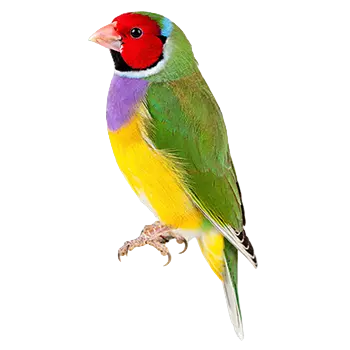

The Gouldian Finch (Erythrura gouldiae) is native to the tropical savanna woodlands of northern Australia, where it was first encountered by European naturalists in the mid-nineteenth century. British ornithologist and artist John Gould described the species in 1844, naming it the Lady Gouldian Finch in honor of his wife, Elizabeth Gould, who was herself a talented illustrator of birds. The discovery captivated the scientific community of the era, as few birds exhibited such a dramatic and varied palette of plumage colors.
Indigenous Australians had long known the Gouldian Finch and considered it part of the rich tapestry of birdlife across the northern tropical regions. Aboriginal peoples observed its seasonal movements and its close association with grassland habitats during the wet and dry seasons. European exploration of northern Australia in the 1800s brought the bird to international attention, and specimens were soon shipped to museums and aviaries throughout Europe.
Gould's original illustrations of the species, published in his monumental work on Australian birds, set a standard for ornithological art that endures to this day. The vivid detail of those early plates introduced the Gouldian Finch to audiences far beyond Australia and helped ignite a lasting fascination with the species among bird enthusiasts worldwide.
The Gouldian Finch's natural range spans parts of the Kimberley region of Western Australia, the Top End of the Northern Territory, and portions of northern Queensland. These remote and sparsely populated areas meant that for decades after its formal description, much about the bird's ecology and behavior remained poorly understood by Western science.