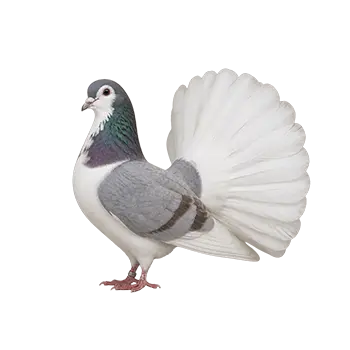

Domestic Pigeon Ownership & Classification

The legal status of the Fantail Pigeon, like that of all domestic pigeon breeds, is shaped by its classification as a domesticated variety of the rock dove (Columba livia domestica). In most jurisdictions, domestic pigeons are not considered wildlife and are therefore not subject to the wildlife protection statutes that govern native bird species. This classification generally means that pigeon keepers are not required to hold hunting licenses, wildlife permits, or the specialized endorsements needed to keep raptors, parrots, or other protected birds. However, the distinction between domestic and wild pigeons is not always clear-cut in regulatory language, and keepers should be aware that some local ordinances may apply broad definitions that inadvertently encompass fancy pigeon breeds.

In the United States, the federal Migratory Bird Treaty Act does not cover domestic pigeons, which means that ownership, breeding, and sale of Fantails are not regulated at the federal level under that statute. State-level regulations vary but generally treat domestic pigeons as livestock or companion animals rather than wildlife. Some states have specific statutes addressing pigeon keeping, often dating to an era when racing and messenger pigeons were more common, while others simply fold pigeons into broader animal husbandry or pet ownership frameworks. Understanding the classification that applies in a given state is an essential first step for any prospective Fantail keeper.

In the European Union, domestic pigeons are similarly excluded from the protections afforded to wild bird species under the Birds Directive. However, member states retain authority over domestic animal regulation, and the specific legal treatment of pigeon keeping varies from country to country. In the United Kingdom, domestic pigeons are classified as captive birds under the Wildlife and Countryside Act, which imposes certain welfare obligations but does not restrict ownership for private individuals. Across continental Europe, national and regional regulations may impose registration requirements, flock size limits, or biosecurity obligations that apply to all domestic poultry and pigeon keepers.

In many parts of Asia, Africa, and the Middle East, where pigeon keeping has deep cultural roots, the legal framework may be less formalized. In countries like India, Pakistan, and Egypt, pigeon keeping is a traditional practice that predates modern animal regulation, and enforcement of any applicable rules tends to be minimal in areas where the hobby is culturally embedded. Nevertheless, urbanization and changing municipal governance structures are gradually introducing new regulatory considerations even in these traditionally pigeon-friendly regions.

Zoning, Housing & Municipal Ordinances

For many Fantail Pigeon keepers, the most directly relevant legal considerations involve local zoning and municipal ordinances rather than state or national law. Cities, counties, and townships in many countries maintain their own animal-keeping regulations that can restrict or condition the right to keep pigeons within residential areas. These rules vary enormously from one jurisdiction to another, and a practice that is entirely unrestricted in one municipality may require a permit, flock-size cap, or specific loft construction standards just a few miles away.

Common provisions in municipal pigeon-keeping ordinances include limits on the number of birds that may be housed on a residential property, setback requirements that dictate how far a loft must be situated from neighboring dwellings, and sanitation standards governing waste management and pest control. Some municipalities require keepers to obtain a permit or license before establishing a loft, while others impose no specific permit requirement but subject pigeon keeping to general nuisance regulations. In areas governed by homeowners' associations, additional covenants may restrict or prohibit the keeping of any livestock or poultry, and pigeons are frequently swept into these categories regardless of their ornamental purpose.

Nuisance complaints represent one of the most common legal flashpoints for pigeon keepers. Noise, droppings, feathers, and the presence of free-flying birds can generate friction with neighbors, and municipalities may respond to complaints by invoking general nuisance statutes or imposing conditions on the keeper's operations. Fantail Pigeons, because they are typically kept as confined exhibition or ornamental birds rather than free-flying breeds, tend to generate fewer nuisance issues than racing or feral pigeons. However, the distinction between Fantails and feral pigeons is not always appreciated by neighbors or code enforcement officers, making clear communication and good loft management important components of legal compliance.

Prospective Fantail keepers are strongly advised to research local regulations before acquiring birds or constructing a loft. Contacting the local planning or zoning department, reviewing municipal code online, and consulting with established pigeon fanciers in the area are all practical steps that can prevent costly surprises. In jurisdictions where pigeon keeping is restricted, organized fancier groups have occasionally succeeded in advocating for regulatory changes or variances that accommodate responsible hobbyists.

Exhibition Standards & Show Regulations

Competitive exhibition is central to the Fantail Pigeon fancy, and the show circuit operates within a framework of rules and standards set by national and international pigeon organizations. In the United States, the National Pigeon Association serves as the governing body for pigeon shows, establishing judging standards, sanctioning events, and maintaining breed classifications. The American Fantail Club, a specialty affiliate, works within this framework to promote the Fantail breed specifically, publishing detailed standards of perfection and organizing breed-specific judging at sanctioned shows.

Show regulations govern a wide range of practical and ethical concerns beyond breed standards. Biosecurity protocols, which have become increasingly prominent in the wake of avian influenza outbreaks and other poultry disease events, may require exhibitors to provide health certificates, submit to veterinary inspections, or demonstrate compliance with vaccination or testing programs. These requirements vary by event and by jurisdiction, and exhibitors are responsible for understanding and meeting the conditions of each show they enter.

Banding and identification requirements are another regulatory dimension of the exhibition world. Most pigeon organizations require that show birds carry a seamless leg band issued by the governing body, which identifies the bird's year of hatch and breeder. These bands serve as proof of domestic breeding, help prevent the exhibition of wild-caught or misrepresented birds, and facilitate record-keeping for pedigree and ownership purposes. Attempting to exhibit an unbanded bird or a bird carrying a band from an unrecognized organization typically results in disqualification.

International exhibitions introduce additional layers of complexity. Shows that attract entries from multiple countries may require compliance with the regulations of both the host country and the exhibitor's home country, including import and export permits, quarantine requirements, and disease testing. The Federation Colombophile Internationale and other international bodies work to harmonize standards and facilitate cross-border participation, but exhibitors contemplating international competition should budget additional time and expense for regulatory compliance.

Import, Export & Quarantine Controls

The international movement of Fantail Pigeons is regulated by a complex web of import, export, and quarantine controls that reflect each country's approach to biosecurity, disease prevention, and trade in live animals. These regulations can vary significantly in their specifics, and they are subject to change in response to disease outbreaks, shifts in government policy, or updates to international animal health agreements. Any fancier contemplating the importation or exportation of Fantails should begin the process well in advance and be prepared for procedural complexity.

In the United States, the importation of live pigeons is regulated by the U.S. Department of Agriculture's Animal and Plant Health Inspection Service (APHIS). Importers must obtain an import permit, ensure that birds meet health testing requirements (which may include testing for avian influenza and Newcastle disease), and arrange for the birds to be held in a USDA-approved quarantine facility for a specified period upon arrival. The quarantine period allows veterinary authorities to monitor the birds for signs of disease before they are released to the importer. Costs associated with quarantine, including facility fees and veterinary inspections, are borne by the importer.

The European Union applies its own set of import controls for live birds entering from non-EU countries. These controls are governed by EU animal health law and are implemented by the veterinary authorities of the member state through which the birds enter. Requirements typically include a health certificate issued by the competent authority of the exporting country, compliance with specific disease testing protocols, and, in some cases, post-arrival quarantine. Within the EU, movement of domestic pigeons between member states is generally less burdensome but still requires an intra-community trade certificate confirming the birds' health status.

Countries in Asia, the Middle East, and the Southern Hemisphere maintain their own import and quarantine regimes, many of which have become more stringent in recent years in response to the global spread of highly pathogenic avian influenza. Australia and New Zealand, for example, impose some of the strictest biosecurity controls in the world, and the importation of live pigeons into these countries is either prohibited outright or subject to extremely rigorous quarantine protocols. Fanciers seeking to move birds across international borders should consult the relevant national veterinary authority and, when possible, work with a licensed customs broker or animal transport specialist experienced in the movement of live birds.

Animal Welfare Legislation

Animal welfare statutes in most developed countries impose general obligations on the keepers of all domestic animals, including pigeons, and Fantail Pigeon owners are expected to meet these standards as a condition of legal ownership. While the specifics vary by jurisdiction, the core principles are broadly consistent: animals must be provided with adequate food, water, shelter, veterinary care, and protection from unnecessary suffering. Failure to meet these standards can result in penalties ranging from fines to confiscation of animals and, in severe cases, criminal prosecution.

In the United States, animal welfare is regulated at both the state and local level, with the federal Animal Welfare Act applying primarily to commercial breeders, dealers, and exhibitors rather than private hobbyists. State anti-cruelty statutes, however, apply to all animal owners and prohibit neglect, abuse, and abandonment. Pigeon keepers who maintain their birds in clean, well-ventilated lofts with access to appropriate nutrition and veterinary care are unlikely to encounter welfare enforcement issues, but cases of hoarding, neglect, or inadequate housing can and do attract the attention of animal control authorities.

The United Kingdom's Animal Welfare Act 2006 established a duty of care for all vertebrate animals kept by humans, requiring owners to provide for the animal's needs in terms of environment, diet, behavior, companionship, and protection from pain, suffering, injury, and disease. Similar frameworks exist across the European Union under national implementations of EU animal welfare directives. For Fantail keepers, these obligations translate into practical requirements around loft design, stocking density, diet, and veterinary oversight that are generally consistent with good husbandry practice.

Ethical considerations specific to the Fantail breed also intersect with welfare law. The Fantail's exaggerated tail, while central to the breed's identity and appeal, can in extreme cases affect the bird's balance, flight ability, and vulnerability to predation. Welfare-oriented critics of extreme selection in fancy pigeon breeding have raised questions about whether breeding for increasingly dramatic tail displays crosses the line into breeding for characteristics that compromise the bird's quality of life. While no jurisdiction has specifically legislated against the breeding of Fantail Pigeons, the broader trend toward regulating breeding practices that cause welfare harm, as seen in some countries' restrictions on extreme conformations in dog breeds, is worth monitoring for its potential implications.

Insurance, Liability & Dispute Resolution

While insurance and liability considerations are not always at the forefront of a Fantail Pigeon keeper's mind, they become relevant in several practical scenarios. Homeowner's insurance policies in many jurisdictions may or may not cover losses related to the death, theft, or injury of domestic pigeons, and coverage for structures such as lofts and aviaries can vary depending on the policy's treatment of outbuildings and hobby-related improvements. Keepers with valuable breeding stock or show birds may wish to investigate specialized livestock or avian insurance products that provide coverage tailored to the risks associated with keeping fancy pigeons.

Liability issues can arise if a keeper's birds cause damage to neighboring properties or if a visitor to the property is injured in connection with the pigeon-keeping operation. While Fantail Pigeons are not aggressive animals and pose minimal physical risk to humans, droppings on neighboring vehicles, roofs, or outdoor furniture can create friction that escalates into legal disputes. In most jurisdictions, a property owner is responsible for preventing their animals from causing a nuisance to neighbors, and repeated complaints can lead to enforcement action by municipal authorities or civil litigation.

Dispute resolution between pigeon keepers and their neighbors or between fanciers in the context of sales and breeding agreements is typically handled through informal negotiation, mediation, or, in more contentious cases, small claims court. National pigeon organizations and breed clubs may offer informal dispute resolution services for conflicts arising within the fancy, such as disagreements over the sale of birds, the accuracy of pedigree information, or the conduct of exhibitors at shows. These internal mechanisms can be faster and less adversarial than formal legal proceedings, though they lack the binding authority of a court judgment.

Fanciers who sell Fantails commercially should also be aware of consumer protection laws that may apply to the sale of live animals. In many jurisdictions, sellers are required to provide accurate descriptions of the animals they offer, disclose known health issues, and honor return or refund policies as specified by law or by the terms of the sale. Misrepresentation of a bird's breed, pedigree, health status, or competition record can expose a seller to legal liability, and maintaining transparent, well-documented sales practices is both an ethical obligation and a practical safeguard.

Always consult a qualified professional before making any health-related decisions. This content is provided for informational reference only and should not replace professional guidance specific to your animal.