
In Natural History Art & Illustration

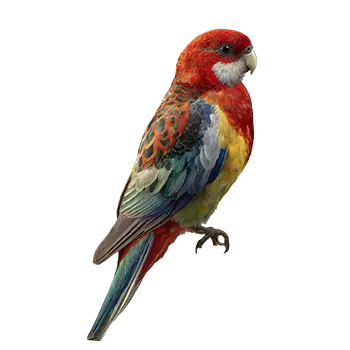
The Eastern Rosella has been a subject of natural history illustration since the earliest days of European exploration in Australia. Among the first published depictions are those found in the works of artists who accompanied or followed the First Fleet, capturing the extraordinary birdlife of New South Wales for audiences in Britain and Europe. The rosella's vivid mosaic of red, yellow, green, blue, and black made it an ideal subject for illustrators working to convey the novelty and richness of the Australian fauna, and it appeared prominently in the hand-colored engravings and lithographs that defined 18th- and 19th-century ornithological publishing.

John Gould, the renowned British ornithologist and artist, included the Eastern Rosella in his monumental work The Birds of Australia, published between 1840 and 1848. Gould's lithographs, executed with the assistance of his wife Elizabeth and the artist Henry Constantine Richter, depicted the Eastern Rosella in lifelike poses against naturalistic backgrounds, setting a standard for avian illustration that influenced generations of subsequent artists. These plates remain highly collectible and are frequently reproduced in modern field guides, coffee-table books, and decorative prints.

Beyond Gould, numerous Australian and European artists have returned to the Eastern Rosella as a subject across the intervening centuries. The species appears in the watercolors and field sketches of colonial-era naturalists, in the detailed plates of early 20th-century bird books, and in the work of contemporary wildlife artists who continue to find inspiration in its plumage patterns. The rosella's combination of bold primary colors and intricate scalloped back feathers presents a technical challenge that has attracted painters interested in the intersection of precision and beauty.

The tradition of natural history illustration has also shaped how the Eastern Rosella is perceived by the general public. Reproductions of classic rosella plates appear on tea towels, greeting cards, ceramic tiles, and other decorative items, ensuring that the bird's image circulates well beyond the birdwatching and aviculture communities. This pervasive visual presence has made the Eastern Rosella one of the most instantly recognizable Australian birds, a status owed in no small part to the artists who first committed its likeness to paper.

Philately, Currency & Official Symbols

The Eastern Rosella has appeared on Australian postage stamps on multiple occasions, reflecting its status as one of the country's most recognizable and beloved birds. Australia Post has featured the species in several stamp series devoted to native wildlife, parrots, and Australian birds, with designs that range from photographic reproductions to stylized illustrations. These stamps have circulated both domestically and internationally, making the Eastern Rosella a quiet ambassador for Australian natural heritage in mailboxes around the world.

Beyond philately, the Eastern Rosella's image has been used in a variety of official and semi-official contexts within Australia. Regional tourism boards in New South Wales and Victoria have employed rosella imagery in promotional materials, leveraging the bird's appeal to attract visitors to areas known for their natural beauty and birdwatching opportunities. The species has also appeared in the branding of local businesses, community organizations, and environmental groups, serving as a visual marker of regional identity in the southeastern Australian landscape.

The rosella's name and image have been adopted by several commercial brands in Australia, most notably in the food industry. The Rosella brand of condiments and canned foods, one of Australia's oldest and most recognized food labels, took its name and its parrot logo directly from the bird. While the brand has undergone ownership changes and redesigns over the decades, the association between the rosella and the product line remains a well-known piece of Australian commercial history, illustrating how deeply the bird's identity has penetrated the national consciousness.

In New Zealand, where introduced populations of Eastern Rosellas have been present since the 19th century, the species has also found its way into local cultural reference points. New Zealand naturalists and birdwatchers regard the Eastern Rosella as a colorful if controversial addition to the country's avifauna, and the bird has appeared in New Zealand birding guides, educational materials, and regional wildlife surveys. Its dual status as both a native Australian and an established New Zealand resident gives it an unusual cross-national cultural presence in the Oceanian region.

Film, Television & Documentary

The Eastern Rosella has featured in numerous wildlife documentaries showcasing the biodiversity of Australia. Major productions from broadcasters including the Australian Broadcasting Corporation, the BBC, and National Geographic have included footage of Eastern Rosellas in segments devoted to Australian parrots, woodland ecosystems, and suburban wildlife. The bird's vivid plumage makes it exceptionally photogenic, and close-up footage of rosellas feeding, preening, and interacting with their environment has become a staple of Australian nature programming.

Documentary filmmakers have often used the Eastern Rosella as an accessible entry point into broader ecological stories. Its presence in suburban gardens and parks means that it can be filmed without the logistical challenges associated with more remote or elusive species, and its behavior in these settings illustrates themes of wildlife adaptation to human-modified landscapes. Programs exploring the relationship between Australian cities and their native fauna frequently feature Eastern Rosellas as examples of species that have successfully negotiated the transition from bushland to backyard.

In fictional film and television, the Eastern Rosella's appearances have been less prominent but not insignificant. Australian-produced dramas and comedies set in rural or suburban landscapes occasionally include glimpses of rosellas as part of the natural backdrop, reinforcing the bird's association with the Australian environment. The species has also appeared in animated content and children's programming aimed at Australian audiences, where its colorful appearance makes it a natural fit for characters and illustrations designed to engage young viewers.

The rise of high-definition and ultra-high-definition filming technology has brought new attention to the Eastern Rosella's plumage details. Slow-motion footage revealing the iridescent qualities of its feathers and the precise mechanics of its flight has been used in nature documentaries to showcase the intersection of biology and aesthetics. These technological advances have allowed filmmakers to present the Eastern Rosella in ways that earlier generations of documentarians could not, deepening the visual record of one of Australia's most striking birds.

Literature & Print Media

The Eastern Rosella has appeared in Australian literature across a wide range of genres, from the field journals of colonial-era naturalists to contemporary nature writing. Early accounts by explorers, settlers, and visiting scientists frequently remarked on the rosella's beauty and its prevalence in the bushland around Sydney, establishing a literary tradition in which the bird serves as a marker of the Australian landscape's visual intensity. These early descriptions, often penned by writers encountering Australian fauna for the first time, convey a sense of wonder that continues to resonate in modern nature writing.

In Australian poetry, the Eastern Rosella appears as a recurring motif associated with color, freedom, and the natural world. Poets working within the Australian pastoral and bush traditions have invoked the rosella as a vivid element of the landscape, using its plumage as a vehicle for exploring themes of beauty, impermanence, and the relationship between human settlement and wild nature. While the rosella has not inspired individual poems of the stature of those devoted to the kookaburra or the lyrebird, its cumulative presence across Australian verse is substantial and reflects its deep integration into the cultural imagination.

The species features regularly in Australian birding guides, field guides, and natural history reference works, where it is typically among the most extensively illustrated and discussed parrots. Authors of these guides often note the Eastern Rosella's ubiquity and approachability, making it a frequent starting point for chapters on parrot identification or Australian avian diversity. The bird's accessibility ensures that it occupies a prominent position in the educational literature aimed at both beginners and experienced birdwatchers.

In avicultural magazines and journals, the Eastern Rosella has been the subject of countless articles covering husbandry, breeding, genetics, color mutations, and health. Publications such as Australian Birdkeeper Magazine, Parrots Magazine, and their international counterparts have devoted regular features to the species over the decades, building a body of practical literature that supports keepers worldwide. This print media presence has been instrumental in disseminating best practices and fostering the global community of Eastern Rosella enthusiasts.

Digital Media & Online Communities

The Eastern Rosella has thrived in the digital age, becoming one of the most frequently photographed and shared Australian birds on social media platforms. Its striking plumage makes it a reliable source of engagement on photography-oriented platforms, where images of wild rosellas feeding in gardens, bathing in birdbaths, or perched in flowering eucalypts routinely attract thousands of views and interactions. Birdwatching and wildlife photography groups on various social platforms count the Eastern Rosella among their most popular subjects, and dedicated hashtags aggregate a steady stream of images from across the species' range.

Online forums and community groups devoted to aviculture have become primary gathering places for Eastern Rosella keepers. Platforms dedicated to parrot care and breeding host active threads covering every aspect of rosella husbandry, from diet formulation and nest box design to the genetics of color mutations and the management of common health issues. These digital communities have democratized access to expert knowledge that was once confined to avicultural societies and printed journals, enabling keepers in remote or underserved areas to benefit from the collective experience of a global network.

Video-sharing platforms have provided another avenue for the Eastern Rosella's cultural presence. Short clips of pet rosellas whistling, interacting with their keepers, or displaying characteristic behaviors attract substantial viewership, and some rosella-focused channels have developed dedicated followings. Educational content creators specializing in Australian wildlife and parrot care have also contributed to the species' digital profile, producing tutorials, species profiles, and habitat tours that reach audiences who may never encounter an Eastern Rosella in person.

Citizen science platforms have added a data-driven dimension to the Eastern Rosella's online presence. Projects such as eBird and the Atlas of Living Australia aggregate sighting records from birdwatchers across the continent, creating detailed distribution maps and population trend analyses that are publicly accessible. These platforms have transformed the casual observation of Eastern Rosellas into a scientifically valuable activity, connecting backyard birdwatchers with professional researchers and contributing to the long-term monitoring of the species across its range.

Enduring Cultural Presence

The Eastern Rosella's cultural footprint is distinguished less by singular moments of fame than by a pervasive, steady presence across multiple domains of human life. It is a bird that Australians encounter on tea towels and in treetops, on postage stamps and in park picnic areas, in field guides and on social media feeds. This omnipresence has made the Eastern Rosella a quiet but deeply embedded cultural fixture, its image and name woven into the fabric of Australian daily life in ways that larger, louder, or rarer species cannot match.

In the global aviculture community, the Eastern Rosella's cultural significance is rooted in its role as a gateway species. For many keepers in Europe, Asia, and the Americas, the Eastern Rosella is among the first Australian parrots they encounter, and its manageable size, hardy constitution, and visual impact make it an enduring favorite. The species' popularity in aviculture has created a worldwide network of breeders, enthusiasts, and advocates whose shared interest transcends national and linguistic boundaries, forming one of the more cohesive international communities in the companion bird world.

The Eastern Rosella also occupies an important place in environmental education and conservation awareness. Its visibility in urban and suburban settings makes it an effective ambassador for broader messages about habitat conservation, the importance of native vegetation, and the value of coexisting with wildlife. Schools, nature centers, and environmental organizations across Australia regularly use the Eastern Rosella as a focal species in programs designed to connect young people with the natural world, capitalizing on the bird's beauty and familiarity to foster ecological literacy.

Looking ahead, the Eastern Rosella's cultural trajectory seems likely to continue along its established path of broad, quiet influence rather than dramatic individual fame. As digital media platforms evolve and citizen science initiatives expand, the species' visibility will continue to grow, and new generations of Australians and international bird enthusiasts will encounter the Eastern Rosella through channels that its colonial-era admirers could never have imagined. The bird's enduring appeal lies in its accessibility: it is beautiful enough to stop a passerby in a park, hardy enough to thrive in a changing landscape, and familiar enough to feel like an old friend.

Always consult a qualified professional before making any health-related decisions. This content is provided for informational reference only and should not replace professional guidance specific to your animal.