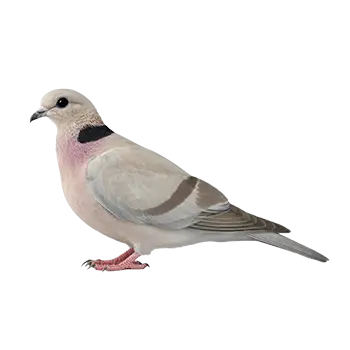

Doves have been a staple of visual storytelling in film and television for decades, and the Ring-necked Dove has played a quiet but consistent role in that tradition. Filmmakers frequently use doves as symbolic props in scenes depicting weddings, funerals, spiritual moments, and dramatic turning points. The bird's calm demeanor and photogenic appearance make it a reliable performer on set, and trained Ring-necked Doves are regularly supplied by animal wrangling companies for productions that require live bird work.
The action film genre popularized the slow-motion dove flight as a dramatic visual motif, particularly in the work of directors known for stylized gunfight sequences. While white pigeons are most commonly used for these iconic shots, Ring-necked Doves and their white color mutations have also appeared in similar roles. The visual of doves taking flight amid chaos became a cinematic shorthand for the tension between violence and innocence, and the trope has been referenced and parodied in countless films and television shows since its popularization in the late twentieth century.
Documentary filmmaking has also featured the Ring-necked Dove prominently. Nature programs covering African wildlife frequently capture the species in its native habitat, highlighting its distinctive cooing call and nesting behavior. These appearances have helped educate international audiences about the bird's origins and natural history, complementing its more familiar identity as a domesticated pet. Wildlife cinematographers value the Ring-necked Dove as a subject because its relatively bold nature and tolerance of human presence make it easier to film than many other wild bird species.
Television variety shows and talent competitions have occasionally featured dove acts performed by magicians, bringing Ring-necked Doves before audiences of millions. These appearances, while brief, reinforce the bird's association with wonder and spectacle in the popular imagination. The visual impact of a performer producing a live dove from thin air remains one of the most enduring images in televised entertainment.