
Film & Television

Doves have long been fixtures of film and television, though the spotlight typically falls on larger white dove species used in dramatic release sequences, wedding scenes, and symbolic moments. The Diamond Dove, with its petite frame and subtle coloring, has occupied a quieter niche in visual media. When filmmakers and television producers need to depict realistic aviary settings, intimate pet-keeping scenes, or Australian wildlife environments, Diamond Doves frequently appear as background or supporting animals that lend authenticity to the production.

Nature documentaries exploring Australian wildlife have given the Diamond Dove some of its most prominent screen time. Productions focusing on the outback ecosystem often feature footage of Diamond Doves foraging on sun-baked ground, performing their distinctive bowing courtship displays, or gathering at remote waterholes alongside other arid-zone species. These sequences introduce international audiences to a bird that many would otherwise encounter only in pet shops or aviaries.

In fictional television, Diamond Doves have occasionally appeared in scenes set in veterinary clinics, pet stores, or characters' homes where a small, visually appealing bird is needed to establish setting without overwhelming the scene. Their calm behavior on set makes them practical choices for productions that require reliable animal performers. Unlike more excitable bird species, Diamond Doves tend to remain composed under studio lighting and around unfamiliar crew members.

The broader symbolic use of doves in cinema—representing peace, innocence, or transition—sometimes extends to the Diamond Dove by association. While directors typically reach for the visual drama of a white Ringneck Dove or a Homing Pigeon for these iconic shots, the Diamond Dove's delicate appearance has been employed in smaller, independent productions seeking a more subtle and naturalistic visual metaphor.

Literature & Art

Australian literature and poetry have embraced the Diamond Dove as an emblem of the bush landscape. Writers describing the outback frequently invoke the bird's soft, repetitive call as an auditory marker of remote places and quiet mornings. The Diamond Dove's cooing appears in pastoral verse and prose as a counterpoint to the harsher sounds of the Australian interior—the crack of dry timber, the screech of cockatoos, the hum of insects—offering readers a sense of the gentleness that persists even in rugged environments.

In the visual arts, the Diamond Dove has been a subject for bird illustrators and wildlife painters since the early colonial period in Australia. Naturalist artists traveling with survey expeditions produced detailed watercolors and engravings of the species that combined scientific accuracy with aesthetic appeal. These early illustrations served both documentary and artistic purposes, appearing in ornithological plates that are now valued as collectible works of art in their own right.

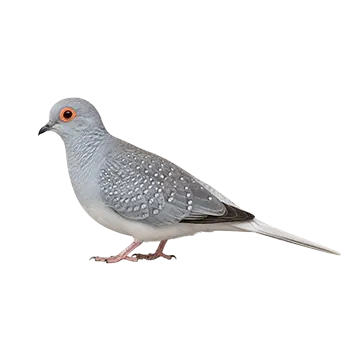
Contemporary artists working in ceramics, textiles, and mixed media have drawn on the Diamond Dove's distinctive spotted wing pattern as a design element. The rhythmic arrangement of white dots against gray-brown feathers translates effectively into decorative motifs for fabric prints, tile designs, and jewelry. Australian craft markets in particular feature handmade items inspired by native fauna, and the Diamond Dove's elegant patterning makes it a popular choice among artisans.

Children's literature has also found a place for the Diamond Dove. Picture books introducing young readers to Australian animals sometimes feature the species as a gentle, approachable character that contrasts with the more dramatic fauna—kangaroos, crocodiles, and venomous snakes—that dominate popular perceptions of Australian wildlife. These portrayals help build early awareness of the continent's avian diversity.

Internet & Social Media

The rise of social media and video-sharing platforms has given Diamond Dove keepers unprecedented opportunities to share their birds with a global audience. Instagram accounts dedicated to Diamond Doves showcase the species' color mutations, nesting behaviors, and daily routines through carefully composed photographs and short video clips. These accounts attract followers who appreciate the birds' photogenic qualities and the calming aesthetic that Diamond Dove content provides in often hectic social media feeds.

YouTube and similar platforms host a growing library of Diamond Dove content ranging from husbandry tutorials and aviary tours to simple videos of doves cooing, preening, and interacting with their keepers. Some of these videos have accumulated hundreds of thousands of views, introducing the species to audiences who may never have encountered a Diamond Dove in person. The comment sections beneath these videos frequently feature questions from prospective keepers seeking advice, creating informal educational exchanges.

Diamond Doves have also found a niche in the broader internet culture surrounding small, endearing animals. Their round bodies, tiny feet, and the habit of tilting their heads inquisitively have made them subjects of affectionate memes and reaction images. While they have not achieved the viral fame of certain parrot species known for mimicry or dramatic behavior, Diamond Doves have cultivated a dedicated following among users who gravitate toward quieter, more understated animal content.

Online forums and Facebook groups dedicated to dove keeping serve as vital community hubs where experienced breeders mentor newcomers, share breeding results, and discuss health concerns. These digital communities have effectively replaced the local bird club meetings that once served as the primary social infrastructure for the hobby, enabling connections that span continents and time zones.

Advertising & Branding

The dove as a symbol has been extensively employed in advertising and branding, most notably in association with peace, purity, and gentleness. While commercial campaigns typically feature stylized or generic dove silhouettes rather than specific species, the Diamond Dove's aesthetic qualities have occasionally made it a choice for brands seeking a more naturalistic and distinctive avian image. Pet food companies, avian supplement manufacturers, and aviculture supply retailers have featured Diamond Doves in product packaging and promotional materials to signal quality and species-specific expertise.

Australian tourism and regional branding efforts have sometimes included the Diamond Dove among the native species used to represent the outback experience. Visitor centers, nature reserves, and eco-tourism operators in central and western Australia have incorporated images of Diamond Doves into their marketing materials alongside more iconic species. The dove's presence in these contexts communicates the richness and subtlety of Australian biodiversity beyond the headline-grabbing megafauna.

In the world of avicultural publishing, the Diamond Dove has graced the covers of specialty magazines and breed guides, serving as a visual ambassador for the broader hobby of dove and pigeon keeping. These publications target a niche but passionate readership, and the selection of a Diamond Dove for cover art signals content that values elegance and refinement in aviculture.

The species' name itself carries inherent marketing appeal. The word "diamond" evokes luxury, rarity, and brilliance, associations that breeders and retailers have leveraged when presenting the birds to potential buyers. This branding advantage, however modest, has likely contributed to the Diamond Dove's enduring commercial popularity relative to other small dove species with less evocative common names.

The Popularity Effect

The Diamond Dove's visibility in media, art, and online spaces has had measurable effects on the species' popularity as a pet and aviary bird. Exposure through nature documentaries and social media content regularly drives spikes in interest from prospective keepers, who contact breeders and pet shops after encountering the species for the first time through a screen. This cycle of media exposure and consumer interest has helped sustain demand for Diamond Doves even as broader trends in pet keeping have shifted over the decades.

However, the popularity effect carries responsibilities. Increased demand can strain breeding populations and encourage hasty acquisitions by individuals who may not have fully researched the species' care requirements. Avicultural organizations and experienced keepers have responded by producing accessible educational content—care sheets, video guides, and starter kits—designed to ensure that new Diamond Dove owners are prepared for the commitment involved in keeping these birds healthy and content.

The Diamond Dove's reputation as a beginner-friendly bird has been both a strength and a source of concern within the avicultural community. While the species is indeed more forgiving of husbandry errors than many exotic birds, characterizing any living animal as "easy" risks setting unrealistic expectations. Thoughtful media coverage and responsible social media content creation can help balance the appeal of Diamond Dove keeping with honest information about the time, space, and attention these birds require.

Looking forward, the Diamond Dove's media presence is likely to continue growing as content creation tools become more accessible and the global community of bird enthusiasts becomes more interconnected. The challenge for the species' advocates will be ensuring that this increased visibility translates into better outcomes for the birds themselves—more informed keepers, stronger breeding programs, and greater appreciation for the quiet charm that has made the Diamond Dove a beloved companion for over a century.

Always consult a qualified professional before making any health-related decisions. This content is provided for informational reference only and should not replace professional guidance specific to your animal.