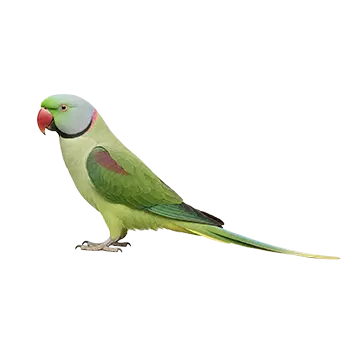

International Trade Protections

The Derbyan Parakeet is listed under Appendix II of the Convention on International Trade in Endangered Species of Wild Fauna and Flora (CITES), the principal international agreement governing cross-border trade in wildlife and wildlife products. Appendix II listing means that international commercial trade in wild-caught Derbyan Parakeets is permitted only with appropriate export permits issued by the country of origin, and that trade must be regulated to ensure it does not threaten the species' survival. In practice, this listing subjects any international movement of Derbyan Parakeets, whether live birds, eggs, or biological specimens, to documentation requirements and oversight by national CITES management authorities.

The CITES framework operates through a system of permits and certificates that must accompany any shipment of listed species across international borders. For the Derbyan Parakeet, this means that a breeder in one country wishing to sell or transfer a bird to a buyer in another country must obtain an export permit from their national CITES authority, and the receiving country must confirm that the import is consistent with its own wildlife regulations. The administrative burden of this process varies considerably from country to country, and delays or complications in permit processing are a common source of frustration for breeders and buyers engaged in legitimate international trade.

The effectiveness of CITES protections for the Derbyan Parakeet depends heavily on enforcement at the national level. In countries with well-resourced wildlife agencies and established inspection protocols, the permit system functions as a meaningful barrier to illegal trade. In regions where enforcement capacity is limited, however, the CITES framework can be circumvented by smuggling or fraudulent documentation. The Derbyan Parakeet's relatively high value in aviculture, driven by its scarcity and desirability, creates a financial incentive for illicit trade that enforcement alone cannot fully eliminate.

Proposals to upgrade the Derbyan Parakeet to CITES Appendix I, which would ban virtually all international commercial trade, have been discussed in conservation circles but have not advanced to formal consideration as of the current date. Such an upgrade would significantly restrict the international movement of captive-bred birds and could complicate efforts to maintain genetically diverse breeding populations across national boundaries. The tension between trade restriction and captive population management is a recurring theme in CITES discussions involving species that are both conservation-sensitive and established in aviculture.

National & Regional Wildlife Laws

Within the Derbyan Parakeet's native range, national wildlife laws provide an additional layer of legal protection that supplements the international CITES framework. In India, the species is protected under the Wildlife Protection Act of 1972, which prohibits the capture, trade, and keeping of wild-caught Derbyan Parakeets. The Act categorizes the species among the protected fauna of India, and violations can result in significant fines and imprisonment. Enforcement of these protections in the remote northeastern states where the Derbyan occurs is challenging but has been supported by periodic crackdowns on illegal bird trapping and trade networks.

In China, the Derbyan Parakeet is classified as a nationally protected species under the country's wildlife protection legislation. The species received upgraded protection status in recent revisions to China's national list of protected wildlife, reflecting growing concern about declining populations in Sichuan and Yunnan provinces. Chinese law prohibits the unauthorized capture, sale, and transport of protected wildlife, and penalties for violations have been strengthened in recent years as part of broader efforts to combat illegal wildlife trade within the country.

Outside the species' native range, legal frameworks governing Derbyan Parakeet ownership vary widely. In the European Union, the Birds Directive and associated national legislation regulate the keeping and breeding of non-native bird species, including the Derbyan Parakeet. EU member states generally require that captive-bred birds be fitted with closed leg bands as proof of captive origin, and some countries require breeders to register with national authorities or obtain specific permits. These requirements are designed to prevent laundering of wild-caught birds through captive breeding programs and to maintain traceability within the legal trade.

In the United States, the Derbyan Parakeet is regulated under the Wild Bird Conservation Act of 1992, which restricts the import of CITES-listed bird species. Domestic ownership of captive-bred Derbyan Parakeets is generally legal at the federal level, though individual states may impose additional restrictions on exotic bird ownership. Prospective owners should consult their state's wildlife agency and local ordinances to confirm that keeping a Derbyan Parakeet is permitted in their jurisdiction, as regulations can differ substantially between states and even between municipalities.

Ownership Requirements & Documentation

Legal ownership of a Derbyan Parakeet in most jurisdictions requires documentation establishing that the bird is of captive-bred origin. The most common form of proof is a closed leg band, a seamless metal ring applied to the bird's leg within the first few days of life, before the foot grows large enough to allow removal. The band typically carries an alphanumeric code that identifies the breeder, the year of hatching, and a unique serial number. In many European countries and in regulated markets elsewhere, a closed band is a legal prerequisite for sale or transfer, and birds without bands may be presumed to be of illegal wild-caught origin.

In addition to banding, some jurisdictions require breeders and owners to maintain records of their birds' lineage, including parentage, hatch dates, and any transfers of ownership. These records serve both regulatory and conservation purposes, enabling authorities to trace the provenance of individual birds and supporting studbook programs that track genetic diversity within the captive population. For species like the Derbyan Parakeet, where the total captive population is relatively small, accurate record-keeping is particularly important for long-term population management.

Owners who acquire a Derbyan Parakeet through purchase, adoption, or transfer should obtain and retain all accompanying documentation, including any CITES certificates, breeder receipts, veterinary health certificates, and band numbers. In the event of a sale, rehoming, or interstate transport, this documentation may be required by law and is essential for demonstrating legal ownership. Failure to produce adequate documentation can result in seizure of the bird by wildlife authorities, particularly in countries or states with active enforcement programs.

The documentation landscape becomes more complex when birds cross international borders. Import and export permits, quarantine certificates, and health screenings may all be required, depending on the countries involved and the specific circumstances of the transfer. Owners contemplating an international move with a Derbyan Parakeet should begin the permitting process well in advance, as processing times can be lengthy and requirements may change with little notice. Consulting with a CITES-accredited specialist or an avian veterinarian experienced in international transport is strongly recommended.

Breeding Regulations & Permits

Breeding Derbyan Parakeets in captivity is subject to a range of regulatory requirements that vary by country, region, and sometimes municipality. In the European Union, breeders of CITES-listed species are generally required to register with their national CITES management authority and to maintain detailed breeding records, including parentage data, hatch dates, and band numbers for all offspring. Some EU member states impose additional requirements, such as aviary inspections, minimum enclosure size standards, or limits on the number of breeding pairs that can be maintained without a commercial breeding license.

In the United States, federal law does not require a specific permit to breed Derbyan Parakeets for personal use or domestic sale, provided the birds are of documented captive-bred origin. However, any breeder intending to sell birds across state lines or to engage in commercial breeding on a significant scale should be aware of the Lacey Act, which prohibits trafficking in wildlife that has been illegally taken, possessed, transported, or sold under any federal, state, tribal, or foreign law. State-level regulations may impose additional licensing, inspection, or record-keeping requirements on bird breeders, and these should be verified before establishing a breeding program.

In countries within the Derbyan Parakeet's native range, captive breeding of the species is generally prohibited or tightly regulated as part of broader wildlife protection measures. In India, the Wildlife Protection Act effectively bars private captive breeding of native wild bird species without specific government authorization, which is rarely granted. In China, recent legislative reforms have tightened controls on the captive breeding of protected species, requiring breeders to obtain licenses and submit to regular inspections. These restrictions reflect a policy priority of discouraging the creation of parallel captive markets that could provide cover for laundering wild-caught birds.

Avicultural organizations in Europe and North America have responded to the regulatory environment by establishing voluntary breeding coordination programs for the Derbyan Parakeet. These programs, which function similarly to zoo-based Species Survival Plans, maintain studbooks, recommend pairings based on genetic compatibility, and track reproductive outcomes across participating breeders. While participation is voluntary, breeders who engage with these programs demonstrate a commitment to responsible management that can enhance their standing with regulatory authorities and improve their access to unrelated breeding stock.

Conservation Status & Legal Implications

The Derbyan Parakeet's classification as Near Threatened on the International Union for Conservation of Nature (IUCN) Red List has significant legal implications that extend beyond the species' CITES listing. The Near Threatened designation signals that the species, while not yet qualifying for a threatened category, is approaching eligibility and may be uplisted if current population trends continue. This status informs the risk assessments that national wildlife agencies use when setting import and export quotas, evaluating permit applications, and prioritizing enforcement resources.

The primary drivers of the Derbyan Parakeet's conservation vulnerability, habitat loss and capture for trade, are both addressed by existing legal frameworks, though with varying degrees of effectiveness. Habitat protection laws in India and China nominally cover much of the species' range, but enforcement in remote mountain areas is uneven, and competing land-use pressures from agriculture, logging, and infrastructure development frequently override conservation priorities. Trade regulations have been more successful in reducing the flow of wild-caught birds into international markets, though domestic trade within range countries remains a concern.

The legal landscape for the Derbyan Parakeet is not static. As conservation data accumulates and wild population assessments are updated, the species' legal protections may be revised upward. An upgrade to CITES Appendix I or a change in IUCN status to Vulnerable would trigger cascading legal consequences, potentially banning international commercial trade entirely, restricting domestic breeding operations, and requiring existing owners to obtain new permits or register their birds under revised frameworks. Keepers and breeders should stay informed about developments in the species' conservation status and be prepared to adapt to changing regulatory requirements.

For prospective owners, the Derbyan Parakeet's conservation-sensitive status carries a practical obligation to ensure that any bird they acquire has been bred and sold in full compliance with applicable laws. Purchasing from reputable breeders who participate in recognized breeding programs, insisting on complete documentation, and avoiding birds of uncertain provenance are not merely best practices but legal necessities in most jurisdictions. The consequences of acquiring an illegally obtained bird can include seizure, fines, and in serious cases, criminal prosecution, outcomes that serve neither the owner's interests nor the species' conservation.

Ethical Considerations & Responsible Ownership

Beyond the letter of the law, Derbyan Parakeet ownership carries ethical dimensions that responsible keepers take seriously. The species' Near Threatened conservation status means that every captive bird exists within a broader context of wild population decline, and decisions made by individual owners and breeders can collectively influence the species' trajectory. Supporting legitimate captive breeding programs, avoiding the purchase of birds from questionable sources, and contributing to conservation efforts in the species' native range are all ways in which Derbyan keepers can align their hobby with the species' long-term survival.

The question of whether keeping conservation-sensitive species in private collections helps or hinders their survival is a subject of ongoing debate within the avicultural and conservation communities. Proponents argue that well-managed captive populations serve as genetic reservoirs and generate public interest and funding for in-situ conservation efforts. Critics counter that private aviculture can create demand that stimulates illegal trapping and that captive populations, if not carefully managed, may lose genetic fitness over generations. For the Derbyan Parakeet, the evidence suggests that both perspectives contain elements of truth, and the net impact of captive keeping depends heavily on the practices of individual breeders and the regulatory environments in which they operate.

Responsible Derbyan Parakeet ownership also entails a commitment to the bird's welfare over its potentially long lifespan. Legal ownership is only the starting point; the ethical obligations of keeping a large, intelligent parakeet for 20 to 30 years include providing appropriate housing, diet, veterinary care, and social interaction. Keepers who find themselves unable to meet these obligations have a responsibility to rehome their birds through established rescue networks or avicultural contacts rather than abandoning or releasing them, actions that are both ethically objectionable and, in most jurisdictions, illegal.

The Derbyan Parakeet's legal and ethical landscape is ultimately inseparable from its conservation story. Laws and regulations provide the framework within which ownership occurs, but it is the choices made by individual keepers, breeders, and consumers that determine whether that framework serves the species' interests or merely regulates its exploitation. For those who choose to keep Derbyan Parakeets, an informed, conscientious approach to ownership is both a legal obligation and a moral one, reflecting the broader responsibility that humans bear toward the species with which they share the planet.

Always consult a qualified professional before making any health-related decisions. This content is provided for informational reference only and should not replace professional guidance specific to your animal.