
Film & Television

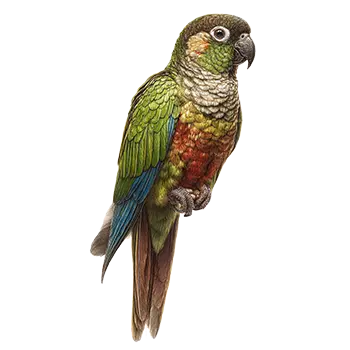
The Green-cheeked Conure has not yet starred as a named character in a major Hollywood production in the way that some larger parrot species have, but the species has nonetheless appeared in various film and television contexts. Small parrots, including conures, are occasionally featured in background scenes of movies and television shows set in tropical locations or in homes where a character is portrayed as an animal lover. These brief appearances, while not central to the plot, contribute to normalizing parrot companionship in popular media and introduce the species to viewers who may not be familiar with smaller parrot varieties.

Documentary programming has given the Green-cheeked Conure more substantial screen time. Nature documentaries focusing on South American biodiversity frequently include footage of wild Pyrrhura flocks moving through forest canopies, foraging in fruiting trees, and engaging in the social behaviors that characterize the genus. These segments help audiences appreciate the bird in its natural ecological context and underscore the conservation importance of the tropical and subtropical forests that sustain wild populations.

Television segments on pet care and lifestyle programs have also featured the Green-cheeked Conure, particularly in episodes dedicated to choosing a first pet bird or exploring the world of aviculture. Avian veterinarians and experienced bird keepers appearing on these programs frequently recommend the species for its manageable size, relatively gentle disposition, and lower noise levels compared to many other parrot species. Such coverage has helped shape the species' reputation as an ideal entry-level parrot.

As streaming platforms have expanded the range of content available to audiences, niche programming about exotic pets and aviculture has found a dedicated viewership. The Green-cheeked Conure appears regularly in this content, featured in breeder profiles, day-in-the-life segments, and educational videos about parrot behavior and training.

Literature & Art

Parrots have been subjects of artistic fascination for centuries, appearing in European still-life paintings, natural history illustrations, and decorative arts from the Renaissance onward. While the Green-cheeked Conure specifically was not among the species most commonly depicted in classical Western art, the broader parrot family has a deep artistic legacy. Nineteenth-century natural history illustrators, including those contributing to major ornithological works, produced detailed plates of Pyrrhura species that remain valued by collectors and historians of scientific illustration.

In contemporary literature, parrots frequently appear as characters or companions in fiction ranging from literary novels to children's books. The Green-cheeked Conure's personality traits — its playfulness, tendency to snuggle, and capacity for mischief — make it a natural fit for stories aimed at young readers learning about pet responsibility. Several self-published and independently released children's books have featured Green-cheeked Conures as central characters, reflecting the species' growing cultural presence.

The avicultural publishing world has produced numerous care guides, breeding manuals, and species profiles that focus on or prominently feature the Green-cheeked Conure. These publications range from concise pet care booklets available at pet stores to detailed avicultural references written by experienced breeders and avian veterinarians. Collectively, this body of literature has helped standardize best practices for the species' care and contributed to the overall body of knowledge available to owners and breeders.

Artists within the bird-keeping community regularly produce illustrations, paintings, and digital art featuring Green-cheeked Conures. Online marketplaces and social media platforms showcase a thriving cottage industry of conure-themed artwork, including prints, stickers, enamel pins, and clothing designs that celebrate the species' distinctive appearance and playful character.

Internet & Social Media

The internet has arguably been the single most powerful force in elevating the Green-cheeked Conure's cultural profile. Social media platforms, particularly Instagram, TikTok, and YouTube, have given individual birds the opportunity to become genuine online celebrities. Accounts dedicated to Green-cheeked Conures regularly attract followers numbering in the hundreds of thousands, with individual videos of birds performing tricks, cuddling with their owners, or engaging in comedic antics accumulating millions of views.

The species' photogenic qualities and expressive behavior translate exceptionally well to short-form video content. Green-cheeked Conures are known for lying on their backs in their owners' hands, bobbing their heads to music, and engaging in playful wrestling matches with toys and fingers. These behaviors produce reliably entertaining content that appeals to both dedicated bird enthusiasts and casual viewers encountering the species for the first time.

Online forums and community groups dedicated to Green-cheeked Conure ownership have created vast repositories of shared knowledge and experience. Platforms such as Reddit, specialized avian forums, and Facebook groups host active communities where owners discuss diet, behavior, health concerns, and the joys and challenges of living with these birds. These communities serve as informal support networks and have helped countless new owners navigate the learning curve of parrot companionship.

The species has also become a popular subject for meme culture within the bird-keeping community. Humorous images and videos highlighting the Green-cheeked Conure's well-known personality traits — its possessiveness of its favorite person, its tendency to chew on everything within reach, and its dramatic reactions to perceived slights — circulate widely and contribute to a shared cultural identity among conure owners.

Advertising & Branding

While parrots as a broad category appear frequently in advertising — often symbolizing tropical destinations, vibrant color, or the exotic — the Green-cheeked Conure specifically has a more modest presence in mainstream commercial branding. Its smaller size and less immediately recognizable silhouette compared to macaws or cockatoos mean that advertisers seeking a generic parrot image tend to reach for larger, more visually dramatic species.

Within the pet industry, however, the Green-cheeked Conure is a marketing staple. Pet food manufacturers, toy companies, and cage designers frequently feature the species in product photography and packaging. The bird's popularity as a companion parrot makes it a natural choice for brands seeking to connect with the small parrot segment of the market, and images of colorful Green-cheeked Conure mutations are particularly effective at catching the eye of potential customers browsing pet store aisles or online retailers.

Breeder marketing has also contributed to the species' commercial visibility. Professional breeders maintain websites and social media presences showcasing their available birds, often highlighting rare or visually striking color mutations. The visual appeal of mutations like the Pineapple, Turquoise, and Mooncheek varieties lends itself well to polished photography and has helped elevate the perceived value and desirability of the species among prospective buyers.

The Green-cheeked Conure's image also appears in the branding of avian veterinary practices, bird boarding facilities, and parrot rescue organizations. Its friendly, approachable appearance and widespread popularity make it an effective visual ambassador for businesses and nonprofits serving the bird-keeping community.

The Popularity Effect

The Green-cheeked Conure's rising media profile has had tangible effects on demand for the species as a companion animal. Social media exposure in particular has driven significant interest among first-time bird owners who encounter the species through viral videos and influencer content. This surge in popularity has been a double-edged development, bringing new enthusiasts into the avicultural community while also raising concerns about impulse purchases by owners who may not fully appreciate the decades-long commitment involved in parrot keeping.

Avian rescue organizations have noted an increase in Green-cheeked Conure surrenders that correlates with the species' growing media presence. Birds acquired on impulse after watching appealing online content sometimes end up in rescue when the realities of parrot ownership — including noise, mess, the need for daily socialization, and potential behavioral challenges — prove more demanding than anticipated. Rescue advocates have responded by emphasizing adoption as an alternative to purchasing from breeders and by producing educational content aimed at setting realistic expectations for prospective owners.

The popularity effect has also influenced breeding practices and market dynamics. High demand for certain color mutations has occasionally led to breeding practices prioritized for visual traits over health and temperament, a concern that responsible breeders and avian veterinarians have sought to address through education and advocacy. The avicultural community continues to grapple with balancing the commercial aspects of bird breeding with the ethical responsibility of producing healthy, well-socialized birds.

Despite these challenges, the Green-cheeked Conure's media-driven popularity has also yielded positive outcomes. Greater public awareness of the species has fueled support for parrot conservation initiatives, increased demand for high-quality avian veterinary care, and expanded the market for enrichment products and nutritionally complete diets. The species' cultural footprint continues to grow, and its role as an ambassador for responsible parrot ownership remains an important contribution to the broader avicultural community.

Always consult a qualified professional before making any health-related decisions. This content is provided for informational reference only and should not replace professional guidance specific to your animal.