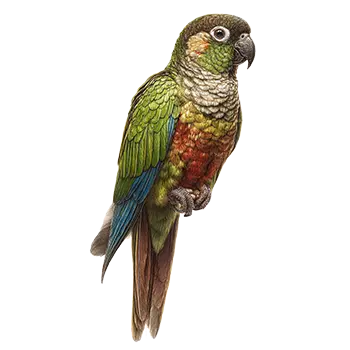

CITES & International Trade Protections

The Green-cheeked Conure is listed under Appendix II of the Convention on International Trade in Endangered Species of Wild Fauna and Flora (CITES). This listing means that international commercial trade in the species is permitted but regulated, requiring export permits issued by the country of origin to ensure that trade does not threaten wild populations. CITES Appendix II status reflects the fact that while the species is not currently endangered, unregulated trade could potentially pose a future risk.

For owners and breeders, the practical effect of the CITES listing is that any international movement of Green-cheeked Conures — whether for sale, breeding exchanges, or personal relocation — requires proper documentation. Export permits must be obtained from the wildlife management authority of the country of origin, and the importing country may also require its own permits or health certifications. Failure to comply with these requirements can result in confiscation of the birds and legal penalties for the parties involved.

The CITES framework is implemented through national legislation in each member country, which means that the specific procedures, fees, and timelines for obtaining permits can vary significantly from one jurisdiction to another. Prospective importers or exporters should consult the relevant national CITES authority well in advance of any planned international transfer. In the United States, the U.S. Fish and Wildlife Service administers CITES compliance, while in the European Union, individual member states implement the regulations through their own wildlife agencies.

The Wild Bird Conservation Act of 1992 in the United States effectively banned the importation of most wild-caught parrots, including Green-cheeked Conures, for the pet trade. This legislation was a landmark development in parrot conservation and had the practical effect of ensuring that virtually all Green-cheeked Conures available in the American pet market are domestically bred. Similar restrictions exist in the European Union and other major markets.

Ownership Requirements & Permits

In most jurisdictions within the United States, Canada, and Europe, the Green-cheeked Conure can be legally owned as a pet without a specific permit. The species is not classified as a dangerous or restricted animal under most state or provincial wildlife codes, and its long history as a captive-bred companion bird means that it is widely accepted as a standard domestic pet. However, regulations can vary at the state, provincial, and even municipal level, and prospective owners should verify local requirements before acquiring a bird.

Some jurisdictions require general exotic animal permits or registration for any non-native species, including parrots. In these areas, owners may need to obtain a permit from a state or local wildlife agency, pay a registration fee, and comply with periodic inspection or reporting requirements. The specifics of these regulations vary widely, and in some cases the rules may be poorly publicized, making it important for owners to proactively research the laws applicable to their location.

Breeders typically face additional regulatory requirements beyond those applicable to pet owners. Many jurisdictions require commercial breeding operations to obtain business licenses, comply with animal welfare inspection standards, and maintain records of bird sales and transfers. Some states also require breeders to band their birds with traceable identification bands, which serve as proof of captive-bred origin and help authorities distinguish legally bred birds from those that may have been illegally imported.

Veterinary care regulations may also come into play. Some jurisdictions require annual health certifications for exotic pets, and avian veterinarians may be obligated to report certain infectious diseases to agricultural authorities. Owners should establish a relationship with a qualified avian veterinarian and stay informed about any reporting requirements that may apply in their area.

Liability & Insurance Considerations

While the Green-cheeked Conure is a small bird with a generally gentle disposition, owners should be aware of potential liability issues that can arise from pet ownership. Parrot bites, though rarely serious from a species of this size, can break skin and potentially transmit bacterial infections. If a visitor or third party is bitten by an owner's bird, questions of liability may arise depending on the circumstances and the applicable laws of the jurisdiction.

Homeowners' and renters' insurance policies vary in their treatment of exotic pets. Some policies explicitly exclude coverage for incidents involving exotic animals, while others may cover parrots under general pet liability provisions. Owners should review their insurance policies carefully and discuss their bird ownership with their insurance provider to ensure adequate coverage. In some cases, supplemental exotic pet liability insurance may be available and advisable.

Noise-related complaints represent another potential area of legal concern for conure owners, particularly those living in apartments, condominiums, or neighborhoods with strict noise ordinances. While the Green-cheeked Conure is among the quieter parrot species, it is still capable of producing vocalizations that may disturb neighbors, especially during early morning and evening hours when the birds tend to be most vocal. Owners should be aware of local noise regulations and take reasonable steps to minimize disturbance.

In the event that a Green-cheeked Conure escapes and causes damage to a neighbor's property or is involved in an incident with another animal, the owner may be held liable under local animal control laws or general negligence principles. Secure housing, properly latched cage doors, and clipped flight feathers or recall training can help mitigate these risks.

Housing & Rental Restrictions

One of the most common legal challenges faced by Green-cheeked Conure owners involves housing restrictions. Many rental properties, condominiums, and homeowner associations have pet policies that restrict or prohibit the keeping of exotic animals, including parrots. These restrictions may be written into lease agreements, condominium bylaws, or HOA covenants and can be enforced through fines, required removal of the animal, or in extreme cases, eviction proceedings.

Renters considering acquiring a Green-cheeked Conure should carefully review their lease agreement and discuss the matter with their landlord before bringing a bird into the property. Even in cases where a lease permits pets generally, there may be specific exclusions for birds or exotic animals. Some landlords may be willing to amend a lease to permit a parrot if the tenant can demonstrate responsible ownership and agree to conditions such as additional security deposits or limits on the number of birds.

Condominium and HOA restrictions can be particularly challenging because they are typically established by a governing board and may be difficult to change. Owners who purchase a home in a community with restrictive pet policies may find themselves unable to keep their birds without risking fines or legal action. It is advisable to review all governing documents before purchasing property in a planned community if parrot ownership is a priority.

In some jurisdictions, disability-related accommodations may allow individuals to keep emotional support animals, including parrots, in housing that otherwise restricts pets. The legal standards for emotional support animal accommodations vary by jurisdiction and have been subject to evolving regulatory guidance. Owners seeking such accommodations should consult with a qualified attorney to understand their rights and obligations under applicable fair housing laws.

Import, Export & Interstate Transport Regulations

Beyond the CITES framework governing international trade, the movement of Green-cheeked Conures across national borders is subject to a complex web of health, agricultural, and customs regulations. Most countries require veterinary health certificates for imported birds, and many impose quarantine periods to screen for infectious diseases such as avian influenza, psittacosis, and Newcastle disease. These quarantine requirements can be lengthy and expensive, and the stress of quarantine on the birds is a significant welfare consideration.

Within the United States, interstate transport of parrots is generally permitted but may be subject to state-specific regulations. Some states require health certificates issued by a licensed veterinarian within a specified timeframe before the bird enters the state, while others may have specific entry requirements for psittacine birds. The National Poultry Improvement Plan and state veterinarian offices can provide guidance on interstate transport requirements.

The European Union has its own set of regulations governing the movement of pet birds between member states. The EU Pet Passport system, while primarily designed for dogs, cats, and ferrets, does not currently cover birds, meaning that separate documentation and health certification procedures apply to parrot transport within the EU. Regulations can vary between member states, adding complexity for owners who relocate or travel within Europe with their birds.

Online sales and shipping of live birds are subject to additional regulatory scrutiny. In many jurisdictions, shipping live animals via postal or courier services requires compliance with carrier-specific policies, packaging standards, and weather-related shipping restrictions. The United States Postal Service does not accept live parrots, and private carriers that do handle live bird shipments impose their own requirements regarding container specifications, temperature ranges, and transit times.

Rescue, Rehoming & Shelter Regulations

The growing population of captive Green-cheeked Conures has led to an increasing number of birds entering the rescue and rehoming system. Parrot rescue organizations operate under a patchwork of state and local regulations that govern animal shelters, rescue operations, and the adoption process. Many states require rescue organizations to obtain nonprofit status, maintain specific standards of care, and submit to periodic inspections by animal control authorities.

The legal process for surrendering a Green-cheeked Conure to a rescue organization varies by jurisdiction and by the policies of the individual rescue. Most rescues require surrendering owners to sign a formal relinquishment document that transfers legal ownership of the bird to the organization. This document protects both the rescue and the former owner by establishing a clear chain of custody and preventing disputes over ownership after the surrender is complete.

Adoption contracts used by parrot rescue organizations typically include provisions that go beyond a simple transfer of ownership. Common terms include requirements for veterinary care, prohibitions on breeding, stipulations about cage size and enrichment, and clauses allowing the rescue to reclaim the bird if the adopter fails to meet the agreed-upon standards of care. While the enforceability of some of these provisions may vary by jurisdiction, they serve as an important expression of the rescue's commitment to the welfare of the birds in its care.

Legal issues can also arise in situations involving the death or incapacitation of a bird owner. Given that Green-cheeked Conures can live for two to three decades, it is not uncommon for birds to outlive their owners or to require rehoming when an owner develops health problems that prevent them from continuing to provide care. Estate planning attorneys increasingly recommend that parrot owners include provisions for their birds in wills or trusts, designating a caretaker and setting aside funds for the bird's ongoing care. Without such planning, birds may end up in already overburdened rescue organizations or be rehomed under less than ideal circumstances.

Always consult a qualified professional before making any health-related decisions. This content is provided for informational reference only and should not replace professional guidance specific to your animal.