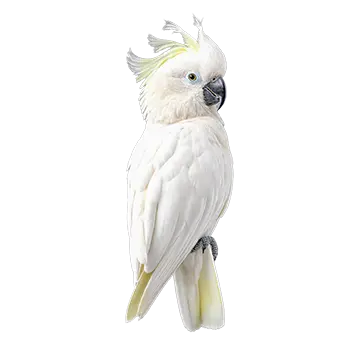

The Umbrella Cockatoo's brilliant white plumage, expressive crest, and natural showmanship have made it a recurring presence in film and television. The species has appeared in a variety of roles, from comedic sidekicks in family films to exotic set dressing in dramas set in tropical or opulent locations. Trainers prize the Umbrella Cockatoo for its responsiveness to cues and its willingness to perform behaviors on command, qualities that translate well to the demands of on-set work.
Television talk shows and variety programs have frequently featured Umbrella Cockatoos as guest animals, typically brought on by wildlife educators or animal trainers to demonstrate the species' vocal mimicry, crest displays, and interactive personality. These appearances have done much to establish the Umbrella Cockatoo as the quintessential "showy" parrot in the public imagination, often serving as the default mental image when people think of a large white parrot.
Documentary programming has also spotlighted the species, with nature documentaries exploring the Umbrella Cockatoo's native habitat in the Maluku Islands, its social behavior in the wild, and the conservation challenges it faces. These productions offer a more nuanced view of the species than entertainment media typically provides, highlighting the gap between the bird's charismatic on-screen persona and the complex realities of its life in the wild and in captivity.
The cumulative effect of the Umbrella Cockatoo's screen presence has been a double-edged phenomenon. On one hand, media exposure has generated genuine public interest in avian intelligence and welfare. On the other, it has sometimes contributed to unrealistic expectations about cockatoo ownership, leading viewers to seek out the species without fully understanding the decades-long commitment and specialized care required.