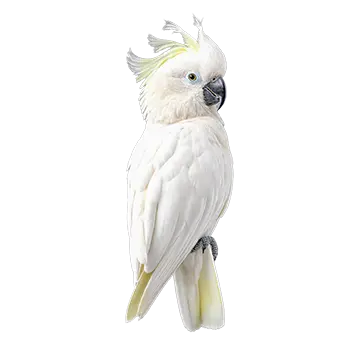

The Umbrella Cockatoo is listed under Appendix II of the Convention on International Trade in Endangered Species of Wild Fauna and Flora (CITES), which regulates and monitors the international trade of species that could become threatened without such controls. Under CITES Appendix II, commercial trade in wild-caught Umbrella Cockatoos requires export permits from the country of origin, and importing nations must verify that specimens were legally obtained and that trade will not be detrimental to the survival of the species in the wild.
Indonesia, as the range state for the Umbrella Cockatoo, has implemented additional domestic restrictions on the capture and export of the species. A zero export quota for wild-caught specimens has been established at various points to address population declines driven by trapping for the pet trade. These quotas are subject to periodic review and adjustment based on population assessments conducted by Indonesian wildlife authorities in coordination with CITES scientific bodies.
For prospective owners in the United States and Europe, the practical effect of CITES protections is that legally available Umbrella Cockatoos are almost exclusively captive-bred birds. Buyers should be prepared to verify the legal origin of any bird they acquire, typically through documentation such as a CITES certificate, a breeder's certificate, or a closed leg band indicating captive breeding. Purchasing a bird without proper documentation may constitute a violation of international wildlife trade law and can result in confiscation of the animal and legal penalties for the buyer.
The enforcement of CITES regulations varies by country, and prospective owners should familiarize themselves with the specific import and trade requirements enforced by their national wildlife authority. In the United States, the U.S. Fish and Wildlife Service oversees CITES compliance, while in the European Union, member states implement the regulations through the EU Wildlife Trade Regulations, which in some cases impose stricter requirements than CITES itself.