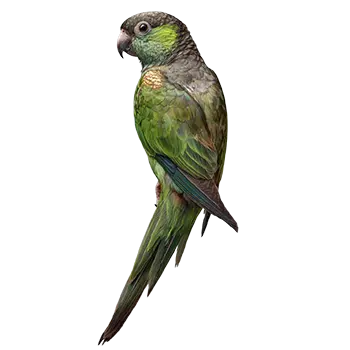

Representation in Wildlife Documentaries

The Bronze Winged Parakeet has appeared in wildlife documentaries primarily as part of broader coverage of Neotropical avian diversity rather than as a featured subject in its own right. Productions exploring the Amazon Basin, the Guianan Shield, and the Orinoco watershed have captured flocks of Brotogeris parakeets in flight or feeding sequences, often grouping them with other small psittacines to illustrate the density and variety of parrot species found in South American forests. These appearances, while typically brief, serve an important function by drawing attention to the enormous richness of the Neotropical avifauna beyond the macaws and Amazons that dominate popular imagery.

Nature filmmaking in the tropics faces practical challenges that work against extended coverage of small, fast-moving canopy species like the Bronze Winged Parakeet. The bird's rapid flight, tendency to blend into green foliage, and preference for dense forest interiors make it a demanding subject for cinematographers accustomed to filming larger, more conspicuous wildlife. As a result, high-quality footage of the species in its natural habitat remains relatively scarce compared to that available for showpiece parrots, though improvements in drone technology and lightweight camera traps are gradually expanding what is possible.

Regional documentary productions from Venezuela, Guyana, and Brazil have occasionally given the Bronze Winged Parakeet somewhat more focused screen time, particularly in programs aimed at cataloging local biodiversity or promoting ecotourism. These shorter-format films, often produced in collaboration with conservation organizations or national parks, provide viewers with closer looks at the species' feeding behavior, social interactions, and nesting habits than are typically available in international blockbuster nature series.

The species' documentary presence, while modest, contributes to a growing body of visual media that challenges the popular assumption that interesting parrots must be large and brightly colored. As audiences become more sophisticated in their appreciation of biodiversity, productions that highlight lesser-known species like the Bronze Winged Parakeet stand to attract increasing interest from viewers who have already seen extensive coverage of the more familiar members of the parrot family.

Avicultural Literature & Publications

The Bronze Winged Parakeet has received consistent, if not voluminous, coverage in avicultural literature spanning several decades. Foundational texts on parrot keeping published in the 1980s and 1990s typically included the species within broader chapters on Brotogeris parakeets, noting its suitability as a companion bird and offering basic husbandry guidelines. Authors such as Rosemary Low, whose comprehensive works on parrots remain widely referenced, documented the Bronze Winged Parakeet alongside its congeners, providing descriptions of its physical characteristics, temperament, and captive care needs that helped establish baseline knowledge for prospective keepers.

Specialized avicultural journals, including publications by organizations such as the American Federation of Aviculture and the Avicultural Society, have published articles addressing the breeding biology and captive management of Brotogeris species, with the Bronze Winged Parakeet receiving attention proportional to its representation in aviculture. These articles have covered topics ranging from successful captive breeding protocols and hand-rearing techniques to dietary experiments and veterinary case reports. For breeders working to establish and maintain captive lines, this body of periodical literature has served as a crucial practical resource.

Field guides and ornithological handbooks covering the birds of northern South America consistently include the Bronze Winged Parakeet, providing identification keys, range maps, and habitat descriptions that serve both professional ornithologists and serious birdwatchers. Publications such as the Handbook of the Birds of the World and the various Helm field guides offer the most authoritative published treatments of the species' taxonomy, distribution, and ecology, synthesizing decades of field observation and museum specimen analysis.

More recently, self-published guides and e-books by experienced Brotogeris keepers have expanded the available literature, often providing a level of practical, day-to-day husbandry detail that traditional avicultural texts do not reach. These independently produced resources, distributed through online platforms and parrot community websites, reflect the decentralization of avicultural knowledge and the growing role of experienced hobbyists as both practitioners and documentarians of best practices for species like the Bronze Winged Parakeet.

Social Media & Online Communities

The Bronze Winged Parakeet has found its most vibrant contemporary media presence in the online spaces where parrot enthusiasts gather to share experiences, photographs, and advice. Dedicated Facebook groups, Reddit communities, and specialized parrot forums host active discussions about Brotogeris care, with the Bronze Winged Parakeet regularly featured in threads about diet, behavior, training, and veterinary concerns. These communities range in size from a few dozen members in species-specific groups to several thousand in broader small-parrot forums where the Bronze Winged Parakeet is one of many species discussed.

Instagram and YouTube have emerged as particularly influential platforms for the species' visibility. Keepers post photographs and short videos showcasing their birds' personalities, foraging antics, and interactions with other household pets, generating engagement that introduces the Bronze Winged Parakeet to audiences who might otherwise never encounter it. The compact size and vivid green plumage of the bird make it photogenic in well-lit indoor settings, and videos of Bronze Winged Parakeets demonstrating playful or affectionate behavior regularly accumulate thousands of views within niche avicultural channels.

The role of social media in shaping perceptions of the Bronze Winged Parakeet is not without complications. The most engaging content tends to emphasize the bird's appealing qualities, potentially creating unrealistic expectations among viewers who may not appreciate the species' demanding care requirements. Experienced community members frequently intervene in comment sections and discussion threads to provide balanced perspectives, cautioning that the playful, bonded bird shown in a 30-second clip is the product of months or years of patient socialization and consistent husbandry.

Online marketplaces and classified platforms also play a role in the species' media ecosystem, serving as primary channels through which Bronze Winged Parakeets are advertised for sale or offered for adoption. The presentation of birds on these platforms varies widely in quality and transparency, and avicultural communities have developed informal vetting practices to help prospective buyers identify reputable breeders and avoid sources associated with poor husbandry or questionable sourcing practices.

Photography & Visual Arts

Wildlife photography of the Bronze Winged Parakeet in its natural habitat presents a genuine challenge, and high-quality images of the species in the wild are prized among birding and photography communities. The bird's predominantly green plumage provides effective camouflage in the forest canopy, and its small size and swift, erratic flight patterns test the limits of even experienced wildlife photographers. The best field photographs of the species tend to capture it at fruiting trees, clay licks, or nest cavities, where the birds pause long enough to permit sharp exposures and detailed studies of plumage.

Captive photography of the Bronze Winged Parakeet is considerably more accessible, and the species appears frequently in avicultural photography shared through online platforms, print magazines, and exhibition catalogs. Keepers with photography skills have produced portraits that highlight the subtle beauty of the species' plumage, particularly the namesake bronze wing patch and the contrasting orange chin spot present in some subspecies. These images serve both aesthetic and educational purposes, helping potential keepers identify the species and appreciate the physical features that distinguish it from closely related Brotogeris.

In the visual arts, the Bronze Winged Parakeet has not achieved the iconic status of species that dominate natural history illustration traditions, such as the Scarlet Macaw or the Sulphur-crested Cockatoo. However, it appears in contemporary wildlife illustration projects, field guide plates, and the work of artists who specialize in Neotropical avifauna. These representations contribute to a growing visual record that treats smaller, less conspicuous species with the same care and precision traditionally reserved for larger and more commercially popular birds.

The emergence of digital art tools and print-on-demand services has enabled niche artists to produce and distribute artwork featuring species like the Bronze Winged Parakeet without the need for mainstream commercial support. Etsy shops, personal websites, and social media galleries now offer prints, greeting cards, and digital illustrations of the species, creating a small but meaningful market that reflects genuine affection for the bird among both keepers and admirers of tropical avifauna.

Presence in Film, Television & Fiction

The Bronze Winged Parakeet has not established a significant presence in mainstream film, television, or literary fiction. Unlike African Greys, macaws, and cockatoos, which have appeared as named characters or memorable supporting animals in Hollywood productions and popular novels, the Bronze Winged Parakeet remains largely unknown to audiences outside the avicultural community. Its small size, relatively muted coloration, and niche status as a companion bird mean that casting directors and fiction writers have had little reason to feature it over more visually dramatic or widely recognized parrot species.

Where the species does surface in fictional or semi-fictional contexts, it is most often in independently produced content or in works by authors with personal connections to aviculture. Blog fiction, fan communities, and self-published novels occasionally feature small parakeets modeled on Brotogeris species, though such references tend to be accessible only to readers already familiar with the birds. The specificity required to identify a character as a Bronze Winged Parakeet, rather than a generic green parrot, limits these appearances to works aimed at knowledgeable audiences.

Children's educational media represents one area where the species has made occasional inroads. Programs and books designed to introduce young audiences to the diversity of tropical birds sometimes include the Bronze Winged Parakeet as an example of a small parrot, contrasting it with larger species to illustrate the range of sizes and adaptations within the parrot family. These educational contexts, while not glamorous, serve an important function by normalizing awareness of lesser-known species and laying the groundwork for more informed attitudes toward avian diversity.

The absence of the Bronze Winged Parakeet from mainstream entertainment media is, in some respects, characteristic of the broader invisibility of small parrots in popular culture. The parrot archetype in Western media tends to be colorful, loud, and large, a characterization that owes more to pirates and tropical resorts than to the ecological reality of a family comprising over 400 species. As media producers and audiences develop a more nuanced appreciation of biodiversity, there is potential for species like the Bronze Winged Parakeet to gain representation, though such a shift will likely be gradual.

Community Events & Exhibitions

The Bronze Winged Parakeet appears with some regularity at avian expos, bird fairs, and avicultural society meetings, where breeders and keepers exhibit their birds and share knowledge with fellow enthusiasts. Events organized by groups such as the American Federation of Aviculture, regional bird clubs, and international avicultural societies provide the primary physical venues where Bronze Winged Parakeets are displayed to audiences beyond the immediate circle of their keepers. These exhibitions often include judged categories for small psittacines, giving the species a competitive context in which its condition, plumage quality, and temperament can be formally evaluated.

Birding festivals and ecotourism events in the species' native range offer a different kind of exposure. Guided birdwatching tours in Venezuela, Guyana, Suriname, and northern Brazil may include the Bronze Winged Parakeet on their target species lists, providing visiting birders with opportunities to observe the species in the wild. While it is rarely the primary draw for international birding tours, its inclusion on checklists contributes to a cumulative awareness of the Guianan Shield and Amazonian avifauna that benefits conservation efforts across the region.

Rescue organizations and adoption events provide another public-facing context for the species. Parrot rescue groups in North America occasionally feature Bronze Winged Parakeets at adoption fairs and educational outreach events, where the birds serve as ambassadors for the broader message of responsible parrot ownership. These events introduce the species to prospective adopters and help dispel misconceptions about small parrots being low-maintenance alternatives to dogs or cats.

The cumulative effect of these various exhibition and event contexts is a slow but steady expansion of the Bronze Winged Parakeet's visibility beyond the core avicultural community. Each bird show entry, each guided tour sighting, and each rescue adoption fair contributes to a growing pool of firsthand encounters that shape how the species is perceived by wider audiences. For a bird that lacks the instant recognition of a macaw or a cockatoo, this grassroots visibility is the foundation upon which any broader cultural presence will be built.

Always consult a qualified professional before making any health-related decisions. This content is provided for informational reference only and should not replace professional guidance specific to your animal.