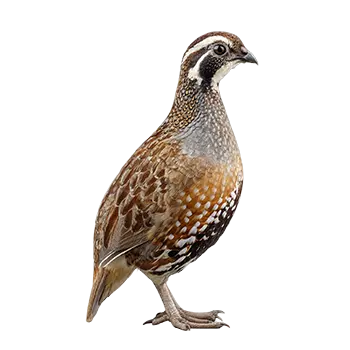

Federal Wildlife Law & the Bobwhite

The legal framework governing the Bobwhite Quail in the United States begins at the federal level, though the species' regulatory status differs fundamentally from that of migratory birds. The Migratory Bird Treaty Act of 1918, which provides the primary federal protection for most North American bird species, does not cover the Bobwhite Quail. Because the Bobwhite is classified as a resident gamebird rather than a migratory species, its management falls primarily under state jurisdiction. This distinction is critical for understanding why Bobwhite regulations vary so significantly from one state to the next.

The Lacey Act of 1900, one of the oldest federal wildlife statutes in the United States, does apply to the Bobwhite insofar as it prohibits the interstate transport of wildlife taken in violation of state law. A hunter or breeder who kills or captures Bobwhites illegally in one state and transports them across state lines faces federal prosecution under the Lacey Act, even though the underlying violation is a state offense. This federal backstop adds a layer of enforcement to state regulations and has been used in cases involving large-scale poaching and illegal commercial trade in gamebirds.

The Endangered Species Act does not currently list the Bobwhite Quail at the federal level, though the species' steep population declines have prompted periodic discussion about whether listing or candidate status might be warranted. Some subspecies, particularly the Masked Bobwhite (Colinus virginianus ridgwayi) of southern Arizona and northern Sonora, Mexico, have received federal protection under the ESA. The Masked Bobwhite was listed as endangered in 1967 and has been the subject of extensive recovery efforts, including captive breeding and habitat restoration programs managed by the U.S. Fish and Wildlife Service.

Federal farm policy also intersects with Bobwhite regulation in indirect but consequential ways. Programs administered through the Farm Bill, such as the Conservation Reserve Program and the Environmental Quality Incentives Program, provide financial incentives for landowners to establish or maintain grassland and early-successional habitat that benefits Bobwhites and other ground-nesting species. While these programs do not regulate the Bobwhite directly, they shape the landscape-level conditions on which the species depends, making federal agricultural policy a de facto component of the Bobwhite's legal and regulatory environment.

State Hunting Regulations

Because the Bobwhite Quail is managed as a state-level gamebird, hunting regulations vary considerably across its range. Each state within the Bobwhite's distribution sets its own season dates, bag limits, shooting hours, and method-of-take restrictions, and these regulations are typically reviewed and adjusted annually based on population surveys, harvest data, and habitat assessments. Hunters pursuing Bobwhites across multiple states must familiarize themselves with the specific rules of each jurisdiction, as assumptions based on one state's regulations can lead to inadvertent violations in another.

Season structures range from relatively generous in states with strong populations to highly restrictive or closed entirely in states where the species has declined to the point that recreational harvest is no longer sustainable. States such as Georgia, Texas, Oklahoma, and Kansas typically offer seasons running from late October or November through February, with daily bag limits that may range from six to fifteen birds depending on the state and the year. By contrast, several northeastern and Midwestern states that historically supported Bobwhite hunting have closed their seasons indefinitely as populations fell below thresholds considered adequate for sustainable harvest.

Licensing requirements for Bobwhite hunting generally include a state hunting license and, in many states, a separate upland game or small game stamp or permit. Some states also require completion of a hunter education course, and non-resident hunters may face higher license fees and, occasionally, reduced bag limits. Youth hunting programs, which offer relaxed regulations and extended seasons for young hunters accompanied by mentors, have become an important tool for recruitment and retention in states seeking to maintain the cultural tradition of quail hunting.

Enforcement of Bobwhite hunting regulations falls to state wildlife officers, often called game wardens or conservation officers, who patrol hunting areas during the season and conduct compliance checks. Violations can result in fines, license revocations, and in cases of egregious poaching, criminal charges. The use of dogs in Bobwhite hunting is universally permitted and culturally expected, but some states impose restrictions on dog training seasons, requiring permits or limiting training activity to specific dates to minimize disturbance to nesting birds during the reproductive season.

Captive Breeding & Possession Permits

The captive breeding of Bobwhite Quail is a substantial industry in the United States, producing millions of birds annually for release on hunting preserves, dog training operations, and, to a lesser extent, conservation programs. The legal requirements for breeding and possessing captive Bobwhites vary by state and can range from minimal to highly regulated. Understanding these requirements is essential for anyone considering raising Bobwhites for any purpose.

Most states require a game breeder's permit, propagation license, or similar authorization for any individual or facility raising Bobwhites in captivity. The application process typically involves providing information about the facility, the number and source of breeding stock, and the intended disposition of the birds produced. Annual reporting of production numbers and sales is commonly required, and inspections by state wildlife officers may be conducted to verify compliance. Permit fees are generally modest, but failure to obtain the required authorization can result in seizure of birds and significant fines.

The sale and commercial distribution of captive-bred Bobwhites is subject to additional regulation in many jurisdictions. Some states require that commercially sold birds be individually banded or otherwise marked to distinguish them from wild-caught birds, which are generally illegal to sell. Interstate shipment of live Bobwhites may trigger federal requirements under the Lacey Act and may also require health certificates issued by a licensed veterinarian certifying that the birds are free of specified diseases. Compliance with these requirements is particularly important for large-scale operations that ship birds across state lines to hunting preserves and training facilities.

Keeping Bobwhite Quail as personal pets or aviary birds is regulated inconsistently across the states. Some jurisdictions permit the keeping of small numbers of Bobwhites without a special permit, treating them similarly to domestic poultry. Others require the same game breeder's license that applies to commercial operations, regardless of the number of birds kept or the keeper's intent. Municipal ordinances may impose additional restrictions, particularly in suburban and urban areas where the keeping of any poultry or gamebirds may be prohibited or subject to zoning approval. Prospective keepers should consult both state wildlife agency regulations and local government ordinances before acquiring Bobwhites.

Hunting Preserves & Commercial Operations

Licensed hunting preserves, also known as shooting preserves or regulated shooting areas, operate under a distinct legal framework that allows them to release and harvest pen-raised Bobwhites outside the restrictions that apply to wild bird hunting. These operations are licensed and regulated by state wildlife agencies, and the specific rules governing them vary significantly from state to state. In general, preserves are permitted to operate during extended seasons, often spanning from September or October through March or April, and may offer higher or unlimited bag limits relative to the regulations for wild bird hunting.

The licensing process for hunting preserves typically requires the operator to register the property with the state wildlife agency, pay an annual fee, maintain records of birds purchased and released, and submit harvest reports at the end of each season. Acreage minimums are common, with many states requiring that a preserve encompass at least a specified number of contiguous acres to qualify for licensing. Stocking densities, boundary marking, and signage requirements are also regulated to ensure that preserve operations do not interfere with wild bird populations on adjacent lands.

Liability and insurance considerations represent an important legal dimension of hunting preserve operation. Preserve operators are generally responsible for ensuring the safety of their clients and staff, and most carry specialized liability insurance to cover hunting-related accidents. Many states have enacted recreational use statutes or assumption-of-risk provisions that offer some legal protection to landowners who open their property to hunting, but the specifics of these protections vary and do not eliminate the operator's duty of care. Guides and dog handlers employed by preserves may also be subject to licensing or certification requirements in some jurisdictions.

The intersection of preserve regulations with property rights and land use law can create complex legal situations, particularly when preserves border residential areas, public lands, or properties with conservation easements. Noise complaints, trespass disputes, and concerns about the ecological impact of releasing large numbers of pen-raised birds have all generated legal conflicts in various states. As suburban development encroaches on formerly rural landscapes, the legal environment for hunting preserve operations is likely to become more complex, requiring operators to stay closely informed of evolving regulations and community standards.

Conservation Law & Habitat Protection

The legal mechanisms for Bobwhite habitat conservation operate at federal, state, and local levels and encompass a range of regulatory, incentive-based, and voluntary approaches. At the federal level, the Farm Bill's conservation title provides the primary legislative framework for incentivizing habitat management on private agricultural lands. The Conservation Reserve Program, which pays landowners annual rental fees to convert marginal cropland to permanent vegetative cover, has been one of the most significant tools for creating Bobwhite habitat at landscape scales, though enrollment levels and program funding have fluctuated with successive Farm Bill reauthorizations.

State-level habitat conservation laws and programs complement federal efforts. Many states within the Bobwhite's range have established wildlife management areas, state game lands, or public hunting areas where habitat is managed explicitly for upland gamebirds including Bobwhites. The acquisition, management, and regulation of these public lands are governed by state wildlife codes and are funded through a combination of hunting license revenues, federal Pittman-Robertson Act excise tax distributions, and state general funds. Some states have also enacted dedicated funding mechanisms, such as habitat stamps or conservation license plates, that direct revenue specifically toward upland bird habitat.

Conservation easements represent an increasingly important legal tool for protecting Bobwhite habitat on private lands. Under a conservation easement, a landowner voluntarily restricts future development or land use changes on a property in exchange for tax benefits, direct payments, or both. These easements are typically held by land trusts or government agencies and are legally binding in perpetuity, providing long-term protection for habitat that might otherwise be converted to uses incompatible with Bobwhite survival. The legal structure and tax treatment of conservation easements have been subject to periodic legislative revision and IRS scrutiny, adding complexity for landowners and conservation organizations navigating this tool.

Prescribed fire, the single most important habitat management practice for Bobwhites across much of the Southeast, operates within a legal framework that varies significantly by state. Prescribed burn laws typically establish requirements for burn planning, notification of neighbors and authorities, certification of burn managers, and liability standards. Some states have adopted presumptive negligence standards that make the burner liable for any damage caused by an escaped fire, while others have enacted right-to-burn statutes that provide greater legal protection for landowners conducting prescribed burns in accordance with approved plans. The legal environment for prescribed burning has direct implications for Bobwhite habitat quality, as restrictive liability standards can discourage the use of fire and contribute to the woody encroachment that degrades quail habitat.

International Regulations & Trade

The Bobwhite Quail's legal status beyond the borders of the United States involves a distinct set of international regulations and trade agreements. The species is not currently listed under the Convention on International Trade in Endangered Species (CITES), which means that international commercial trade in Bobwhites and their products does not require the CITES permits that apply to many other bird species. However, the Masked Bobwhite subspecies, which is federally listed as endangered in the United States, is subject to ESA trade restrictions that effectively prohibit its commercial export.

In Mexico, where several Bobwhite subspecies occur natively, the species is regulated under federal wildlife law administered by SEMARNAT, the Secretariat of Environment and Natural Resources. Hunting of Bobwhites in Mexico requires appropriate permits and is subject to seasonal and bag limit restrictions that are set regionally. The legal framework for wildlife management in Mexico has undergone significant reform in recent decades, with increasing emphasis on sustainable use and community-based conservation, but enforcement capacity varies considerably across the country's diverse landscapes and jurisdictions.

Bobwhite Quail have been introduced to various countries outside their native range, including parts of the Caribbean, Europe, and East Asia. The legal status of these introduced populations depends entirely on the receiving country's domestic wildlife law. In some jurisdictions, introduced Bobwhites are classified as domestic or semi-domestic poultry and are subject to agricultural regulations rather than wildlife laws. In others, they may be regulated as exotic or invasive species, with restrictions on further release, breeding, or transport designed to prevent ecological harm to native fauna.

The import and export of live Bobwhites between countries is subject to veterinary health certification requirements, quarantine protocols, and, in some cases, biosecurity restrictions designed to prevent the spread of avian diseases across borders. The trade in Bobwhite hatching eggs, which is less heavily regulated than live bird shipments in some jurisdictions, has facilitated the international dispersal of the species into aviculture and hunting preserve operations worldwide. Prospective importers and exporters should consult both the wildlife and agricultural regulatory authorities of the origin and destination countries before initiating any cross-border movement of Bobwhites or their reproductive material.

Always consult a qualified professional before making any health-related decisions. This content is provided for informational reference only and should not replace professional guidance specific to your animal.