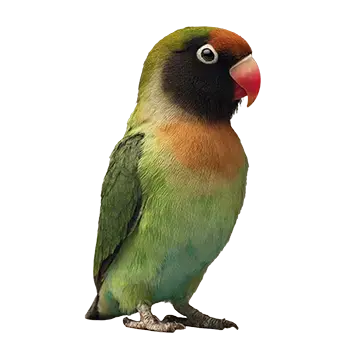

The Black-Cheeked Lovebird has appeared in a handful of wildlife documentaries, though it has never been the sole subject of a major production in the way that more commercially recognizable species have. Its appearances tend to occur within broader programs about African birdlife, Zambian wildlife, or the ecology of the Kafue basin. In these contexts, the species typically features as an example of a range-restricted endemic, illustrating the fragility of specialized habitats and the conservation challenges facing lesser-known avian species.
Documentary crews that have filmed the Black-Cheeked Lovebird in the wild have often focused on its behavior at waterholes, where flocks gather during the dry season in scenes that are both visually striking and ecologically significant. The sight of dozens of small green parrots descending to drink at a diminishing pool, surrounded by parched mopane woodland, provides a compelling visual narrative about water scarcity and habitat dependence. These sequences have been used effectively in conservation-focused programming to communicate the stakes of environmental change in southern Africa.
Several short-format films and web documentaries produced by conservation organizations, including BirdLife International and the World Parrot Trust, have given the Black-Cheeked Lovebird more focused attention. These productions are typically aimed at fundraising and awareness-building audiences and combine field footage with interviews featuring researchers and community members working on the species' behalf. While they do not reach the viewership of mainstream nature television, they play an important role in connecting international supporters with on-the-ground conservation efforts.
The species' relative obscurity in mainstream media is itself a point of interest for documentary makers exploring the concept of conservation prioritization. Programs that examine how funding and public attention are allocated among threatened species have occasionally used the Black-Cheeked Lovebird as a case study, contrasting its modest profile with the enormous resources directed toward charismatic megafauna. In this way, the bird's absence from the spotlight has paradoxically become part of its media narrative.