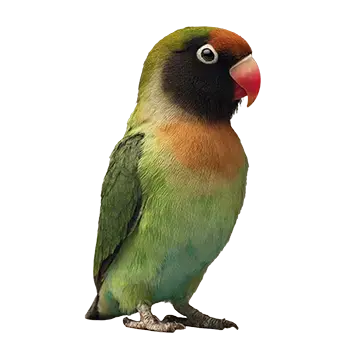

The Black-Cheeked Lovebird has been listed on Appendix II of the Convention on International Trade in Endangered Species of Wild Fauna and Flora since 1981. Appendix II listing does not prohibit international trade outright but requires that any export be authorized by a CITES Management Authority in the country of origin and accompanied by a valid export permit. The permit can only be issued when the exporting country's Scientific Authority has determined that the trade will not be detrimental to the survival of the species in the wild, a standard known as the non-detriment finding.
In practice, Zambia has maintained a zero export quota for wild-caught Black-Cheeked Lovebirds for many years, effectively prohibiting the legal export of birds taken from wild populations. This quota reflects the species' vulnerable conservation status and the consensus among Zambian authorities and international conservation bodies that wild harvesting is not sustainable given the small and declining population. The zero quota does not prevent the international trade in captive-bred specimens, which remains legal provided the appropriate CITES documentation accompanies each shipment.
For breeders and buyers in CITES signatory countries, the practical implication is that any Black-Cheeked Lovebird entering international trade must be demonstrably captive-bred and must be accompanied by documentation confirming its captive origin. The specific documentation requirements vary by country but typically include a CITES export permit from the country of origin, a CITES import permit or notification from the receiving country, and proof that the birds were bred in a facility registered with or known to the relevant CITES authority. Failure to provide adequate documentation can result in seizure of the birds, fines, and criminal prosecution.
The CITES framework is periodically reviewed at the Conference of the Parties, which meets approximately every three years. The status of listed species, including the Black-Cheeked Lovebird, is assessed in light of new population data, trade volumes, and conservation developments. While there has been no recent proposal to move the species to Appendix I, which would impose a near-total ban on commercial international trade, such a reclassification remains a possibility if wild populations continue to decline or if evidence of significant illegal trade emerges.