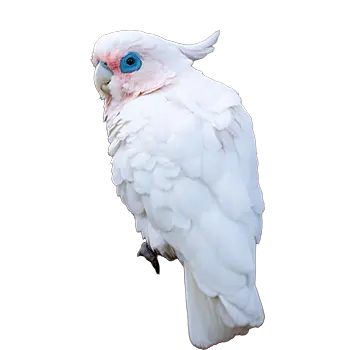

Preparing Your Cockatoo for Travel

Successful travel with a Bare-Eyed Cockatoo begins well before the day of departure. The single most important preparatory step is acclimating the bird to its travel carrier. A cockatoo that has never spent time in a carrier will almost certainly experience significant stress when confined during transit, and that stress can manifest as loud vocalizations, destructive chewing, self-injurious behavior, or refusal to eat or drink. Begin carrier training weeks or even months in advance by placing the carrier in the bird's living area, encouraging exploration with treats and favorite toys, and gradually increasing the duration of time spent inside with the door closed.

Choosing the right carrier is equally important. For a Bare-Eyed Cockatoo, a hard-sided carrier rated for airline use is generally the best option, as it provides structural protection, adequate ventilation, and resistance to the bird's powerful bill. The carrier should be large enough for the cockatoo to stand, turn around, and extend its wings partially, but not so spacious that the bird is thrown about during sudden stops or turbulence. Secure perches, spill-resistant water dispensers, and a tray lined with absorbent material are standard outfitting recommendations.

A pre-travel veterinary examination is strongly recommended and may be legally required depending on the destination. Your avian veterinarian can assess the bird's fitness for travel, update vaccinations if applicable, and issue the health certificate that most airlines and many state or national authorities require. Schedule this appointment within the time window specified by the relevant regulations, which is typically 10 days before departure for domestic travel within the United States and may differ for international journeys.

Finally, consider the bird's emotional state. Bare-Eyed Cockatoos are social, routine-oriented animals, and the disruption of travel can be distressing even with thorough preparation. Bringing familiar items such as a preferred toy or a small piece of fabric from the bird's cage can provide comfort. Maintaining a calm demeanor yourself is also essential, as cockatoos are highly attuned to their owners' emotional states and will often mirror anxiety or agitation.

Air Travel with a Bare-Eyed Cockatoo

Flying with a Bare-Eyed Cockatoo requires careful planning and a thorough understanding of airline policies, which vary significantly between carriers and change frequently. Most major airlines permit birds to travel either in the cabin, if the carrier fits under the seat, or as checked or cargo baggage in a pressurized and temperature-controlled hold. The Bare-Eyed Cockatoo's moderate size means that cabin travel may be possible on some airlines, but the bird's potential for loud vocalization makes this a consideration that both the owner and the airline must weigh.

When booking, contact the airline's live animal desk directly rather than relying on general customer service or online booking tools. Confirm the airline's current avian pet policy, inquire about breed-specific restrictions, and reserve a spot for the bird well in advance, as most airlines limit the number of live animals permitted per flight. Obtain written confirmation of the booking and any associated fees, and review the airline's carrier specifications to ensure your equipment meets their requirements exactly.

For flights during which the bird must travel in the cargo hold, temperature is a critical concern. Most airlines impose temperature embargoes that restrict live animal transport when ground temperatures at the origin, destination, or any connecting airport exceed or fall below specified thresholds. In the United States, these limits are typically set at approximately 85 degrees Fahrenheit on the high end and 45 degrees on the low end, though exact figures vary by carrier. Planning flights during temperate seasons and choosing direct routes whenever possible significantly reduces the risk of temperature-related stress or injury.

On the day of travel, arrive at the airport early to allow time for check-in procedures, security screening, and any last-minute documentation checks. Ensure the carrier is clearly labeled with your contact information, the bird's identification details, and directional arrows indicating the correct orientation. Attach a small container of food to the outside of the carrier for use by airline staff in the event of a delay, and include written feeding and watering instructions. After arrival, move the bird to a quiet, temperature-controlled environment as soon as possible and allow ample recovery time before introducing further stressors.

Ground Transportation & Road Trips

Ground transportation is often the most practical and least stressful way to travel with a Bare-Eyed Cockatoo, particularly for distances that can be covered in a single day of driving. In a personal vehicle, the bird should be secured in its carrier at all times while the car is in motion, with the carrier positioned on a stable surface away from direct sunlight and airbag deployment zones. The back seat is generally the safest location. Never allow a cockatoo to ride unrestrained in a moving vehicle, as even a minor collision or sudden stop can cause fatal injuries to an unsecured bird.

Temperature management inside the vehicle is critical. Cockatoos are sensitive to both overheating and chilling, and the interior of a parked car can reach lethal temperatures within minutes on a warm day. Never leave a Bare-Eyed Cockatoo unattended in a parked vehicle under any circumstances. During the drive, maintain a comfortable cabin temperature and avoid directing air conditioning or heating vents directly at the carrier. Partial covering of the carrier with a breathable cloth can help reduce visual stimulation and promote calm during the journey.

For longer road trips, plan regular stops to check on the bird, offer water and food, and allow brief periods of supervised interaction outside the carrier if conditions permit. Choose rest stops that are quiet and away from heavy traffic, and ensure the car is locked and climate-controlled if you must step away briefly. If overnight stops are necessary, research pet-friendly accommodations in advance and confirm that the property accepts birds specifically, as many hotels that welcome dogs and cats do not extend the same courtesy to avian guests.

Public transportation presents additional challenges. Policies regarding birds on buses, trains, and rideshare services vary by system and region, and many explicitly prohibit live animals other than service animals. If public transit is your only option, confirm the rules in advance and be prepared for the possibility that you and your bird may be denied boarding. In urban areas, some specialty pet transport services offer door-to-door travel for birds, providing climate-controlled vehicles and experienced handlers.

International Relocation & Quarantine

Relocating internationally with a Bare-Eyed Cockatoo is among the most complex logistical undertakings a bird owner can face. Beyond the CITES permits discussed in the legal section of this guide, most destination countries impose their own import requirements for live birds, which can include veterinary health certificates, specific disease testing, quarantine periods, and pre-arrival notification to the national veterinary authority. Failure to comply with any element of these requirements can result in the bird being refused entry, confiscated, or ordered into extended quarantine at the owner's expense.

Quarantine requirements vary dramatically by country. Australia, which maintains some of the strictest biosecurity protocols in the world, generally does not permit the importation of pet birds from overseas except under very limited circumstances, and any bird that is admitted faces a mandatory quarantine period in a government-approved facility. The United States requires a 30-day quarantine at a USDA-approved facility for most imported birds, with testing for avian diseases including avian influenza and psittacosis. European Union member states impose their own quarantine and testing protocols, which have been harmonized to some degree but still vary in implementation.

The logistics of international bird transport typically require the services of a professional pet relocation company experienced in live animal shipping. These firms handle documentation, coordinate with airlines and customs authorities, arrange quarantine accommodations, and manage the physical transport of the bird from origin to destination. While professional relocation services represent a significant expense, the complexity of international bird transport makes professional assistance a practical necessity for most owners.

Planning should begin at least six months before the intended move date, and in some cases even earlier. Certain disease tests required by destination countries must be performed within specific time windows, and the results may take weeks to process. CITES permits can take months to obtain, and quarantine facility availability may be limited. Starting the process early, maintaining meticulous records, and communicating frequently with both the pet relocation company and the destination country's veterinary authority are the keys to a successful international move.

Health Certificates & Documentation

Virtually all forms of regulated travel with a Bare-Eyed Cockatoo require some form of health documentation, and understanding what is needed, who can issue it, and when it must be obtained is essential to avoiding costly disruptions. In the United States, the standard document for domestic travel is a Certificate of Veterinary Inspection, commonly known as a health certificate, issued by a USDA-accredited veterinarian. This certificate confirms that the bird has been examined and found to be free of signs of communicable disease, and it is typically valid for 10 days from the date of issue.

For international travel, the documentation requirements are more extensive. Most countries require not only a health certificate but also specific laboratory test results, proof of vaccination status where applicable, and endorsement of the health certificate by the national veterinary authority. In the United States, the USDA Animal and Plant Health Inspection Service provides endorsement services through its Veterinary Services offices, and appointments should be scheduled well in advance of the travel date. The endorsed health certificate must conform to the specific format and content requirements of the destination country, which can be obtained through the country's embassy or its online import permit system.

Microchipping or leg banding may be required to establish the bird's identity and link it to its health and CITES documentation. Many countries and airlines now require a form of permanent identification for live animal shipments, and a microchip implanted by a qualified avian veterinarian provides a reliable and tamper-resistant means of identification. If the bird is already banded, ensure that the band number is recorded on all documentation and that the band is legible and securely attached.

Keeping organized copies of all travel documentation is not merely advisable but essential. Carry physical copies of health certificates, CITES permits, microchip records, and any destination-country import permits in a clearly labeled folder that accompanies the bird at all times during transit. Digital backup copies stored in a cloud-accessible location provide additional security against loss. At each checkpoint, whether airline counter, customs station, or quarantine facility, you may be asked to present some or all of these documents, and any inability to produce them can result in delays, additional inspections, or refusal of entry.

Accommodation, Boarding & Staying Behind

Finding suitable accommodation while traveling with a Bare-Eyed Cockatoo requires advance planning, as the hospitality industry's approach to avian guests ranges from welcoming to flatly prohibitive. Many hotel chains that advertise pet-friendly policies are referring exclusively to dogs and cats, and their front-desk staff may have no protocol for handling a cockatoo check-in. When booking, call the property directly, explain that you will be traveling with a parrot, and confirm acceptance in writing. Ask about any pet deposit or fee, noise policies, and whether there are restrictions on leaving the bird in the room unattended.

Vacation rentals booked through private platforms can offer more flexibility, as individual property owners may be more willing to accommodate an unusual pet. However, the same due diligence applies. Confirm acceptance of birds specifically, inquire about any damage deposit, and be transparent about the bird's potential impact on the property. Bare-Eyed Cockatoos are capable of inflicting significant cosmetic damage to wooden furniture, window frames, and soft furnishings if left unsupervised, so plan to supervise the bird closely or confine it to its carrier or a portable travel cage when you cannot be present.

For trips where bringing the bird is impractical, professional avian boarding facilities offer a safe alternative. Reputable boarding operations provide species-appropriate housing, experienced care staff, and veterinary oversight. When evaluating a boarding facility, visit in person to inspect cleanliness, enclosure size, noise management, and the overall health and demeanor of the birds in residence. Ask about the facility's protocols for emergencies, feeding routines, and socialization during the boarding period. Booking well in advance is advisable, particularly during holiday seasons when demand for boarding services peaks.

A trusted pet sitter who is experienced with parrots is another option. In-home care has the advantage of keeping the bird in its familiar environment, reducing the stress associated with transport and novel surroundings. If choosing a sitter, provide detailed written instructions covering diet, medication, daily routine, behavioral cues, and emergency veterinary contacts. A trial visit before your departure allows the sitter to interact with the bird under your supervision and ensures that both parties are comfortable with the arrangement. Whether boarding or sitting, the goal is to ensure that the bird's physical and emotional needs are met consistently throughout your absence.

Always consult a qualified professional before making any health-related decisions. This content is provided for informational reference only and should not replace professional guidance specific to your animal.