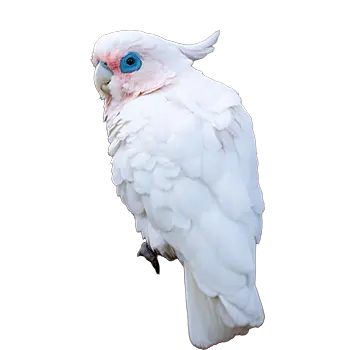

International Trade & CITES Framework

The Bare-Eyed Cockatoo is listed under Appendix II of the Convention on International Trade in Endangered Species of Wild Fauna and Flora, commonly known as CITES. Appendix II designation does not indicate that the species is currently threatened with extinction, but it does mean that international commercial trade is regulated to prevent exploitation that could threaten the species' survival. Any cross-border movement of a Bare-Eyed Cockatoo, whether for sale, breeding loan, or relocation with an emigrating owner, requires valid CITES documentation issued by the relevant national authority.

The practical effect of the CITES listing is that all international transactions involving Bare-Eyed Cockatoos must be accompanied by export permits from the country of origin and, in many cases, import permits from the receiving country. The issuing authorities are tasked with confirming that the trade will not be detrimental to the survival of the species in the wild and that the specimens were legally acquired. For captive-bred birds, this typically involves verifying the breeding facility's records and ensuring that the birds in question are not of wild-caught origin unless they were legally obtained prior to applicable trade restrictions.

CITES enforcement varies by country, and prospective buyers or sellers should be aware that penalties for non-compliance can be severe, including confiscation of the bird, substantial fines, and criminal prosecution. In countries with strong enforcement regimes, such as the United States, the European Union member states, and Australia, documentation requirements are rigorously applied. In other jurisdictions, enforcement may be less consistent, but the legal obligations remain in place regardless.

It is essential for any owner contemplating an international move or an international purchase to begin the CITES permit process well in advance. Processing times can be lengthy, and incomplete or incorrect applications are commonly returned, causing further delays. Consulting with a customs broker experienced in live animal shipments or with the CITES management authority in both the origin and destination countries is strongly recommended.

Australian Export Restrictions & Domestic Law

Australia has maintained a comprehensive ban on the export of native wildlife since the Wildlife Protection (Regulation of Exports and Imports) Act of 1982, and earlier restrictions dating to 1960 effectively closed the legal export of native parrots decades before the current legislation was enacted. The Bare-Eyed Cockatoo, as an Australian native species, cannot be legally exported from Australia for commercial purposes. This ban applies equally to wild-caught and captive-bred individuals, and exceptions are granted only in narrowly defined circumstances such as approved zoo exchange programs or government-sanctioned research collaborations.

Within Australia, the legal framework governing the keeping of Bare-Eyed Cockatoos varies significantly by state and territory. In some jurisdictions, such as New South Wales and Victoria, native cockatoos may be kept as pets without a specific license, provided the birds were legally obtained. In other states, including Queensland and Western Australia, a native animal keeping permit or license may be required, and the conditions attached to such permits can include enclosure specifications, record-keeping obligations, and periodic inspections.

The species' status as an agricultural pest in many parts of Australia adds a further layer of regulatory complexity. State and territory governments have the authority to declare the Bare-Eyed Cockatoo a pest species in specific regions, authorizing management measures that can include controlled culling, trapping, and destruction of nests. These declarations do not affect the legality of keeping the species as a companion animal, but they do reflect the sometimes contradictory positions that governments must navigate when a native species causes economic harm.

Prospective owners within Australia should consult their state or territory wildlife authority for current permit requirements and any restrictions that may apply. Regulations can change, and local government ordinances may impose additional conditions beyond those set at the state level. Keeping accurate records of a bird's provenance, including purchase receipts, breeder documentation, and any applicable band or microchip numbers, is prudent and may be required by law.

United States Federal & State Regulations

In the United States, the Bare-Eyed Cockatoo is legal to own as a companion animal at the federal level, provided the bird was legally imported or bred domestically. The Wild Bird Conservation Act of 1992 effectively ended most commercial importation of wild-caught parrots into the United States, but captive-bred Bare-Eyed Cockatoos produced by domestic breeders are freely available for sale. Federal law requires compliance with the Lacey Act, which prohibits the trade of wildlife obtained in violation of foreign or domestic law, and with CITES requirements for any birds crossing international borders.

State-level regulations introduce considerable variation. Some states impose no additional restrictions on cockatoo ownership beyond general animal welfare statutes. Others classify cockatoos as exotic animals and require owners to obtain specific permits, meet enclosure standards, or submit to periodic inspections. A small number of jurisdictions restrict or prohibit the private keeping of certain parrot species altogether, although outright bans on cockatoos are uncommon at the state level.

Local ordinances can add further complexity. Municipal and county governments in the United States have broad authority to regulate animal keeping within their boundaries, and some communities have enacted noise ordinances, zoning restrictions, or exotic animal bans that affect cockatoo ownership. In densely populated urban and suburban areas, complaints from neighbors about cockatoo vocalizations have occasionally prompted local authorities to invoke nuisance statutes, resulting in warnings, fines, or orders to rehome the bird.

Prospective Bare-Eyed Cockatoo owners in the United States should investigate the regulations that apply at every level of government before acquiring a bird. This process can seem daunting, but state wildlife agencies, avian veterinarians, and local bird clubs are typically knowledgeable about applicable rules and can provide guidance. Maintaining documentation of the bird's legal origin is always advisable, as it provides protection in the event of a regulatory inquiry.

European Union & United Kingdom Regulations

Within the European Union, the keeping and trade of Bare-Eyed Cockatoos is governed by a combination of EU-wide wildlife trade regulations and member state domestic legislation. The EU Wildlife Trade Regulations implement CITES requirements across all member states, and any importation of a Bare-Eyed Cockatoo from outside the EU requires an import permit and proof that the bird was legally acquired. Intra-EU transfers of CITES-listed species are also subject to documentation requirements, though these are generally less onerous than those governing international trade.

Individual EU member states apply their own additional rules. In Germany, for example, the keeping of parrots is regulated under the Federal Nature Conservation Act and may require registration with local authorities, proof of legal acquisition, and compliance with minimum enclosure standards specified in expert opinions issued by the Federal Ministry of Food and Agriculture. In the Netherlands, specific parrot species are subject to mandatory leg banding or microchipping, and breeders must maintain detailed records of all breeding activity.

Following its departure from the European Union, the United Kingdom established its own CITES management framework, and the rules governing the importation, keeping, and breeding of Bare-Eyed Cockatoos in England, Scotland, Wales, and Northern Ireland are now distinct from those of the EU. UK law requires CITES permits for imports and exports, and the Animal Welfare Act of 2006 imposes general welfare obligations on all animal keepers, including parrot owners. Some local councils may impose additional conditions related to noise or the keeping of exotic animals.

Across both the EU and the UK, enforcement of exotic bird regulations has been strengthened in recent years in response to concerns about wildlife trafficking and animal welfare. Buyers should ensure that any Bare-Eyed Cockatoo they acquire comes with complete documentation, including a closed leg band or microchip, breeder records, and any required certificates. Purchasing from reputable, established breeders or adopting from recognized rescue organizations is the most reliable way to ensure legal compliance.

Breeding Regulations & Ethical Standards

The breeding of Bare-Eyed Cockatoos for sale or exchange is subject to regulation in most jurisdictions, though the specific requirements vary widely. In many countries, commercial breeders must hold specific licenses, maintain detailed breeding records, and submit to inspections by wildlife or agricultural authorities. These requirements are designed to ensure the welfare of breeding birds and their offspring, to prevent the laundering of illegally obtained wild-caught birds through captive breeding operations, and to maintain the traceability of individual animals through the supply chain.

In the United States, commercial bird breeders are generally required to hold a USDA license under the Animal Welfare Act if they sell birds at wholesale or to pet stores. Small-scale breeders who sell directly to consumers may be exempt from federal licensing in some circumstances, but state-level requirements may still apply. Record-keeping obligations typically include documenting the identity and origin of breeding stock, the dates and outcomes of breeding attempts, and the disposition of all offspring.

Ethical breeding standards within the avicultural community often exceed legal minimums. Reputable breeders of Bare-Eyed Cockatoos typically health-test their breeding stock, provide extensive socialization for young birds before placement, offer post-sale support to buyers, and screen prospective owners to ensure they are prepared for the commitment involved. Industry organizations and breed clubs promote best practices through codes of ethics, educational publications, and peer oversight.

The distinction between responsible breeding and substandard operations is an important consideration for prospective buyers. Birds produced in high-volume, profit-driven facilities may lack the socialization, health screening, and genetic diversity that characterize well-managed breeding programs. Acquiring a Bare-Eyed Cockatoo from a breeder who is transparent about their practices, willing to provide references, and committed to the long-term welfare of their birds is the best protection against both legal complications and the heartache of a poorly adjusted or unhealthy companion.

Liability, Insurance & Practical Legal Considerations

Owning a Bare-Eyed Cockatoo carries practical legal considerations that extend beyond permits and trade regulations. Like all cockatoos, the Bare-Eyed variety is capable of delivering a powerful bite that can cause significant injury. Owners may be held liable for injuries inflicted by their bird on visitors, service providers, or other household members, depending on the applicable negligence or strict liability standards in their jurisdiction. Homeowner's or renter's insurance policies may or may not cover incidents involving exotic pets, and owners should review their coverage and consider supplemental liability insurance if necessary.

Noise is another area where legal issues can arise. The Bare-Eyed Cockatoo's vocalizations, while generally less intense than those of larger cockatoo species, can be loud and persistent, particularly during dawn and dusk contact-calling periods. In communities with noise ordinances, chronic complaints from neighbors can lead to citations, fines, or court orders. Owners should be proactive in managing vocalization through environmental enrichment, behavioral training, and considerate placement of the bird's enclosure within the home.

Housing-related restrictions are a further concern, particularly for renters. Many landlords and property management companies include clauses in lease agreements that restrict or prohibit the keeping of exotic animals, and cockatoos frequently fall within the scope of these restrictions. Condominium and homeowners' association bylaws may impose similar limitations. Prospective owners should clarify housing restrictions before acquiring a bird, as the consequences of non-compliance can include eviction or forced rehoming of the animal.

Estate planning is an often-overlooked legal consideration for cockatoo owners. Given the Bare-Eyed Cockatoo's potential lifespan of 40 to 60 years, the bird may well outlive its owner. Establishing a pet trust, naming a designated caretaker in a will, or making arrangements with a parrot rescue organization are all prudent steps. Several jurisdictions now recognize enforceable pet trusts, allowing owners to set aside funds for the ongoing care of a companion animal after their death. Taking these steps ensures that the bird's future is secured regardless of what happens to its human family.

Always consult a qualified professional before making any health-related decisions. This content is provided for informational reference only and should not replace professional guidance specific to your animal.