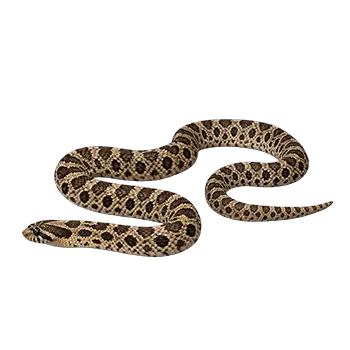

Enrichment for the Mexican Hognose Snake operates on a fundamentally different paradigm than enrichment for mammals, birds, or even many other reptile species. Snakes do not play with objects in the way a dog chases a ball or a parrot manipulates a puzzle feeder, and the concept of a "toy" must be reinterpreted through the lens of ophidian behavior and sensory ecology. For Heterodon kennerlyi, enrichment means providing environmental complexity that stimulates the animal's natural behavioral repertoire — burrowing through substrate, investigating novel scents, navigating varied terrain, and choosing among multiple microhabitats with different thermal, humidity, and light characteristics. A well-enriched hognose snake enclosure does not look like a playroom; it looks like a carefully curated slice of the Chihuahuan Desert floor.
The scientific basis for reptile enrichment has grown substantially over the past two decades, and the emerging consensus among herpetological researchers and progressive keepers is that snakes housed in environmentally complex enclosures exhibit lower stress hormone levels, more diverse behavioral repertoires, better feeding responses, and improved long-term health outcomes compared to snakes kept in minimalist setups. For a fossorial species like the Mexican Hognose Snake, complexity means depth and variety below the surface as much as it means structure above it. A snake that can burrow through substrate of varying density, encounter buried objects at different depths, and select among hides with different microclimates is engaging in the same decision-making and exploratory behavior it would perform in the wild.
The keeper's role in enrichment is that of a habitat designer rather than a playmate. Mexican Hognose Snakes do not seek interaction with their owners as a form of enrichment — handling provides exercise and socialization benefits but is not a substitute for environmental complexity within the enclosure. The most effective enrichment strategy combines a well-designed baseline habitat with periodic, deliberate changes that introduce novelty without overwhelming the animal. Novelty is the engine of enrichment: a new scent, a repositioned hide, or a different substrate texture in one corner of the enclosure gives the snake something to investigate, and investigation is the snake-equivalent of play.
Overstimulation is a genuine risk that well-meaning keepers should guard against. Mexican Hognose Snakes are relatively bold among colubrid species but still rely on predictable environmental cues for security. An enclosure that changes dramatically every few days — new hides, new substrate, new scents — can produce chronic stress rather than enrichment. The goal is a stable, complex baseline habitat with small, controlled changes introduced at intervals that allow the snake to habituate to each modification before the next one arrives. Observing the snake's behavior after each change provides feedback: a snake that emerges to explore within hours is responding positively, while a snake that buries itself completely and refuses food for an extended period may have been overstimulated.