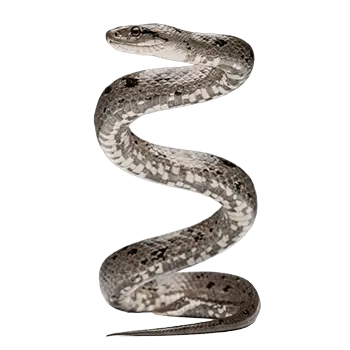

The concept of enrichment in snake husbandry has evolved dramatically over the past two decades, moving from the minimalist philosophy that snakes are simple animals requiring only food, water, and warmth to a more nuanced understanding that these animals are cognitively capable creatures whose welfare is significantly enhanced by environmental complexity. The Gray Rat Snake is an ideal species for demonstrating the value of enrichment because it is an active, inquisitive colubrid that explores its environment extensively during its active periods. Wild Pantherophis spiloides navigate complex three-dimensional landscapes that include forest canopies, rock crevices, barn interiors, and riparian vegetation — environments rich in texture, structure, and sensory variation.
Enrichment for captive Gray Rat Snakes falls into several functional categories: structural enrichment that provides climbing, hiding, and resting opportunities; sensory enrichment that introduces novel scents, textures, and visual stimuli; and cognitive enrichment that challenges the animal to solve simple problems or explore novel configurations. The goal is not to entertain the snake in the way a dog might be entertained with a ball, but to provide the environmental complexity that allows the animal to express its full behavioral repertoire — climbing, investigating, thermoregulating at multiple elevations, retreating to secure refuges, and navigating varied terrain.
The behavioral indicators of an enriched Gray Rat Snake are unmistakable to an attentive keeper. Animals housed in complex, well-furnished enclosures spend more time in active exploration, display more confident and less defensive behavior during handling, feed more reliably, and exhibit fewer stress-related behaviors such as repetitive glass-surfing or persistent hiding. Conversely, Gray Rat Snakes maintained in barren enclosures with only a single hide and a water bowl frequently develop chronic stress patterns that manifest as feeding refusal, excessive hiding, defensive striking, and abnormal skin conditions related to compromised immune function.
Investing in enrichment does not require a large budget or specialized knowledge. Many of the most effective enrichment items can be sourced from nature — a well-cleaned branch from a non-toxic hardwood tree, a flat stone from a creek bed, a handful of dried leaves — or constructed from inexpensive materials available at any hardware store. The key is understanding what types of stimulation matter to the animal and presenting them in ways that encourage active engagement rather than passive coexistence.