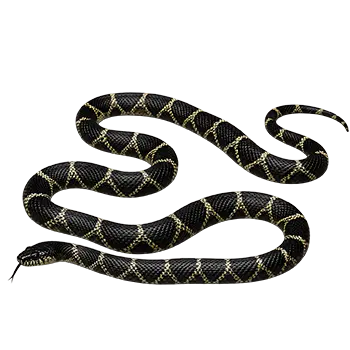

Understanding Snake Enrichment

Enrichment for snakes is a concept that has gained significant traction among herpetologists and experienced keepers over the past two decades, moving well beyond the outdated notion that a snake's needs are fully met by a hide, a water dish, and a regular feeding schedule. The Florida Kingsnake is an especially rewarding species to enrich because of its naturally inquisitive disposition, its active foraging behavior in the wild, and its willingness to explore novel objects and environments without the prolonged stress responses seen in more defensive colubrid species. In the pine flatwoods, hardwood hammocks, and suburban margins of the Florida peninsula, wild Florida Kingsnakes navigate complex terrain, investigate scent trails left by potential prey and conspecifics, and encounter a constantly shifting mosaic of sensory stimuli that captive environments must approximate if the animal is to express its full behavioral repertoire.

The goals of enrichment for a Florida Kingsnake are threefold: to promote physical activity that maintains muscle tone and cardiovascular health, to provide cognitive stimulation through novelty and problem-solving that prevents the stereotypic behaviors associated with understimulated captive animals, and to allow the expression of species-typical behaviors such as burrowing, climbing, investigating scent trails, and exploring confined spaces. A kingsnake that exhibits regular exploratory movement throughout its enclosure, investigates changes to its environment with tongue-flicking curiosity rather than defensive posturing, and maintains a healthy feeding response is demonstrating the behavioral indicators of effective enrichment.

It is important to distinguish enrichment from stress. Novel stimuli should be introduced gradually and with observation. A Florida Kingsnake that retreats to its hide and remains there for days after an environmental change is telling the keeper that the change was too abrupt or too extreme. Effective enrichment produces brief, investigatory responses — tongue-flicking at a new object, exploring a rearranged hide, following a scent trail across the substrate — followed by a return to normal behavior patterns. The keeper's role is to read the animal's body language and adjust the intensity and frequency of enrichment to match the individual snake's temperament and tolerance.

Finally, enrichment should not be confused with the commercial pet toy market, which is oriented almost entirely toward mammals and birds. Snakes do not play with toys in the way a dog chews a ball or a parrot manipulates a puzzle feeder. Snake enrichment is environmental and sensory, centered on the habitat itself rather than on discrete objects designed for interactive play. This distinction matters because it shifts the keeper's investment away from purchasing novelty products and toward thoughtful habitat design, scent introduction, and handling protocols that provide genuine cognitive and physical benefit.

Environmental Complexity

The physical complexity of the enclosure is the most impactful enrichment tool available to a Florida Kingsnake keeper, and it requires no specialized products — only a thoughtful approach to furnishing and layout. Environmental complexity refers to the variety and arrangement of surfaces, textures, elevations, and microhabitats within the enclosure that give the snake choices about where to rest, how to move, and what to investigate. A complex environment differs fundamentally from a cluttered one: the goal is purposeful diversity, not a chaotic pile of objects that impedes movement and makes cleaning impossible.

Multiple hide options distributed across the thermal gradient are the foundation of environmental complexity. Beyond the standard warm-side and cool-side hides, adding a third hide in the mid-range temperature zone or a humid hide filled with damp sphagnum moss gives the snake additional choices and encourages movement between microhabitats as its physiological needs shift throughout the day. Each hide should differ in material or design — a ceramic cave, a cork bark half-round, and a plastic hide with a tight entry, for example — so that the snake encounters different textures, light levels, and spatial configurations depending on which retreat it selects.

Vertical elements transform a two-dimensional floor space into a three-dimensional habitat. Sturdy branches positioned at low angles, cork bark flats leaned against the enclosure walls, and stacked flagstone or slate ledges allow the Florida Kingsnake to climb, drape, and survey its enclosure from an elevated position. While kingsnakes are classified as terrestrial, they are far more arboreal in practice than many keepers realize, and providing safe climbing structures reveals a dimension of their behavior that a flat enclosure completely suppresses. All vertical elements must be stable enough to bear the snake's weight without shifting, and they should not create gaps between the furnishing and the enclosure wall where the snake could become wedged.

Substrate depth itself constitutes a form of environmental enrichment when it is sufficient to allow burrowing. Florida Kingsnakes are avid burrowers that will tunnel through four to six inches of aspen shavings, coconut fiber, or cypress mulch, creating their own subterranean retreats and pathways. Burrowing engages the snake's entire body musculature, stimulates tactile receptors along the ventral scales, and satisfies a deeply ingrained behavioral drive. Keepers who use thin substrate layers to simplify cleaning are making a practical decision at a real behavioral cost, and striking a balance — using deeper substrate in at least a portion of the enclosure — allows the snake to burrow while keeping part of the floor accessible for spot-cleaning.

Leaf litter, dried magnolia leaves, oak leaves, or commercially available reptile leaf litter scattered across the substrate surface adds textural variety, visual cover, and the rustling sensory feedback that accompanies movement through a forest floor. The Florida Kingsnake's natural habitat is rich with leaf debris, and a scattering of leaves across the enclosure surface is one of the simplest and most effective enrichment additions a keeper can make. Leaves should be replaced periodically as they break down and should be sourced from pesticide-free areas or purchased from reptile supply vendors.

Scent-Based Enrichment

Scent is the dominant sense through which snakes interpret their environment, and scent-based enrichment is arguably the most potent and underutilized enrichment strategy available to kingsnake keepers. The Florida Kingsnake's forked tongue continuously samples airborne chemical particles and delivers them to the vomeronasal organ in the roof of the mouth, constructing a detailed olfactory map of the enclosure and its surroundings. In the wild, this sensory system guides the snake to prey, alerts it to predators, identifies conspecifics, and tracks chemical gradients across the landscape. Replicating even a fraction of this olfactory complexity in captivity produces dramatic increases in exploratory behavior.

The simplest scent enrichment technique involves introducing novel, safe scent objects into the enclosure. A clean, pesticide-free branch from an outdoor tree carries the scent of soil, bark, insects, and weathering that is entirely absent from sterile enclosure furnishings. A small stone or piece of driftwood collected from a natural area and rinsed with plain water introduces mineral and organic scent compounds that trigger sustained tongue-flicking investigation. Rotating these objects every one to two weeks maintains novelty without overwhelming the snake, and removing the previous object before introducing a new one prevents scent accumulation that dulls the investigatory response.

Prey scent trails represent a more structured enrichment approach that leverages the kingsnake's predatory instincts. Dragging a thawed feeder mouse across the substrate surface with feeding tongs before placing the prey item in a concealed location — under a hide, inside a cork tube, or buried lightly beneath the substrate — transforms a routine feeding event into a hunt. The Florida Kingsnake follows the scent trail with focused, deliberate tongue-flicking, tracks the odor gradient to its source, and consumes the prey with a level of behavioral engagement that drop-feeding from above simply cannot replicate. This technique should not be used at every feeding, as some meals should be straightforward and low-stress, but incorporating it once or twice a month adds significant cognitive stimulation.

Shed skins from other snake species kept in the same collection — provided those animals are healthy and free of mites or infectious disease — introduce conspecific and heterospecific chemical signals that provoke strong investigatory responses in kingsnakes. Given the genus Lampropeltis's well-documented ophiophagy, the scent of another snake is a particularly potent stimulus that triggers prolonged tongue-flicking, body posturing, and active searching behavior. This form of enrichment requires caution and observation: if the snake becomes agitated or refuses food after exposure to conspecific scent, the stimulus is too intense and should be discontinued. Used judiciously, shed-skin introduction is one of the most behaviorally stimulating enrichment options available for this species.

Handling as Enrichment

Regular, gentle handling sessions serve a dual purpose for the Florida Kingsnake: they provide the snake with exposure to a radically different sensory environment outside its enclosure, and they build the calm, tractable temperament that makes kingsnakes such valued captive animals. A Florida Kingsnake that is handled three to four times per week for sessions lasting ten to twenty minutes receives a substantial enrichment benefit from the novel textures, temperatures, scents, and spatial challenges it encounters on the keeper's hands, arms, and clothing. The snake navigates an unpredictable surface that moves, shifts, and offers constantly changing tactile input — a stark contrast to the static interior of even the most well-furnished enclosure.

Handling should always be approached as an enrichment activity for the snake rather than purely as entertainment for the keeper. This framing matters because it establishes boundaries that protect the animal's welfare. Handling sessions should be avoided for forty-eight to seventy-two hours after feeding, during active shedding cycles when the snake's vision is occluded by the pre-shed eye caps, and during any period of illness or visible stress. Sessions should begin and end on the snake's terms as much as practical — lifting the snake gently from below, supporting its full body length, and returning it to the enclosure when it begins to show signs of restlessness or attempts to retreat.

Variation in the handling environment amplifies the enrichment value. Allowing the snake to explore a controlled area of a room — a couch, a desk surface, a large plastic bin filled with clean towels and tunnels — introduces novel scents, textures, and spatial challenges that the enclosure cannot provide. Supervised exploration on a carpeted floor lets the snake encounter a surface with radically different friction and texture than any substrate in its habitat. These experiences engage the snake's proprioceptive and chemosensory systems in ways that stationary holding in the keeper's hands does not, and they are particularly valuable for young Florida Kingsnakes whose behavioral repertoires are still developing.

Socialization through handling also has practical long-term benefits that extend beyond enrichment. A Florida Kingsnake that is accustomed to regular handling tolerates veterinary examinations with less stress, allows enclosure maintenance without defensive striking, and can be safely shown to guests or used in educational programs. The investment of fifteen minutes several times a week during the snake's first two years of life pays dividends across the animal's entire lifespan in the form of a reliably calm disposition that makes every aspect of care simpler and less stressful for both the snake and the keeper.

Enclosure Rotation and Seasonal Variation

Rearranging the interior layout of a Florida Kingsnake's enclosure on a periodic basis is one of the simplest and most effective enrichment strategies available, and it costs nothing beyond the time required to reposition existing furnishings. Snakes build cognitive maps of their environment using a combination of spatial memory and chemical landmarks, and when the layout changes, the snake must re-explore, re-map, and reassess its surroundings. This process engages neural pathways associated with spatial learning and environmental assessment, providing the cognitive exercise that a static enclosure cannot deliver. Rearranging hides, branches, and decorative elements every two to four weeks strikes a productive balance between novelty and stability.

The rotation should be meaningful but not disorienting. Moving the warm-side hide to a slightly different position, swapping the cool-side hide for a different style or material, repositioning a climbing branch from one angle to another, and shifting the water dish to a new location within the appropriate temperature zone all qualify as productive changes. A complete overhaul of the entire enclosure in a single session can overwhelm a shy individual, so keepers should start with one or two changes per rotation and observe the snake's response before increasing the scope of rearrangement. A Florida Kingsnake that investigates the changes within the first evening and resumes normal behavior within twenty-four hours is responding well to the enrichment.

Seasonal variation adds another dimension to enclosure management that mirrors the environmental fluctuations a wild Florida Kingsnake would experience across the year. During the cooler months, reducing the photoperiod from fourteen hours of light and ten hours of darkness to ten hours of light and fourteen hours of darkness, and allowing nighttime temperatures to drop slightly into the mid-sixties, approximates the mild winter conditions of the Florida peninsula. This seasonal cycling supports the snake's circannual hormonal rhythms, promotes natural behavioral shifts such as reduced feeding and increased sheltering during the cooler period, and is essential for keepers planning to breed their animals in the spring.

Introducing different substrate materials seasonally or rotating between two compatible substrates — aspen shavings for the drier months, coconut fiber or cypress mulch during periods when higher humidity is desired — adds textural variety to the snake's environment. The tactile difference between burrowing through light, fluffy aspen and pushing through damp, fibrous coconut coir engages the ventral scales and body musculature differently, and the chemical profiles of the two materials provide distinct olfactory backgrounds. This kind of multi-sensory variation may seem subtle from the keeper's perspective, but for an animal that interprets the world primarily through touch and chemoreception, a substrate change represents a significant environmental event.

Documenting the snake's behavioral response to enrichment interventions over time helps the keeper develop an individualized enrichment program tailored to the specific animal. Some Florida Kingsnakes are intensely curious and respond positively to frequent changes, while others are more neophobic and prefer longer intervals between rearrangements. Recording observations — which new objects the snake investigated, how long it took to resume normal behavior after a layout change, whether it used a new climbing structure or ignored it — builds a behavioral profile that guides future decisions. The most effective enrichment programs are iterative, evolving alongside the snake's behavioral history rather than following a rigid schedule imposed from the outside.

Always consult a qualified professional before making any health-related decisions. This content is provided for informational reference only and should not replace professional guidance specific to your animal.