
Nutritional Needs

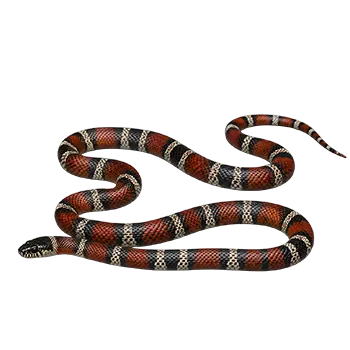
The Eastern Milk Snake is a slender, moderately sized colubrid that thrives on a straightforward whole-prey diet when kept in captivity. In the wild, Lampropeltis triangulum triangulum occupies a broad ecological niche across the eastern United States and southeastern Canada, where it feeds primarily on small rodents, lizards, other snakes, bird eggs, and invertebrates. This dietary generalism translates to a captive feeding strategy centered on commercially raised mice, which provide a nutritionally complete food source that meets the species' protein, fat, calcium, and micronutrient requirements without the complexity of multi-prey rotation.

Caloric demands for the Eastern Milk Snake are modest compared to larger constrictors. Adults typically range from twenty-four to thirty-six inches, with exceptional individuals approaching forty-two inches. At this size, a single appropriately sized mouse every seven to ten days sustains healthy body condition in adult specimens. Overfeeding is a common mistake among keepers new to colubrid care, and the Eastern Milk Snake is particularly prone to obesity when offered meals too frequently or when prey items are consistently oversized. An obese milk snake develops visible fat deposits along the spine and flanks, loses the clean triangular cross-sectional profile characteristic of a healthy specimen, and faces increased risk of hepatic lipidosis and reproductive complications.

The metabolic rate of the Eastern Milk Snake fluctuates seasonally, even in captivity where temperatures are controlled. Many keepers observe a natural reduction in feeding enthusiasm during the shorter days of late autumn and winter, which reflects the species' wild brumation cycle. Allowing a modest reduction in feeding frequency during these months — extending the interval between meals to twelve or fourteen days — respects the snake's physiology and can improve long-term health outcomes. Attempting to maintain a rigid year-round feeding schedule often results in repeated food refusals that cause unnecessary concern.

Hydration complements the nutritional picture. Eastern Milk Snakes require constant access to clean, fresh water in a dish heavy enough to resist tipping. While these snakes are not aquatic and do not typically soak, they drink regularly, and adequate hydration is essential for efficient digestion, proper shedding, and kidney function. Water should be changed every one to two days or immediately if soiled, as milk snakes will occasionally defecate in their water dish. Dehydration manifests as wrinkled skin, retained shed, and sluggish behavior, all of which can be prevented with attentive water management.

Choosing the Right Prey

Prey selection for the Eastern Milk Snake is centered almost exclusively on commercially bred mice, which are available in a standardized range of sizes that correspond to the snake's growth stages. Pinky mice — newborn, hairless mice weighing approximately one to three grams — serve as the first meals for hatchling milk snakes, which typically emerge at eight to twelve inches in length. As the snake grows through its first year, prey size advances through fuzzy mice, hoppers, and small adult mice. By the time an Eastern Milk Snake reaches full adult size, it generally consumes adult mice or small to medium adult mice depending on individual girth.

The widely cited prey-sizing guideline — selecting prey items no wider than the widest point of the snake's body — applies reliably to Eastern Milk Snakes and should not be exceeded. Unlike larger python species that can accommodate proportionally bigger meals, colubrids have comparatively delicate digestive systems and narrower esophageal passages. Offering prey that is too large increases the risk of regurgitation, which is a stressful physiological event that damages the esophageal lining, dehydrates the animal, and suppresses the immune system. A regurgitating milk snake should not be offered food again for at least ten to fourteen days to allow full recovery of the digestive tract.

Frozen-thawed prey is the recommended standard for Eastern Milk Snake husbandry. Live mice, even small ones, can bite and scratch a snake during the feeding process, potentially causing wounds that become infected in the warm, humid conditions of a reptile enclosure. The Eastern Milk Snake's relatively small head and slender build make it more vulnerable to prey-inflicted injuries than bulkier species. Additionally, frozen-thawed feeding eliminates the ethical and logistical complications of housing and managing live feeder colonies or making frequent trips to purchase live prey.

Some keepers of Eastern Milk Snakes experiment with offering the occasional pinky rat or day-old chick as variety. While neither is harmful as a rare supplement, mice should remain the dietary mainstay. Rat pinkies are slightly higher in fat content than mouse pinkies and can contribute to weight gain if offered regularly. Day-old chicks are nutritionally adequate but messier and often less readily accepted by milk snakes that have been conditioned to rodent prey. Consistency in prey type reduces feeding complications and makes it easier to monitor intake and body condition over time.

Frozen Prey Options

The frozen feeder market has matured significantly over the past two decades, and keepers of Eastern Milk Snakes now have access to a reliable supply chain of high-quality frozen mice in every size category. Online reptile supply companies ship frozen feeders in insulated packaging with dry ice or gel packs, ensuring that the prey arrives solidly frozen and safe for long-term storage. Purchasing from established suppliers with verifiable breeding and processing standards is essential, as the nutritional value and safety of the prey depends entirely on how the feeder animals were raised and handled.

Bulk purchasing is the most economical approach to frozen prey for Eastern Milk Snakes. A single adult milk snake consuming one mouse per week requires roughly fifty to fifty-two mice per year, a quantity that fits comfortably in a small dedicated section of a household freezer. Many suppliers offer tiered pricing that substantially reduces the per-unit cost when buying in lots of fifty or one hundred. Keepers with multiple snakes benefit even more from bulk ordering, as shipping costs are amortized across a larger order and the per-mouse price drops further at higher quantities.

Proper storage and handling of frozen prey protects both the snake and the keeper. Frozen mice should be stored at zero degrees Fahrenheit or colder and organized by size and purchase date so that older stock is used first. Thawing should always be done in warm water — never in a microwave, which creates hot spots that can burn the snake's mouth and throat — and the prey should reach a core temperature near or slightly above room temperature before offering. The warmth helps trigger a feeding response, as Eastern Milk Snakes rely heavily on thermal and chemical cues to identify prey. Prey that has been thawed and not consumed within a few hours should be discarded rather than refrozen.

Quality variation exists among frozen prey suppliers, and keepers should evaluate their source periodically. Signs of a high-quality supplier include consistent sizing within labeled categories, minimal freezer burn on received product, prompt and well-insulated shipping, and transparency about their breeding and euthanasia practices. Prey animals raised on nutritious diets in clean conditions produce feeders with better vitamin and mineral profiles than those from operations that cut corners on animal husbandry. The difference may not be visible to the eye, but it manifests over months and years in the snake's body condition, shed quality, and overall vitality.

Supplements and Vitamins

Eastern Milk Snakes fed a consistent diet of properly raised, whole frozen-thawed mice rarely require any nutritional supplementation. The whole-prey model is nutritionally self-contained: the mouse's skeleton delivers calcium and phosphorus in a biologically appropriate ratio, the liver and kidneys provide fat-soluble vitamins including A and D, the muscle tissue supplies complete amino acid profiles, and the gut contents contribute trace minerals and a small amount of plant-derived nutrition. This completeness is the fundamental advantage of whole-prey feeding and the reason it is universally recommended by herpetological veterinarians.

Situations that may justify limited supplementation include recovery from prolonged illness, parasitic infections that have compromised nutrient absorption, and reproductive activity in breeding females. A reptile-specific calcium supplement without added phosphorus can be lightly dusted onto the prey item in these circumstances. Gravid female milk snakes developing follicles or producing eggs draw heavily on calcium reserves, and a modest calcium supplement during the breeding season can support shell formation and reduce the risk of egg-binding. The dusting should be light — a thin, barely visible coating — as excessive calcium supplementation carries its own risks, including visceral gout.

Vitamin D3 supplementation is generally unnecessary for Eastern Milk Snakes. Unlike diurnal lizard species that depend on UVB exposure to synthesize vitamin D3 for calcium metabolism, snakes obtain adequate D3 from the tissues of their prey. While some keepers provide low-level UVB lighting for milk snakes and other colubrids, the scientific evidence for measurable health benefits in this species remains limited. The dietary D3 present in whole mice is sufficient to support normal calcium absorption and skeletal maintenance throughout the snake's life.

The most impactful nutritional decision a keeper makes is not whether to supplement but which prey supplier to trust. Feeder mice raised on high-quality rodent block diets with access to clean water and maintained in hygienic conditions pass along superior nutritional content to the snake. Conversely, mice from marginal operations — fed the cheapest available feed, overcrowded, and stressed — produce nutritionally inferior prey even though the difference is invisible at the point of sale. Researching suppliers, reading keeper reviews, and periodically evaluating the snake's body condition and shed quality are the most effective forms of nutritional quality assurance available to the hobbyist.

Foods to Avoid

The most critical feeding prohibition for Eastern Milk Snakes is wild-caught prey. Field-collected mice, voles, shrews, and lizards carry parasites including roundworms, tapeworms, and pentastomids that can establish infections in a captive snake. Beyond parasites, wild rodents in agricultural and suburban areas frequently carry residues of rodenticides, herbicides, and pesticides that accumulate in their tissues and transfer directly to the snake upon ingestion. Anticoagulant rodenticides are particularly dangerous because they cause internal hemorrhaging that may not produce visible symptoms until the snake is critically ill. The convenience and safety of commercially bred frozen feeders make wild-caught prey unnecessary and indefensible.

Grocery-store meat products — chicken breast, ground beef, fish fillets, or any other butchered protein — should never be offered to an Eastern Milk Snake. These products lack the skeletal calcium, organ-derived vitamins, and micronutrient diversity that whole prey provides. A milk snake fed exclusively on boneless meat would develop severe metabolic bone disease within months, manifesting as spinal kinking, jaw deformities, and an inability to constrict or swallow prey. The bacterial load on raw commercial meat also presents infection risks that are avoided entirely with properly processed frozen feeder mice.

Oversized prey is another significant hazard. Eastern Milk Snakes are slender-bodied colubrids without the jaw and body elasticity of similarly sized boid species. Offering a prey item that is substantially wider than the snake's body at its widest point forces the animal into a dangerous feeding attempt that frequently ends in regurgitation or, in severe cases, esophageal tearing. Keepers who are unsure whether to offer a larger or smaller size should always err on the side of the smaller option. Two appropriately sized meals spaced a few days apart deliver the same caloric content as one oversized meal without the attendant risks.

Insects and invertebrates should not be used as staple feeders for Eastern Milk Snakes, despite the fact that wild milk snakes occasionally consume slugs and earthworms. Commercially available feeder insects such as crickets and mealworms lack the caloric density, fat content, and calcium-to-phosphorus ratio that mice provide, and they cannot sustain a milk snake nutritionally over any meaningful period. Offering insects also risks introducing impaction if the insect's chitinous exoskeleton cannot be fully digested. While a hatchling milk snake that refuses its first pinky might be tempted with a lizard-scented pinky or an anole tail to initiate feeding, this is a transition technique, not a dietary plan.

Feeding multiple prey items in rapid succession is a practice that some keepers adopt when they believe their milk snake is not getting enough food from a single mouse. This approach carries risk for a species as slender as the Eastern Milk Snake. Two or more prey items consumed in quick succession create a bolus in the stomach that generates more digestive heat and acid than a single item, increasing the chance of regurgitation and placing stress on the digestive tract. If a keeper believes the snake needs more calories — during growth spurts or recovery — the better approach is to increase feeding frequency slightly rather than doubling the prey volume at a single sitting.

Feeding Schedule and Techniques

Establishing a consistent feeding schedule is one of the simplest and most effective husbandry practices for the Eastern Milk Snake. Hatchlings and juveniles under one year of age should be offered an appropriately sized pinky or fuzzy mouse every five to seven days. This frequency supports the rapid growth rate characteristic of the first twelve to eighteen months of life without pushing the snake toward obesity. As the snake matures and its growth rate decelerates, the feeding interval extends naturally. Sub-adults between one and two years of age do well on a seven-to-ten-day schedule, while fully grown adults typically thrive on one mouse every ten to fourteen days.

Feeding time should be consistent and predictable. Many experienced keepers feed their Eastern Milk Snakes during the evening hours, aligning with the species' crepuscular and nocturnal activity patterns. A snake that is already alert and moving within its enclosure is far more likely to strike and consume prey than one that is buried under substrate in a deep daytime rest. Dimming room lights and minimizing noise and foot traffic around the enclosure during the feeding window further increases the likelihood of a successful feeding response.

Presentation technique influences acceptance rates, particularly with young or newly acquired milk snakes. The prey item should be fully thawed, warmed to just above room temperature, and offered with long feeding tongs or hemostats. Dangling the mouse gently and moving it in a slow, naturalistic path near the snake's hide entrance often triggers a strike. Leaving the mouse on the substrate near the hide — a technique sometimes called leave-and-retreat — works well for shy individuals that refuse tong-fed prey. In this scenario, the keeper places the mouse and exits the room, returning in thirty to sixty minutes to check whether the snake has fed.

Recording feeding data is an underappreciated aspect of milk snake husbandry. A simple log noting the date, prey size, acceptance or refusal, and any observations about the snake's condition creates a longitudinal record that reveals patterns invisible in week-to-week observation. Seasonal feeding slowdowns, growth rate trends, pre-shed appetite suppression, and early signs of illness often become apparent only in retrospect when the keeper reviews several months of feeding records. A notebook, spreadsheet, or reptile-keeping app all serve this purpose equally well.

Handling the snake immediately before or after feeding should be avoided. Pre-feeding handling can stress the animal and suppress the feeding response, while post-feeding handling risks triggering regurgitation as the snake's body diverts blood flow and metabolic resources to digestion. A minimum of forty-eight hours of undisturbed rest after a meal allows the Eastern Milk Snake to digest safely. During this window, the warm side of the enclosure becomes particularly important, as the snake will seek out the thermal gradient's upper range to optimize enzymatic activity in the stomach and intestines.

Always consult a qualified professional before making any health-related decisions. This content is provided for informational reference only and should not replace professional guidance specific to your animal.