
Enclosure Size and Type

Selecting the correct enclosure for an Eastern Kingsnake requires balancing the animal's adult size, its active temperament, and its well-documented talent for escape. Lampropeltis getula getula is a terrestrial colubrid that spends the majority of its time on or near the ground, exploring under cover objects, threading through leaf litter, and investigating every seam and gap in its environment. An adult Eastern Kingsnake measuring thirty-six to forty-eight inches is best housed in an enclosure that provides a minimum floor space of thirty-six inches long by eighteen inches deep. A forty-gallon breeder-style glass terrarium meets this requirement and is one of the most commonly used options, though front-opening enclosures with hinged or sliding glass doors offer superior access for maintenance and reduce the overhead approach that can startle a resting snake.

PVC and molded plastic enclosures have become increasingly popular among kingsnake keepers and offer several practical advantages over traditional glass tanks. They retain heat and humidity more effectively due to their insulated walls, they are lighter and easier to move for cleaning, and they typically feature tighter-fitting doors and lids that reduce the escape risk inherent with screen-topped glass aquariums. Several manufacturers produce PVC enclosures in the four-foot-by-two-foot footprint that is ideal for an adult Eastern Kingsnake, and many include built-in channels for heating elements and cord management that eliminate dangling wires and reduce fire hazard.

Escape prevention is a paramount concern with any kingsnake species, and the Eastern Kingsnake is no exception. These snakes are persistent, methodical escape artists that will test every lid clip, door track, and ventilation opening in their enclosure repeatedly until they find a weakness. Screen lids must be secured with locking clips rated for reptile use rather than simple friction-fit rims. Sliding glass doors should include a lock or pin that prevents the snake from nosing them open. Any opening larger than the snake's head is a potential exit point, and keepers should inspect new enclosures thoroughly before introducing the animal. A common mistake is assuming that a gap too small for the snake's body to pass through is secure — kingsnakes can compress their bodies remarkably and will exploit openings that appear impossibly narrow.

Hatchling and juvenile Eastern Kingsnakes should not be housed in the full-sized adult enclosure from the start. A very young snake placed in a large, open space may feel exposed and insecure, leading to chronic stress, hiding behavior, and food refusal. Starting a hatchling in a smaller enclosure — a ten-gallon tank or a six-quart plastic tub with ventilation holes — provides the sense of confinement that promotes confident feeding and active exploration. As the snake grows and demonstrates consistent feeding and healthy behavior, it can be transitioned to progressively larger enclosures. Most Eastern Kingsnakes are ready for their permanent adult enclosure by twelve to eighteen months of age.

Substrate Options

The substrate forms the literal foundation of the Eastern Kingsnake's captive environment and influences humidity retention, ease of cleaning, burrowing opportunity, and overall hygiene. Aspen shavings are the most widely recommended substrate for this species and have been a staple in colubrid husbandry for decades. Aspen is absorbent, virtually dust-free when sourced from a quality supplier, easy to spot-clean, and allows the snake to burrow and tunnel in a manner that mimics its natural behavior of moving through leaf litter and loose soil. It does not produce the aromatic oils found in cedar and pine shavings, which are toxic to reptiles and must never be used.

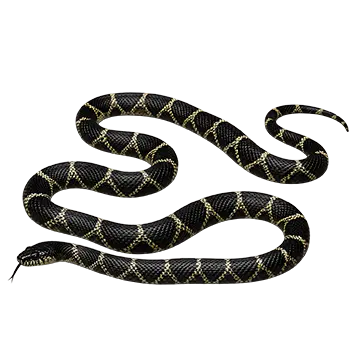
Coconut fiber, sold in compressed brick form under various trade names, is another excellent substrate choice for the Eastern Kingsnake. It holds moisture well without becoming soggy, resists mold growth under normal conditions, and breaks down naturally over time. Coconut fiber is particularly useful in regions where ambient indoor humidity is low, as it can be lightly misted to maintain the moderate humidity levels that support healthy shedding. Its dark color provides a naturalistic appearance and contrasts attractively with the Eastern Kingsnake's bold black-and-white banding. The primary drawback is that it is slightly more difficult to spot-clean than aspen, as waste can blend into the dark substrate.

Cypress mulch offers a middle ground between the moisture retention of coconut fiber and the ease of cleaning associated with aspen. It is naturally resistant to mold and mites, has a pleasant earthy appearance, and allows limited burrowing. Cypress mulch is harvested from pond cypress and bald cypress trees and should be sourced from reptile-specific suppliers to ensure it has not been treated with pesticides or mixed with cedar. Some keepers use a layered approach, placing a thin base of cypress mulch topped with a generous layer of aspen shavings, combining the humidity benefits of one with the burrowing properties of the other.

Substrates to avoid include cedar and pine shavings, which release phenol compounds that cause respiratory irritation and liver damage in reptiles. Sand is inappropriate for the Eastern Kingsnake because it provides no burrowing structure, can be ingested during feeding and cause intestinal impaction, and does not reflect the animal's natural habitat in any meaningful way. Newspaper and paper towels are functional for quarantine setups or temporary housing but do not support the enrichment behaviors that a permanent enclosure should facilitate. They are flat, featureless surfaces that deny the snake the opportunity to burrow, tunnel, and explore beneath a substrate layer — activities that are central to the Eastern Kingsnake's behavioral repertoire in the wild.

Temperature and Heating

The Eastern Kingsnake originates from the temperate forests, fields, and coastal plains of the eastern United States, from southern New Jersey through Florida and westward into the Appalachian foothills. This broad geographic range encompasses significant climatic variation, but the species consistently occupies microhabitats where it can thermoregulate by moving between sun-warmed surfaces and cool underground retreats. Replicating this thermal gradient in captivity is essential for proper digestion, immune function, and behavioral health. The warm end of the enclosure should maintain a basking surface temperature of eighty-five to eighty-eight degrees Fahrenheit, while the cool end should remain in the seventy-two to seventy-six degree range. This gradient allows the snake to select the temperature that suits its immediate physiological needs.

Under-tank heat mats are the most common heating solution for Eastern Kingsnake enclosures and remain effective when used correctly. The heat mat should be positioned beneath one end of the enclosure — never centered — to create the thermal gradient rather than uniformly heating the entire floor. It must always be connected to a thermostat, which is a non-negotiable requirement regardless of the heating method employed. An unregulated heat mat can reach temperatures exceeding one hundred and ten degrees Fahrenheit on its surface, which is hot enough to cause severe thermal burns through even a layer of substrate. Proportional thermostats that gradually adjust power output rather than cycling on and off produce the most stable and natural temperature profile.

Overhead heating elements, including ceramic heat emitters and deep heat projectors, offer an alternative that mimics the directional warmth the snake would experience from solar radiation in nature. These devices mount in a dome fixture on top of the enclosure or inside it, depending on the design, and radiate infrared heat downward onto a basking surface. Ceramic heat emitters produce no visible light and can be used around the clock without disrupting the photoperiod. Deep heat projectors emit infrared-A and infrared-B wavelengths that penetrate tissue more deeply than the infrared-C produced by heat mats, promoting more effective and biologically authentic thermoregulation. Both types require thermostat regulation and a protective cage or shroud inside the enclosure to prevent the snake from contacting the hot surface directly.

Nighttime temperature management is straightforward for the Eastern Kingsnake. A modest drop to sixty-eight to seventy-two degrees Fahrenheit on the cool end during the night mirrors the natural diurnal temperature fluctuation the species experiences in the wild and supports a healthy circadian rhythm. The warm end can remain slightly elevated at seventy-eight to eighty degrees overnight to ensure the snake has access to warmth if it is digesting a meal. Supplemental room heating is necessary only in very cold climates where ambient indoor temperatures drop below sixty-five degrees consistently, as prolonged exposure to temperatures below this threshold can suppress immune function and increase susceptibility to respiratory infection.

Humidity and Ventilation

Humidity management for the Eastern Kingsnake strikes a moderate balance that reflects the species' natural range across the southeastern United States, where ambient humidity varies from the relatively dry uplands of the Appalachian piedmont to the saturated coastal marshes of the Carolinas and Georgia. In captivity, a relative humidity of forty to sixty percent meets the needs of most individuals and supports healthy respiratory function, efficient shedding, and proper hydration. Maintaining this range requires attention to substrate choice, water dish placement, enclosure ventilation, and seasonal adjustments that account for the drying effects of indoor heating systems during winter months.

The water dish is the primary humidity source in most Eastern Kingsnake enclosures and serves double duty as both a drinking supply and a passive humidifier. Placing the water dish on the warm side of the enclosure increases evaporation and raises ambient humidity, while positioning it on the cool side reduces evaporation and keeps humidity lower. This simple repositioning gives keepers a no-cost tool for fine-tuning humidity without resorting to misting systems or foggers. The dish should be large enough for the snake to soak in comfortably, as Eastern Kingsnakes will occasionally immerse themselves in water, particularly during the pre-shed period when increased humidity helps loosen the old skin layer.

Ventilation is the counterpart to humidity, and the two must be balanced carefully. Enclosures with screen tops provide excellent air exchange but can make humidity difficult to maintain, especially in arid climates or air-conditioned rooms. Covering a portion of the screen with aluminum foil, a piece of acrylic, or a damp towel reduces airflow and traps moisture effectively. PVC enclosures with small ventilation ports on opposite sides create a gentle cross-draft that provides adequate air exchange while retaining humidity far more effectively than open-screen designs. Stagnant, overly humid air with poor ventilation creates conditions favorable to mold growth, bacterial proliferation, and respiratory infections, so the goal is consistent moderate humidity with gentle airflow rather than a sealed, swamp-like environment.

Shedding periods provide the clearest indicator of whether humidity levels are adequate. A well-hydrated Eastern Kingsnake in a properly humidified enclosure sheds its skin in a single, intact piece from nose to tail tip. Incomplete or patchy sheds — where fragments of old skin remain adhered to the body, particularly around the eyes, tail tip, and ventral scales — signal chronic low humidity that must be addressed. During the pre-shed phase, when the snake's eyes cloud over and its coloring dulls, temporarily increasing humidity to sixty-five to seventy percent by misting the enclosure lightly or placing a damp sphagnum moss hide box on the warm side helps ensure a clean, complete shed.

Lighting Requirements

Lighting for the Eastern Kingsnake serves two primary functions: establishing a consistent photoperiod that regulates the animal's circadian rhythm and providing visual illumination that allows the keeper to observe and enjoy the snake. Unlike many diurnal lizard species, the Eastern Kingsnake does not require ultraviolet B radiation for calcium metabolism or vitamin D synthesis. Its whole-prey diet supplies adequate vitamin D3 through the organs and tissues of consumed rodents, and its crepuscular to nocturnal activity pattern means it would receive limited direct sun exposure even in the wild. However, emerging research suggests that low-level UVB exposure may confer marginal health benefits for colubrids, and providing a UVB-capable lamp is a reasonable optional enhancement.

A consistent day-night cycle of twelve hours of light and twelve hours of darkness suits the Eastern Kingsnake year-round and can be maintained with an inexpensive plug-in timer connected to the enclosure's light fixture. Some keepers adjust the photoperiod seasonally, shortening the light cycle to ten hours during winter months and extending it to fourteen hours during summer, to approximate the natural variation in day length that the species experiences across its range. This seasonal adjustment is particularly relevant for breeders who use photoperiod manipulation as one component of the brumation cycling that prepares animals for reproductive behavior.

LED lighting has largely replaced incandescent and fluorescent fixtures in reptile keeping due to its energy efficiency, low heat output, and long operational lifespan. A daylight-spectrum LED bar or strip mounted inside the enclosure lid or on a bracket above the screen provides clean, even illumination that enhances the Eastern Kingsnake's striking color pattern without contributing unwanted heat to the thermal gradient. Color-rendering index is worth considering when selecting an LED fixture — a CRI of ninety or above reproduces the animal's natural coloration more faithfully and makes visual health assessments easier for the keeper.

Nighttime lighting should be absent entirely. Red and blue bulbs marketed as nighttime viewing lamps are unnecessary and potentially disruptive. While older sources sometimes claim that snakes cannot perceive red light, research indicates that many snake species possess visual sensitivity across a broader spectrum than previously assumed. The safest approach is complete darkness during the night cycle. Keepers who wish to observe their Eastern Kingsnake during its most active nocturnal hours can use a low-intensity flashlight or headlamp briefly rather than installing a permanent colored light source that may interfere with the animal's rest and circadian regulation.

Cleaning and Maintenance

Maintaining a clean enclosure is one of the most straightforward yet consequential aspects of Eastern Kingsnake husbandry. A regular cleaning schedule prevents the accumulation of bacteria, reduces the risk of parasitic and fungal infection, and ensures that the snake's living environment remains comfortable and odor-free. The cleaning regimen divides naturally into daily spot-cleaning, weekly intermediate maintenance, and periodic deep cleaning that together form a comprehensive hygiene program.

Daily spot-cleaning involves removing fecal deposits and urates as soon as they are noticed. Eastern Kingsnakes typically defecate within forty-eight to seventy-two hours of a meal, and the feces are usually deposited in a consistent location within the enclosure. Removing the soiled substrate promptly with a small scoop or disposable glove and replacing it with fresh substrate prevents bacterial growth and ammonia buildup. The water dish should be checked daily, refilled with fresh dechlorinated water, and repositioned if the snake has displaced it. If the snake has defecated in the water dish — a common occurrence — the dish should be emptied, scrubbed with a reptile-safe disinfectant, rinsed thoroughly, and refilled.

Weekly maintenance extends beyond spot-cleaning to include a broader assessment of the enclosure's condition. The entire substrate surface should be turned and aerated to prevent compaction and detect any soiled areas that were missed during daily checks. Hides, water dishes, and decorative items should be inspected for accumulated waste, biofilm, or mold. A quick wipe-down of the enclosure walls with a damp cloth removes dust and water spots that can obscure visibility through glass panels. This is also an appropriate time to verify that the thermostat probe is properly positioned, the thermometer and hygrometer are reading accurately, and all lid clips or door locks are secure.

A full deep clean should be performed every four to six weeks or whenever the substrate has reached the end of its useful life. This involves removing the snake to a secure temporary container, discarding all substrate, removing all furnishings, and cleaning every surface of the enclosure with a reptile-safe disinfectant solution. A dilute chlorhexidine solution or a commercial reptile habitat cleaner is effective against bacteria, fungi, and common reptile parasites. All surfaces must be rinsed thoroughly and allowed to dry completely before fresh substrate is added and furnishings are replaced. Hides, water dishes, and climbing branches should be scrubbed individually and disinfected during this process. The deep clean is also an ideal opportunity to inspect the enclosure for developing problems such as cracked silicone seams, corroded screen clips, or heat mat wear that could compromise containment or safety.

Disinfectant selection and usage require care to avoid exposing the snake to chemical residues. Products containing pine oil, phenol, or strong fragrances should never be used in or near a reptile enclosure. A ten-percent bleach solution is effective and inexpensive but must be rinsed away completely and the enclosure aired out until no chlorine odor remains. Veterinary-grade chlorhexidine at a dilution of two ounces per gallon of water provides broad-spectrum antimicrobial action with minimal residual toxicity and is the preferred disinfectant among experienced reptile keepers. Regardless of the product used, the enclosure must be completely dry and odor-free before the snake is returned.

Always consult a qualified professional before making any health-related decisions. This content is provided for informational reference only and should not replace professional guidance specific to your animal.