
Nutritional Needs

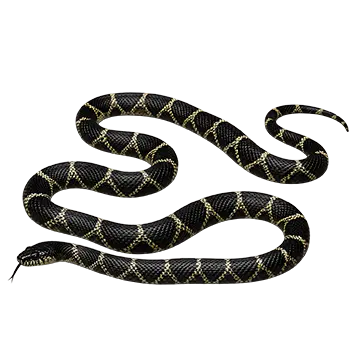
The Eastern Kingsnake is a medium-bodied colubrid whose dietary requirements in captivity are straightforward compared to many reptile species, yet they demand careful attention to prey quality and feeding frequency. In the wild, Lampropeltis getula getula is an opportunistic predator with one of the broadest diets of any North American snake. It consumes rodents, lizards, smaller snakes including venomous species such as copperheads and rattlesnakes, bird eggs, frogs, and turtle eggs. This dietary versatility reflects a robust digestive system and a metabolism well suited to processing whole prey of varying composition. In captivity, the keeper's task is to channel that adaptability into a consistent, nutritionally complete feeding program built around commercially available rodents.

Whole-prey feeding is the foundation of Eastern Kingsnake nutrition. A mouse or rat consumed in its entirety provides a complete nutritional package that no combination of processed ingredients can replicate. The skeleton delivers calcium and phosphorus in a biologically appropriate ratio, the liver and kidneys supply fat-soluble vitamins A and D along with essential trace minerals, the muscle tissue provides high-quality protein, and the fur or hair contributes indigestible fiber that supports healthy digestive motility. This self-contained meal eliminates the need for the complex supplementation regimens required by herbivorous or insectivorous reptiles.

Metabolic rate in the Eastern Kingsnake is influenced by ambient temperature, age, reproductive status, and activity level. Snakes maintained at the warmer end of their preferred temperature gradient digest food more quickly and may require slightly more frequent feeding than those kept at cooler temperatures. Younger animals grow rapidly during their first two years and need proportionally more frequent meals than adults in maintenance mode. Breeding females expend significant energy during follicle development and egg production, creating temporary increases in caloric demand that keepers must anticipate and address through adjusted feeding schedules.

Hydration plays a supporting but essential role in the nutritional health of the Eastern Kingsnake. These snakes originate from the forests, fields, and coastal plains of the eastern United States, where they have access to streams, ponds, and morning dew. In captivity, a clean water dish large enough for the snake to soak in should be available at all times. Adequate hydration supports efficient digestion, healthy kidney function, and proper shedding. A dehydrated Eastern Kingsnake may refuse food, produce chalky urates instead of the normal white paste, and experience incomplete sheds that indicate systemic stress.

Choosing the Right Prey

Prey selection for the Eastern Kingsnake follows a progression that mirrors the animal's growth from a slender hatchling to a robust adult. Neonates, which typically measure ten to fourteen inches at birth, begin their feeding careers on pinky mice — newborn mice that are hairless and roughly the diameter of the hatchling's midsection. Within the first few months, as the young snake grows and gains confidence, it transitions to fuzzy mice and then to hoppers. By the time the snake reaches eighteen to twenty-four inches, it is generally ready for adult mice. Larger adults in the forty-to-forty-eight-inch range may accept small weaned rats, though many Eastern Kingsnakes remain appropriately fed on large adult mice throughout their lives.

The standard prey-sizing guideline for colubrids is to offer prey items whose diameter does not exceed one and a half times the widest point of the snake's body. For the Eastern Kingsnake, this rule produces reliable results and should be followed consistently. Offering prey that is too large increases the risk of regurgitation, which is a stressful and potentially dangerous event. A regurgitation episode damages the esophageal lining with digestive acids, dehydrates the snake, and necessitates a recovery period of at least ten to fourteen days before the next feeding attempt. Conversely, prey that is too small fails to trigger a satisfying feeding response and provides insufficient caloric intake.

Frozen-thawed prey is the preferred option for Eastern Kingsnakes and should be the default for every keeper. Live prey poses a genuine risk of injury to the snake. Even a small adult mouse can bite hard enough to lacerate facial scales, damage eyes, or cause wounds that invite bacterial infection. Frozen-thawed prey eliminates this danger entirely while also being more convenient to store, easier to source in bulk, and more consistent in quality. The vast majority of captive-bred Eastern Kingsnakes accept frozen-thawed prey without hesitation, as they have never been conditioned to associate movement with food.

Keepers who acquire an Eastern Kingsnake with a history of live-prey feeding may need to employ transition strategies. Warming the thawed prey item to slightly above room temperature using hot water immersion makes it more appealing by enhancing scent dispersal and mimicking the thermal signature of a living animal. Presenting the prey on long feeding tongs with gentle, lifelike movement in a dimly lit environment during the snake's naturally active evening hours often elicits a strong feeding response. Scenting a thawed mouse with a drop of used rodent bedding can also bridge the gap for stubborn feeders.

Frozen Prey Options

The frozen feeder market offers Eastern Kingsnake keepers a range of prey sizes and species that can sustain the animal from hatchling through adulthood. Frozen mice are the staple prey item and are available in standardized sizes: pinkies, fuzzies, hoppers, small adults, large adults, and jumbo or retired breeders. This size progression aligns conveniently with the growth trajectory of the Eastern Kingsnake, allowing keepers to step up prey size gradually without the guesswork involved in sourcing from inconsistent suppliers. Frozen rats in the pinky and fuzzy size range serve as an alternative for larger adult kingsnakes that have outgrown the biggest available mice.

Quality control is essential when selecting a frozen prey supplier. Reputable breeders raise their feeder rodents on nutritious commercial rodent diets, provide clean water and sanitary housing, and process the animals humanely through carbon dioxide euthanasia before flash-freezing them. The resulting prey items are plump, intact, and free of the tissue degradation, freezer burn, or off-odors that characterize poorly handled feeders. Upon thawing, a high-quality frozen mouse should look and smell fresh, with no discoloration or bloating that would indicate bacterial decomposition prior to freezing.

Bulk purchasing is the most cost-effective approach for Eastern Kingsnake keepers. A single adult kingsnake consuming one large mouse per week will go through approximately fifty mice per year. Buying in quantities of twenty-five, fifty, or one hundred from a wholesale supplier reduces the per-unit cost substantially compared to purchasing individually from a pet store. A small chest freezer or a dedicated section of a household freezer accommodates this stock easily. Prey should be organized by size and purchase date, with older stock positioned for first use to maintain rotation and freshness. Most frozen prey retains optimal nutritional value for six to nine months at consistent sub-zero storage temperatures.

Alternative prey species can provide dietary variety, though mice and small rats form the backbone of the Eastern Kingsnake's captive diet. Frozen day-old chicks are accepted by some adult kingsnakes and offer a different amino acid and fat profile compared to rodents, though they lack the fur that aids in digestive motility. African soft-furred rats, also known as multimammate mice, are another option that some keepers use to entice reluctant feeders or to add variety. These are slightly more aromatic than standard domestic mice and can trigger a feeding response in snakes that have become disinterested in their usual fare. Regardless of the prey species offered, the whole-prey principle should always be maintained.

Supplements and Vitamins

Eastern Kingsnakes fed a consistent diet of appropriately sized, high-quality whole prey rarely require nutritional supplementation. The completeness of the whole-prey model is its greatest advantage: every essential nutrient is present in the correct proportion, delivered in a form that the snake's digestive system has evolved to process efficiently. Unlike insectivorous or herbivorous reptiles that depend on calcium dusting, gut loading, and UVB-mediated vitamin D synthesis to avoid metabolic deficiencies, the Eastern Kingsnake derives everything it needs from the body of a well-nourished mouse or rat.

Specific circumstances may justify targeted supplementation under veterinary guidance. Females in active breeding condition experience elevated calcium demands during follicle development and eggshell formation. A light dusting of phosphorus-free calcium carbonate powder on a prey item during the pre-ovulatory feeding period can help ensure that the female's skeletal calcium reserves are not dangerously depleted by egg production. This intervention should be time-limited and discontinued after the breeding cycle concludes, as chronic calcium supplementation in the absence of increased demand serves no purpose and may disrupt mineral balance.

Snakes recovering from illness, parasitic infection, or prolonged hunger strikes may benefit from short-term multivitamin supplementation to replenish depleted reserves. A reptile-specific multivitamin powder applied sparingly to one prey item per month is generally sufficient for recovery support. Fat-soluble vitamins A, D, and E accumulate in liver tissue and can reach toxic concentrations if administered excessively, so restraint is critical. Water-soluble B vitamins are excreted more readily and pose less risk of toxicity, but they are also abundantly present in whole prey and seldom deficient in snakes that are eating regularly.

The most impactful nutritional decision a keeper makes is not whether to supplement but where to source prey. Feeder rodents raised on high-quality commercial diets in clean, low-stress conditions produce nutritionally superior prey compared to animals raised in crowded, unsanitary facilities on cheap feed. The vitamin and mineral content of a mouse is a direct reflection of what that mouse consumed during its life. Investing in prey from reputable breeders who maintain high husbandry standards for their feeder colonies is a more reliable nutritional strategy than attempting to correct deficiencies after the fact with powdered supplements.

Foods to Avoid

A number of food items that might seem intuitively acceptable are in fact inappropriate or dangerous for the Eastern Kingsnake, and keepers should be aware of these hazards before establishing a feeding program. Wild-caught prey tops the list of items to avoid without exception. Wild mice, voles, frogs, and lizards carry internal parasites including nematodes, cestodes, and pentastomids that can establish infections in the captive snake. More critically, wild rodents in agricultural and suburban areas frequently carry sublethal doses of anticoagulant rodenticides that accumulate in their tissues. A kingsnake consuming a poisoned mouse ingests those compounds and can suffer fatal internal hemorrhaging days or weeks later with no external warning signs.

Grocery-store meat products are entirely unsuitable for Eastern Kingsnakes despite their superficial resemblance to appropriate food. Raw chicken breast, ground beef, fish fillets, and similar items lack the nutritional completeness of whole prey. They contain no bones to supply calcium and phosphorus, no organs to deliver fat-soluble vitamins and trace minerals, and no fur or feather material to provide digestive fiber. An Eastern Kingsnake maintained on boneless meat will develop metabolic bone disease over time as calcium reserves are depleted without replacement, leading to softened vertebrae, jaw deformities, and muscular tremors. Additionally, raw grocery meat carries bacterial loads including salmonella and listeria that pose infection risks to the snake and the keeper.

Oversized prey is a common and avoidable feeding error. While the Eastern Kingsnake is a powerful constrictor for its size and possesses the jaw flexibility characteristic of all snakes, there are limits to what it can safely consume and digest. Prey items that significantly exceed the one-and-a-half-times-body-width guideline may be swallowed but can cause regurgitation during the digestive process. Repeated regurgitation damages the esophageal and gastric lining, leads to chronic dehydration, and creates a cycle of stress that can suppress immune function. Keepers who are uncertain about prey sizing should always err on the smaller side.

Feeding other snakes to a captive Eastern Kingsnake is strongly discouraged despite the species' well-documented ophiophagy in the wild. While Lampropeltis getula getula is famous for consuming rattlesnakes, copperheads, and other serpents, offering captive snakes as food introduces disease transmission risks, parasitic cross-contamination, and ethical concerns that have no place in responsible husbandry. The nutritional profile of a snake consumed as prey is adequate but offers no advantage over commercially available rodents, and the potential for transmitting inclusion body disease, snake fungal disease, or cryptosporidiosis between snake species makes the practice hazardous. The Eastern Kingsnake's ophiophagous instincts are fully satisfied by a consistent diet of whole rodents.

Feeding Schedule and Technique

Establishing a consistent feeding schedule is one of the most important aspects of Eastern Kingsnake husbandry, and the appropriate frequency varies significantly across the animal's life stages. Hatchlings and juveniles under one year of age should be offered an appropriately sized prey item every five to seven days. Their rapid growth rate during this period demands frequent caloric input to support skeletal development, muscle growth, and the energy expenditure associated with their characteristically active temperament. Sub-adults between one and three years of age can transition to feeding every seven to ten days as their growth rate decelerates. Fully mature adults over three years old thrive on a feeding schedule of one appropriately sized meal every ten to fourteen days.

Feeding technique influences both the success rate of individual feeding events and the long-term behavioral disposition of the snake. Prey should be fully thawed and warmed to slightly above room temperature before presentation. Submerging the sealed bag containing the prey item in warm water for fifteen to twenty minutes achieves the correct temperature without cooking the outer tissues. The prey is then grasped securely by the tail or hindquarters with a pair of feeding tongs — never bare fingers — and presented to the snake with gentle, natural-looking movement. Offering the mouse headfirst encourages the snake to swallow in the correct orientation, which reduces the risk of the prey's limbs catching on the esophageal lining during ingestion.

The feeding environment matters as much as the prey itself. Eastern Kingsnakes are crepuscular to nocturnal feeders that are most responsive to food during the late afternoon and evening hours. Dimming the room lights or feeding during the natural dusk period takes advantage of the snake's instinctive hunting behavior and increases the likelihood of an immediate strike. Minimizing disturbance during and after feeding is equally important. The snake should not be handled for at least forty-eight hours following a meal to prevent stress-induced regurgitation. Vibrations, loud noises, and sudden temperature fluctuations during the digestive period can also trigger regurgitation in sensitive individuals.

Seasonal appetite fluctuations are normal in the Eastern Kingsnake and should not alarm keepers who are prepared for them. Many individuals reduce or cease feeding entirely during the cooler months of late autumn and winter, even when maintained at normal captive temperatures. This voluntary fasting period mirrors the natural brumation cycle that wild Eastern Kingsnakes undergo in response to decreasing photoperiod and temperature. A healthy, well-established adult can safely fast for several weeks to two months without nutritional consequence. Attempting to force-feed or aggressively coax a seasonally anorexic kingsnake is counterproductive and stressful. Simply continue offering prey every two to three weeks during this period, and the snake will resume feeding when its internal clock signals the return of the active season.

Record-keeping completes the feeding management picture. Maintaining a log of each feeding event — including the date, prey size, whether the prey was accepted or refused, and any notes about the snake's behavior or body condition — provides invaluable data over the long term. Patterns of refusal may indicate impending shed cycles, seasonal slowdowns, or developing health issues that are not yet visible externally. Weight records taken monthly using a digital kitchen scale or small animal scale allow keepers to track growth rates in juveniles and detect gradual weight loss in adults that might otherwise go unnoticed. This data-driven approach transforms feeding from guesswork into a reliable management system.

Always consult a qualified professional before making any health-related decisions. This content is provided for informational reference only and should not replace professional guidance specific to your animal.